Construction has begun on a 600 MW pumped storage hydroelectric power station (PSH) in Delingha City, Qinghai Province, northwest China. Valued at an estimated 5.23 billion yuan (approximately $783 million), the facility is designed to serve as a key grid-balancing element supporting one of the country's largest renewable energy bases. Full commercial operation of the station is scheduled for 2034. The upper reservoir will be located at an altitude of 4,008 meters above sea level, making the project the highest-altitude facility of its kind in northwest China.
Operating Principle: From Energy Surplus to Peak Generation
The PSH design comprises two reservoirs — upper and lower — connected by a system of water conduits, alongside an underground powerhouse equipped with pump-turbine units. During off-peak hours when power consumption drops and generation surpluses occur, pumps transfer water from the lower reservoir to the upper one, effectively storing energy as potential energy. During periods of peak demand, water flows back down, spinning turbines to generate electricity. The plant's designed annual generation capacity stands at 1.2 billion kWh, which will not only cover peak loads but also provide emergency reserves and participate in grid frequency regulation.
Delingha as a Clean Energy Hub
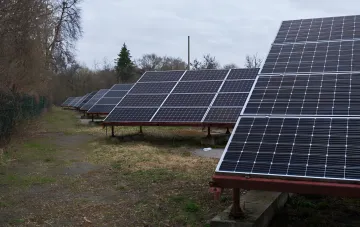
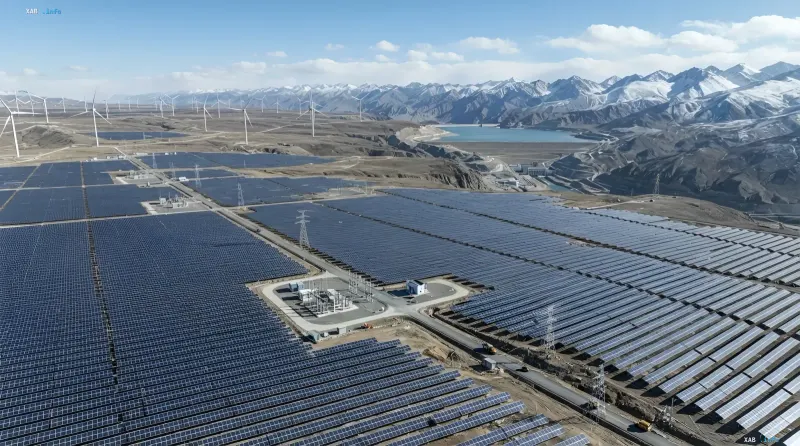
The new PSH does not exist in isolation: it integrates into Delingha's broader energy infrastructure, where solar generation, wind power, and green hydrogen production are actively developing. According to municipal authorities, by 2026 the total installed capacity of clean energy facilities in the region reached 6.05 GW, with another 950 MW under construction. By 2030, Delingha expects to increase this figure to over 14 GW, transforming into one of China's largest renewable generation centers. Without a reliable storage and balancing tool, integrating such vast volumes of intermittent solar and wind energy into a unified grid would be extremely challenging.
Altitude as an Engineering Challenge
Locating the upper reservoir at an altitude exceeding four kilometers imposes stringent requirements on materials, logistics, and construction technology. In the high-altitude environment of Qinghai, where winter temperatures plunge far below zero and air density is lower than in the plains, every stage of construction requires accounting for specific climatic and geological factors. Nevertheless, the combination of abundant solar radiation, wind potential, and mountainous terrain with high elevation drops makes the region highly attractive for combined solar-wind-storage projects. The Delingha PSH will essentially act as a giant physical battery capable of smoothing daily and seasonal generation fluctuations.
Context: China's Energy Strategy
The Delingha project aligns with China's broader strategy to expand renewable energy capacities and tackle their intermittency issues. Pumped storage stations remain the most mature and economically viable large-scale energy storage technology, and China is consistently expanding its fleet. The station's launch in 2034 coincides with Delingha's clean generation targets, indicating synchronized development of storage infrastructure alongside connected solar and wind capacities. Thus, the 600 MW PSH at 4,008 meters is not an isolated facility, but a systemic component without which realizing Delingha's ambitious plans to achieve 14 GW of clean energy by 2030 would be impossible.