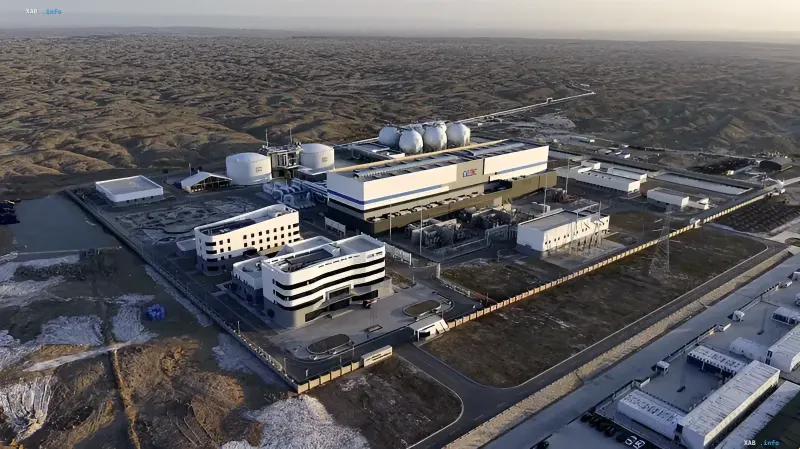
On November 16, 2026, the Yuanchu No. 1 station was successfully connected to the power grid in Yumen, Gansu Province, China. It is the world's first industrial Compressed Air Energy Storage (CAES) plant whose storage reservoir is built not in natural salt caverns, but in artificially excavated underground chambers within hard rock formations. With a capacity of 300 MW and an energy storage capacity of 1,800 MWh, the facility is the result of a project costing approximately 2.5 billion yuan (around $368 million) implemented by China Energy Digital Technology Group, a subsidiary of the state-owned China Energy Engineering Corporation. According to the developer, the estimated charging cycle takes eight hours, while continuous generation lasts for six hours.
From Salt Caves to Man-Made Chambers
The fundamental principle of pumping air underground during periods of excess renewable energy generation and subsequently retrieving electricity on demand is not new: traditional CAES systems rely on natural underground cavities, primarily salt caverns or abandoned mines. The Chinese facility breaks away from this geological constraint: at a depth of about 110 meters in a solid rock massif, four interconnected chambers with a total volume of roughly 200,000 cubic meters were excavated, designed to withstand operating pressures of up to 18 MPa. To contain air under such high pressure, the chambers are lined internally with steel plates, requiring extensive mining operations and the creation of a hermetically sealed structure.
How the Thermal Storage System Works
A key element of the station is the thermal storage system designed to capture the heat generated during air compression. Instead of being released into the environment, this heat is stored in a hybrid system combining a low-melting-point triple salt eutectic mixture and pressurized hot water tanks. This allows different temperature levels to be utilized during the operating cycle. During electricity generation, the stored heat is sequentially returned to the compressed air, which then expands in turbines driving electrical generators. This approach increases the overall efficiency of the plant compared to basic CAES schemes without heat recuperation.
Claimed Efficiency and Output: What Is Confirmed and What Is Not
According to the developer, the full-cycle electrical round-trip efficiency reaches 72%, and the estimated annual generation is 600 GWh. The station is designed, among other things, to store excess electricity from regional wind and solar power plants and feed it back into the grid during periods of peak demand. However, the efficiency figure should currently be viewed as a stated design specification: there are no independent long-term operational data yet confirming the achievement of these values under real-world conditions.
Practical Significance and Economic Issues
The primary practical value of the technology lies in the ability to construct large underground compressed air storage facilities in regions lacking suitable natural salt caverns—areas where deploying CAES was previously geologically impossible. At the same time, the economic feasibility of this approach will depend on excavation costs, sealing expenses, and the duration of stable high-pressure operation. Ultimately, these parameters, rather than the claimed efficiency, will determine whether man-made CAES becomes a mainstream solution for integrating renewable sources into power grids.