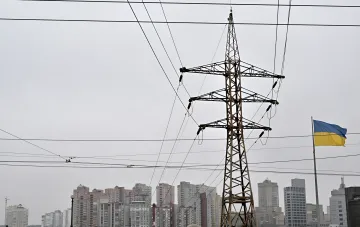
Ukrainian business remains the country's largest consumer of electricity. According to the NEURC, in 2025, enterprises used over 51 billion kWh, accounting for nearly two-thirds of total electricity consumption in Ukraine. At the same time, companies face two simultaneous challenges: the risk of outages and rising electricity costs. This is precisely why more and more enterprises are investing not only in backup power but also in solutions that help control expenses, increase energy independence, and manage consumption more efficiently. The choice of a specific solution directly depends on the business's specifics: for a coffee shop, it is critical not to halt customer service; for an office, it is ensuring digital infrastructure operations; for a warehouse, it is preventing operational downtime; and for a shopping center, it is maintaining critical systems and visitor comfort.
An energy resilience project begins with process analysis, not generator selection
A key conclusion reached by experts is that energy resilience projects today should not start with choosing a generator, solar plant, or energy storage system, but with analyzing business processes, downtime costs, and potential savings. Before investing in a generator, energy storage unit, or solar power plant, a business should answer several questions: which processes cannot stop during an outage, what is the duration of critical backup needed, and what is the total cost of ownership of the equipment. Only after creating a list of processes that cannot be interrupted does it make sense to calculate the necessary capacity and backup duration. Answering these questions helps determine if the business only needs backup power or if it is advisable to consider a comprehensive solution for generation, storage, and electricity management.
From generator to comprehensive energy resilience: total cost of ownership
For many entrepreneurs, a generator was the first solution during blackouts. However, today businesses are increasingly evaluating not just the cost of equipment but the total cost of its usage: fuel expenses, technical maintenance, oil and filter changes, as well as scheduled repairs can significantly impact project economics. That is why many companies consider energy storage units as an alternative or supplement to a generator. One must evaluate not only the price of the equipment but also the cost of operating it over several years: in many cases, a combination of a generator and an energy storage unit allows for reduced fuel costs and improved energy supply reliability.
Small business and offices: reserving the critical, not the entire grid
For small establishments and offices, the main task during outages is not to reserve the entire electrical network, but to ensure the operation of critical processes. For coffee shops, these are primarily coffee machines, refrigerators, cash registers, and the internet; for beauty salons — lighting, CRM systems, sterilization equipment, and workstations; for offices — internet, servers, work computers, and basic lighting. The main risk for such businesses lies not only in the absence of electricity but in the loss of revenue, customers, or team productivity. Therefore, for many of them, an energy storage system providing autonomous operation of key equipment becomes an effective solution, and for offices, an additional EMS system for consumption control and optimization is beneficial. It is worth reserving primarily the equipment and processes that directly affect revenue and operational continuity: for most offices, this is digital infrastructure, and for service establishments, the equipment needed for customer service.
Logistics and agribusiness: even a short downtime is unacceptable
For logistics, warehouse complexes, and agricultural enterprises, even a short downtime can mean disrupted deliveries and significant financial losses. It is particularly important to ensure the continuous operation of refrigeration equipment, automated storage systems, video surveillance, production lines, and loading equipment. This is why such enterprises are increasingly implementing comprehensive solutions for electricity generation, storage, and management. This is especially relevant for facilities where compliance with temperature regimes, order processing speed, and delivery schedules depend on stable energy supply.
Practical example: 1.2 MW of solar generation and a 1.2 MWh storage unit
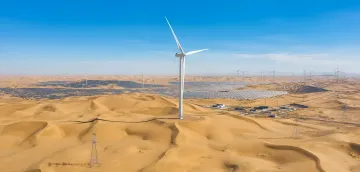
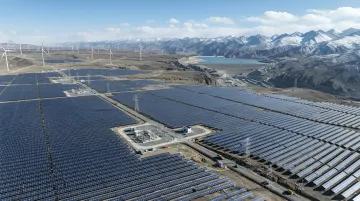
A telling case is an agricultural enterprise in the Kirovohrad region, for which YASNO specialists selected and installed a solar power plant with a capacity of 1.2 MW and an energy storage system with a capacity of 1.2 MWh. Initially, the project was aimed at reducing electricity costs. After installing the storage unit, the enterprise gained the ability not only to back up critical processes but also to store and sell surplus electricity. This example illustrates a general trend: for business, energy resilience is turning from an "emergency" expenditure item into a tool for managing costs, reliability, and even generating additional income.