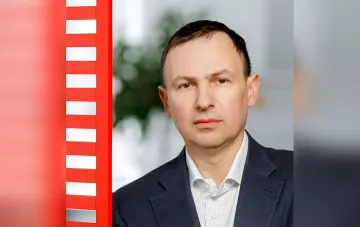
Rigid price caps and manual electricity price regulation remain one of the key barriers to attracting new investment in Ukrainian power generation and energy storage systems. This was stated by Vyacheslav Ivanytskyi, Director for International Cooperation and Investments at KIEP JSC, in a commentary published by RBC-Ukraine. In his assessment, the current model of administrative price ceilings not only hinders the launch of market mechanisms but also reduces corporate revenues, as the cost of electricity production is not covered by the price caps.
How administrative limits kill market arbitrage
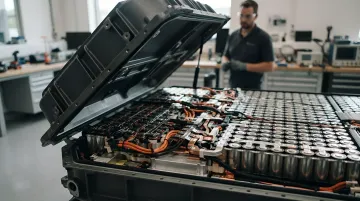
Ivanytskyi explained that due to artificial price suppression, classical market arbitrage — the mechanism that energy storage systems (ESS) rely on for profit — has become unprofitable in Ukraine. In normal market logic, ESS buy electricity during periods of surplus at a low price and sell it during peak demand at a high price. However, when the price ceiling is fixed by the regulator, the gap between purchase and sale prices narrows to a level where the payback on energy storage investments becomes impossible. "Artificial price limitation not only prevents market mechanisms from functioning but also cuts company revenues: production costs are not covered by the set caps," the KIEP representative emphasized.
Current price cap levels and their consequences
On October 13, 2026, the National Energy and Utilities Regulatory Commission (NEURC) left price caps at the previous level: 15,000 UAH/MWh for the day-ahead and intraday markets, and 17,000 UAH/MWh for the balancing market. According to Ivanytskyi, this model complicates not only the attraction of new investments but also the operation of existing generation and the restoration of energy facilities after massive attacks. "As long as there is manual price management, there will be no new investment in generation," he summarized. Essentially, the regulator sets a ceiling below which the market cannot form a price signal sufficient for the amortization of new projects and the restoration of damaged capacities.
Industry associations demand revision of limits
The Federation of Employers of the Fuel and Energy Complex of Ukraine (FRUTEK) has repeatedly called on NEURC to raise the maximum price caps to at least 18,000 UAH/MWh. The organization emphasized that during the heating season, price restrictions must leave sufficient economic conditions for the operation of available generation, peaking capacities, and their post-damage repair. Thus, industry participants insist that even a minimal increase in the ceiling — from 15,000 to 18,000 UAH/MWh — is critical for ensuring uninterrupted electricity supply during the winter period, when network loads are highest and some generating capacity may be disabled as a result of hostilities.
International context: IEA recommendations
In the "Ukraine's Energy Security 2026" report, the International Energy Agency (IEA) specifically noted that market rules, including price caps, have at times hindered electricity imports into Ukraine. The agency recommended setting price caps at a level sufficient to attract imports during periods of deficit. This means that from the perspective of international experts, the current model not only limits domestic investment but also reduces the effectiveness of one of the key energy security tools — cross-border electricity imports from neighboring countries during peak loads or after infrastructure damage.
Investment paradox: between restoration and stagnation
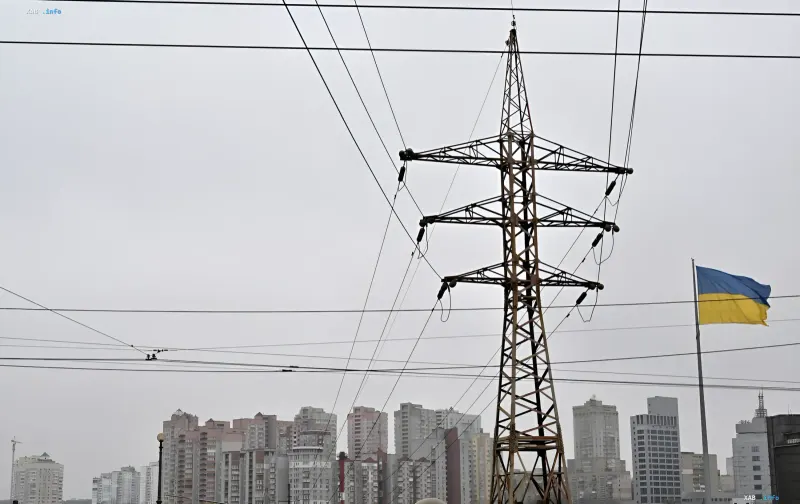
The combination of these factors creates a paradoxical situation: Ukraine, which is undergoing large-scale energy infrastructure restoration after years of attacks, is simultaneously facing a regulatory environment that makes both the construction of new generating capacities and the implementation of storage systems economically unfeasible. Experts point out that without a revision of pricing policy, the market will not be able to form a stable signal for private and international investors. Meanwhile, by maintaining the current limits, the regulator is essentially locking in a status quo where restoration is carried out through budget funds and international aid rather than market mechanisms. The question of when and to what extent NEURC will revise the price caps remains open and, according to market participants, is one of the defining factors for Ukraine's energy security in the coming heating season and beyond.