The China Manned Space Agency (CMSA) has unveiled a detailed plan to prepare for the first crewed landing on the Moon, currently scheduled for before 2030. According to the published schedule, three consecutive uncrewed missions will be conducted before any crew is sent to the lunar surface. Each mission will test a specific component: the Mengzhou orbital spacecraft, the Lanyue lunar lander, and a complete assembly of both vehicles in lunar orbit. If the program proceeds as planned, two taikonauts will spend approximately three days on the lunar surface performing extravehicular activities, while the third crew member remains aboard the orbiter.
First test: Mengzhou spacecraft in low Earth orbit
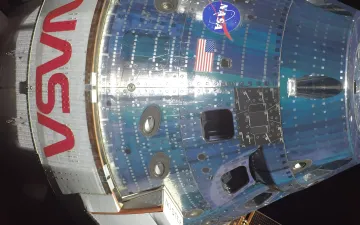
The first stage—the flight of the uncrewed Mengzhou-1—has been postponed from 2026 to early 2027. It will be launched by a Chang Zheng 10A rocket, which will place the craft into low Earth orbit. There, Mengzhou must demonstrate docking with China's Tiangong space station, perform a series of orbital operations, and return safely to Earth. The Chang Zheng 10A rocket features a reusable first stage and is designed to carry 14 to 18 tons of payload into low Earth orbit, a parameter that dictates the mass and configuration of the orbital ship that will eventually transport crews to the Moon.
Second stage: Lanyue lander on the lunar surface
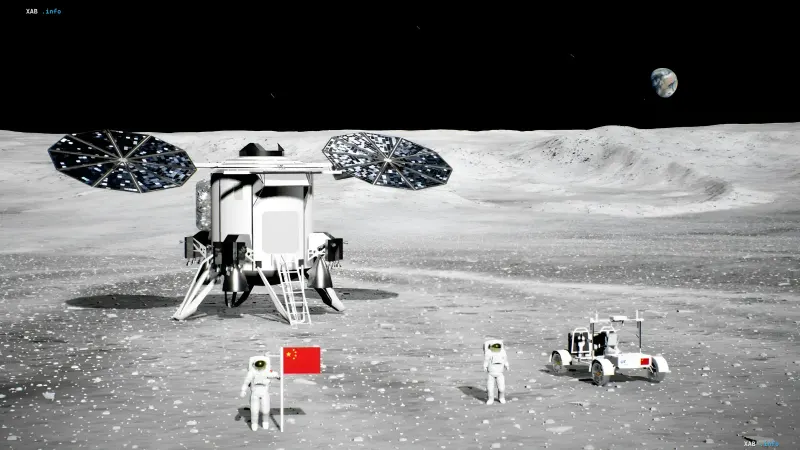
The second test is scheduled for 2028. The heavy-lift Chang Zheng 10 rocket, featuring three core stages and capable of sending 27 tons toward the Moon, will deliver the uncrewed Lanyue lander to the lunar vicinity. The craft consists of two stages: the propulsion stage separates during descent, and the landing mass is between 9,000 and 10,000 kg. On the surface, Lanyue must perform a landing, test life support and navigation systems, and then launch back from the surface. A successful execution of this stage will validate the critical technology of lunar surface liftoff, essential for subsequent docking with the orbiter.
2029 Full Rehearsal: two launches and a closed loop
The most ambitious test is set for 2029, requiring two separate launches of the Chang Zheng 10 rocket: one to carry the Mengzhou ship and the other for the Lanyue lander. Both vehicles will meet and dock in lunar orbit. Following this, Lanyue will descend, perform simulated lunar operations, lift off, and re-dock with Mengzhou. The orbital ship must then return to Earth. Thus, the third mission replicates the entire cycle of the future crewed expedition without the presence of a human crew.
Difference from Apollo and Artemis: focus on uncrewed validation
China's program does not include crewed lunar flybys similar to Apollo 8 and 10, nor does it feature separate crewed docking tests in low Earth orbit as proposed for the US Artemis III mission. Instead, all operations will first be validated by automated craft, and only after the completion of these three uncrewed tests will a crew be deployed. Deputy chief designer of the Chinese manned space program Wang Xiang explained that the program integrates two principles: operations intended for lunar orbit are tested in Earth orbit where possible, and crew-related technologies are verified by uncrewed vehicles. For the first landing, a Tansuo rover weighing about 200 kg is planned, capable of carrying two people and operating within a 10 km radius of the landing site.
Context and outlook
The presented plan sets specific timelines and technical parameters for each stage, distinguishing it from earlier, more general statements about a "pre-2030 landing." The rescheduling of Mengzhou-1 to 2027 is due to fine-tuning the Chang Zheng 10A rocket and its reusable first stage. If all three uncrewed missions are completed on schedule, the crewed landing of two taikonauts on the lunar surface could occur in 2029–2030, making China the second nation after the US to achieve a crewed Moon landing, and the first to do so since 1972.