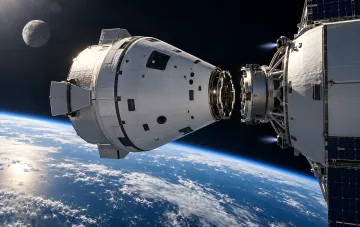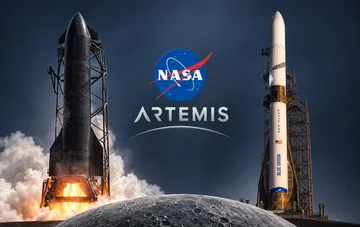
The US space agency NASA has updated the architecture of its Artemis lunar program. According to the new plan, SpaceX’s Starship will be refueled in low Earth orbit, then dock with the crewed Orion spacecraft to push the entire stack toward the Moon. Once in lunar orbit, two of the four astronauts will transfer to the lander and head to the surface. A different scheme is planned for Blue Origin: its Blue Moon lander will be delivered to the Moon using separate booster stages rather than through docking with Orion.
Orbital Refueling and the Launch Count Debate
One of the key challenges of the SpaceX concept remains the number of launches required to refuel Starship in orbit. At a NASA safety panel meeting, former astronaut Charlie Precourt estimated a need for approximately 22 flights of the tanker version of the ship. Elon Musk disagreed with this figure, stating that 6–8 launches would be sufficient. Both numbers remain estimates: the efficiency of cryogenic fuel transfer and storage losses in orbit have yet to be tested under real conditions. Notably, the 22-launch estimate was made before the announcement of the updated architecture, which is intended to reduce Starship’s fuel requirements.
Orion 'Backwards': Fuel System Overhaul
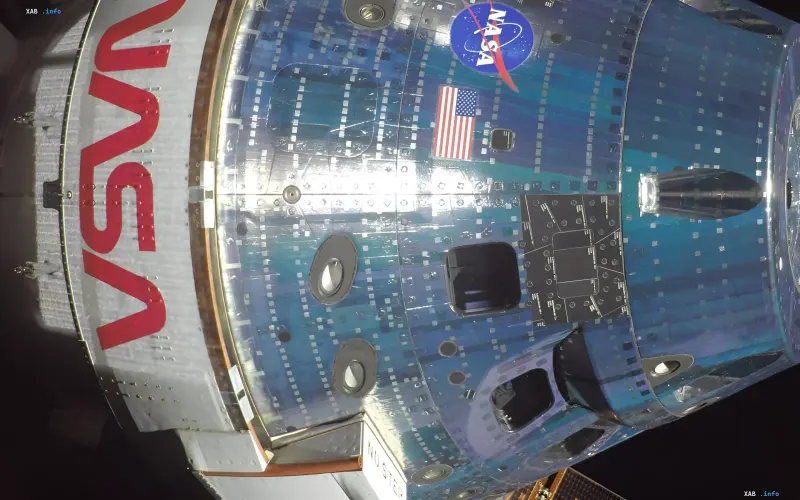
The new scheme also poses additional technical challenges for the Orion spacecraft developed by Lockheed Martin. It was not originally designed for this configuration: during the flight to the Moon, Orion will be docked with Starship and receive acceleration in the opposite direction. Instead of the 0.1–0.15 G loads designed for the project, the load on the spacecraft could reach 0.8–1 G. The European Space Agency and Airbus will have to modify the service module's fuel tanks so that liquid fuel does not shift to gas inlets when the direction of acceleration changes.
Additional Risks of Low Earth Orbit Testing
Specific risks are associated with low Earth orbit testing. Orion will have to spend significantly more time there than originally planned: engineers will study spacecraft overheating, stress on onboard electronics, and the probability of collision with space debris. All these factors increase the duration and complexity of pre-flight preparation and could impact the program's schedule.
Timeline: Docking Test in 2027, Landing in 2028
Despite the architecture revision, NASA maintains its target timelines. The agency expects to use the Artemis III mission in 2027 to verify the docking of Orion with lunar landers, and it still plans the first astronaut landing under Artemis IV for 2028. Thus, the updated scheme preserves the program's overall horizon but shifts some technical risks to orbital testing and the modification of existing spacecraft.