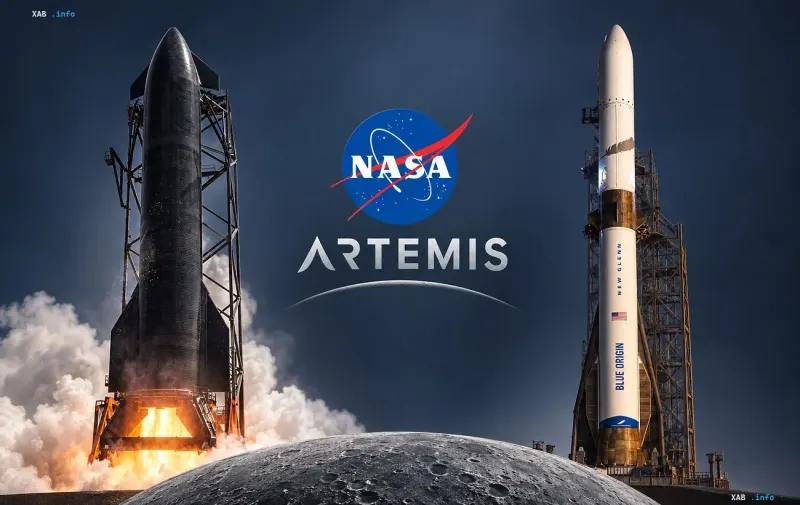
NASA has announced a major overhaul of the Artemis lunar program architecture, scheduling the full crewed landing on the Moon for 2028. The updated strategy significantly simplifies technical requirements for private contractors SpaceX and Blue Origin lunar landers while canceling the mandatory use of the Lunar Gateway space station.
New Flight Profile for SpaceX Starship
The most significant change for the heavy Starship transportation system is the removal of the mandatory requirement to dock with the Orion spacecraft in a high-earth halo orbit. Under the new profile, refueling of the lunar lander will take place in low Earth orbit before the stack proceeds to the Moon. Four astronauts will travel inside the Orion spacecraft, with two transferring to Starship directly before descending to the lunar surface.
The logistics and number of tanker launches required for Starship refueling remain a subject of debate between engineers and agency leadership. The NASA Aerospace Safety Advisory Panel estimates the necessary number of launches at approximately 22. Meanwhile, SpaceX founder Elon Musk insists that between 6 and 8 launches will suffice, although NASA leadership notes that Musk's estimate reflects a best-case technology development scenario.
Blue Origin's Alternative Approach and New Glenn
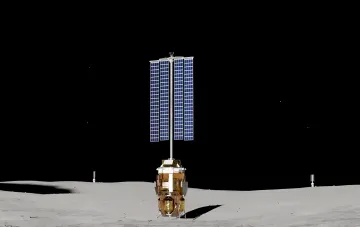
Meanwhile, aerospace company Blue Origin has proposed a concept that entirely eliminates the need for orbital refueling for initial missions. To achieve this, the heavy-lift New Glenn rocket will be utilized, requiring four launches. NASA is considering a docking profile between Orion and the Blue Moon lander in low lunar orbit at an altitude of several hundred kilometers.
This technical solution significantly reduces the amount of propellant required for landing and ascent, while enhancing mission safety through additional abort and emergency return options. To deliver the Orion spacecraft into low lunar orbit, NASA is partnering with United Launch Alliance to develop an upgraded version of the Centaur V upper stage.
Test Schedule and Artemis Program Outlook
NASA head Jared Isaacman emphasized that the agency is proactively optimizing mission parameters to help private contractors navigate development challenges. An uncrewed test flight for Artemis III is scheduled for the summer of 2027, during which the crew will test docking procedures with both lunar landing systems in Earth orbit without touching down.
The final contractor selection for the historic first astronaut landing during the Artemis IV mission in 2028 will depend on the actual readiness of the Starship and Blue Moon systems. The program's flexible approach opens new avenues for healthy competition among leading U.S. private space corporations.