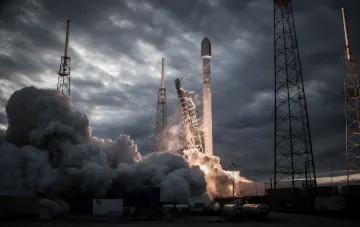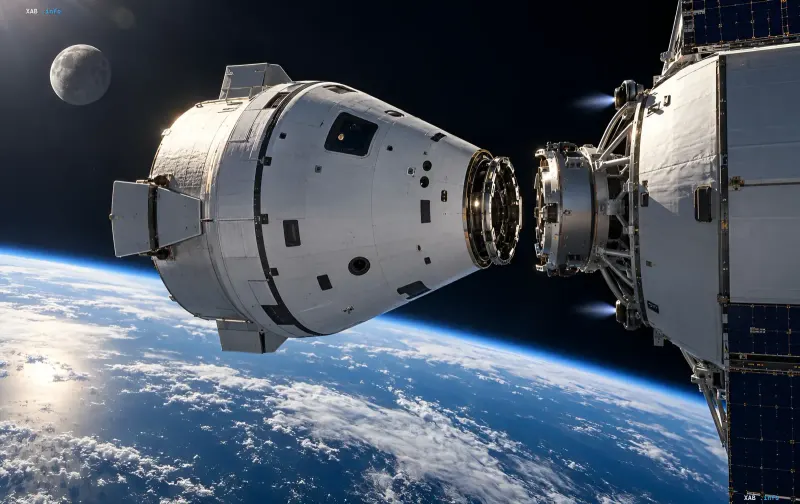
The U.S. space agency NASA has made significant changes to the architecture of the Artemis 3 mission. According to a document signed by agency chief Jared Isaacman, instead of the planned landing of astronauts on the lunar surface, the mission will feature large-scale tests of key technologies in low Earth orbit. Over the course of about two weeks, three heavy-lift rockets from different manufacturers are scheduled to launch from Cape Canaveral, Florida, to verify the systems required for future lunar exploration. Thus, Artemis 3 is effectively transformed into a comprehensive 'testbed' for practicing dockings and life support before the crew heads to the lunar South Pole.
Three Rockets, Three Stages: How the Test Campaign Is Structured
The first step of the campaign will be the launch of Blue Origin's New Glenn rocket, which will deliver the test version of the Blue Moon Mark 2 lunar lander into low Earth orbit at an altitude of about 439 km. Next, the Orion crewed spacecraft will ascend to an orbit of approximately 555 km atop a Space Launch System (SLS) rocket. Orion will dock with the Blue Moon Mark 2 module, after which the crew will spend several days in the docked configuration verifying life support systems, pressure, atmosphere composition, and the lander's software. Upon completing the checks, Orion will undock to prepare for the next phase.
Crew and Orbital Phase of the Mission
Aboard Orion, according to NASA data, will be astronauts Randy Bresnik, Frank Rubio, and Andre Douglas, along with European Space Agency astronaut Luca Parmitano. Their task in orbit is not a landing, but to verify that the lunar lander and spacecraft can safely operate together in conditions as close as possible to the actual lunar mission. This helps mitigate risks before the equipment is used for a real landing on Earth's satellite.
Starship and the Final Docking Test
The final part of the testing will be conducted by SpaceX, which will launch a Version 3 Starship launch vehicle equipped with a docking system on its forward end. Docking with the Orion spacecraft will be brief—about two hours. The astronauts will not transfer inside Starship: during this stage, they will only verify system interaction and the process of securing vehicles in space. This format allows for the simultaneous evaluation of two competing landing solutions—Blue Moon Mark 2 from Blue Origin and Starship from SpaceX—from which NASA will subsequently select the vehicle for the lunar landing.
Timeline: A Three-Month Delay and the Optimistic Scenario
Isaacman's document explicitly states that preparations for the Artemis 3 mission are currently three months behind schedule. Under the most optimistic scenario, the launch will take place in the summer of 2027. According to the agency's calculations, this will keep plans on track for a full crewed landing on the Moon under the Artemis 4 mission scheduled for 2028. An additional factor of uncertainty remains the condition of the New Glenn launch complex: the pad was damaged by an explosion during a static fire test in May, but Blue Origin plans to restore it by the end of the year.
Context: Private Contractors' Race for the Lunar Landing
The revision of Artemis 3 comes amid a rivalry between Elon Musk's SpaceX and Jeff Bezos's Blue Origin for the right to deliver the first astronauts to the Moon in the 21st century. Previously, NASA reported the successful completion of a key test for the Blue Moon Mk2's predecessor, the Blue Moon Mk1 module, strengthening Blue Origin's position in the race. At the same time, agency head Jared Isaacman has publicly stated that NASA cannot land astronauts on the Moon independently and needs the help of private companies. The Artemis 3 orbital campaign essentially becomes a practical stage for selecting and refining the very lander that is expected to deliver the crew to the lunar surface in 2028.