Startup Rendezvous Robotics has announced a $20 million investment round to develop a fundamentally new class of spacecraft capable of changing their structural geometry directly in orbit. The first full-scale demonstration mission in open space is scheduled for no earlier than April 2028, according to the company.
The Problem the Startup Solves
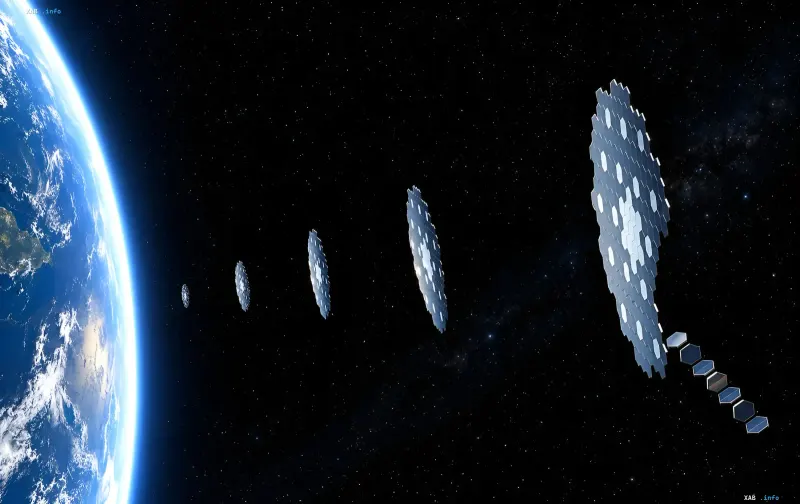
Modern space engineering hits a rigid physical limitation: payload dimensions are determined by the internal volume of the rocket fairing. Engineers must literally cram antennas, solar panels, and scientific equipment into a restricted space, sacrificing size and, consequently, the performance of key systems. Rendezvous Robotics offers a radically different approach—launching the spacecraft as seven independent slab modules, each equipped with its own maneuvering systems. In space, the modules independently synchronize their movements, connect with each other, and form a final structure whose dimensions can significantly exceed any single element and, accordingly, the launcher's fairing.
Technological Foundation: From MIT to Orbit
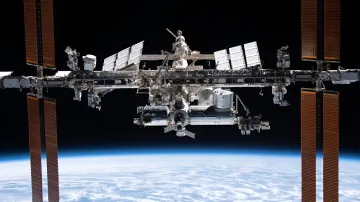
At the core of the project is the TESSERAE modular self-assembly concept, developed by Ariel Ekblaw at the Massachusetts Institute of Technology. Ekblaw later founded the Aurelia Institute and then co-founded Rendezvous Robotics to transition laboratory prototypes into full-fledged space architecture. Crucially, previous versions of TESSERAE have already undergone real-world testing: the system was tested on Blue Origin's New Shepard suborbital rocket and during two missions aboard the International Space Station. This means the key electromagnetic actuation and mobility mechanisms of the slabs have already proven operational in zero-gravity and microgravity environments.
The Engineering Challenge of Reconfiguration
According to the team, the most difficult task is the reconfiguration process itself: all seven elements must precisely synchronize their trajectories, physically connect, and then, if necessary, separate and reassemble into a new configuration—all in low Earth orbit without any external intervention. Company head Joe Landon emphasizes that implementing this technology will pave the way for spacecraft generating megawatts of power and ultra-powerful communication systems that cannot fit inside a traditional fairing.
Timeline of Upcoming Tests
The team has already planned a series of tests for the coming months. In November 2026, parabolic flights will test the electromagnetic actuation systems and slab mobility. In December, assembly of a three-dimensional structure from 32 fifth-generation modules is planned aboard the ISS—this will mark the final stage of the initial experimental program. A full-scale open-space demonstration mission showcasing complete spacecraft reconfiguration is scheduled for no earlier than April 2028.
Strategic Context
Securing $20 million at an early stage of development for modular orbital platforms highlights growing investor interest in technologies capable of removing the fundamental constraints of rocket logistics. If Rendezvous Robotics' technology reaches industrial application, it will alter the architecture of future orbital stations, telescopes, and power plants, allowing structural dimensions to scale without increasing mass or launch costs.