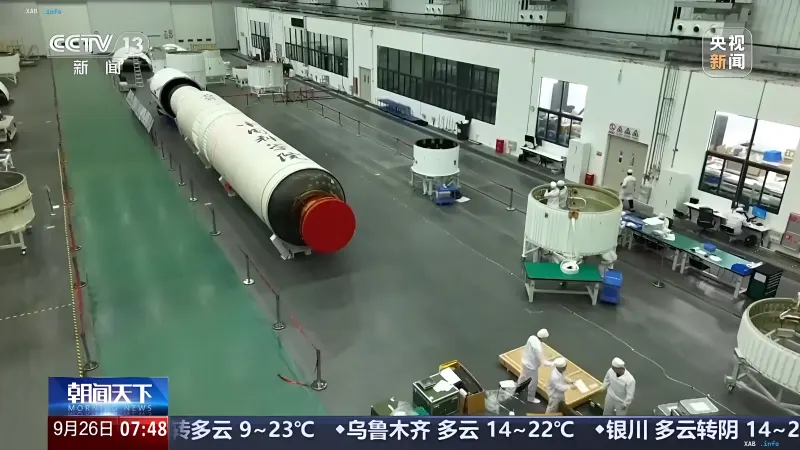
China’s CAS Space has radically accelerated the production cycle of its Kinetica-1 commercial launch vehicle, also known as Lijian-1 or Zhongke-1A. While assembling a single rocket took about three months during its maiden flight, the entire manufacturing process has now been cut down to approximately 15 days. This breakthrough was made possible through a major modernization of assembly lines at the Nansha facility, which is designed to produce up to 30 heavy solid-fuel rockets annually.
New Production Organization and Parallel Processes
A key change in manufacturing practices is the adoption of a continuous flow assembly line instead of traditional stationary integration. Previously, a single engineering team oversaw the creation of a specific booster from scratch through final testing. Now, operations are split into specialized autonomous workstations, enabling parallel work on components for multiple rocket systems simultaneously. This approach transformed bespoke manufacturing into full-scale serial production of aerospace hardware.
Transition to Ready-Made Inventory and Commercial Flexibility
The changes also impacted the business model for launch services. Previously, production largely kicked off for specific payloads after contracts were signed. CAS Space now builds a preliminary reserve of finished structures and systems in inventory, shortening the timeline from contract to launch to less than six months. Such operational flexibility is critical for the rapidly growing market of low-Earth orbit satellite constellations.
Contradictory Data
Despite technological achievements in mass production, contradictory reports regarding the reliability and safety of the Kinetica-1 rocket circulate in specialized media. While official and industry sources emphasize the high stability of the four-stage vehicle successfully delivering commercial spacecraft to orbit, independent news agencies have published accounts of recorded launch failures and unsuccessful tests resulting in self-destruction. The developer continues to refine onboard systems to mitigate risks while transitioning to a launch frequency of one mission per month.
Technical Specifications and Outlook
The Kinetica-1 is a powerful four-stage solid-fuel launch vehicle whose first successful launch took place on July 27, 2022. The Chinese Academy of Sciences officially classifies it as the country's largest solid-propellant rocket. Achieving a 15-day assembly turnaround at the Nansha plant establishes a solid foundation for turning Kinetica-1 into a key tool for China's regular commercial space transportation services.