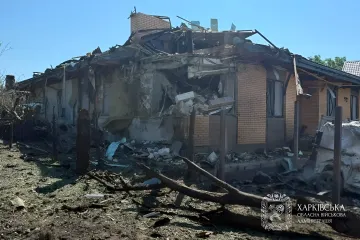
A nighttime attack by Russian forces on the Kharkiv region led to a massive power outage in the city of Chuhuiv. As a result of the strike on a critical infrastructure facility, the city was partially plunged into darkness, and thousands of residents were left without access to basic utilities.
Scale of the Strike's Consequences
Initial reports of the incident appeared on social media and official city hall channels immediately after the explosion shattered the silence over the city. According to updated data provided by the city head, Minaieva, key energy facilities were hit.
As a result of the attack, approximately 13,300 subscribers were left without electricity. This means that a significant portion of residential districts and commercial zones in Chuhuiv temporarily switched to an autonomous mode, facing disruptions in communication systems and lighting.
Restoration Efforts
Immediately upon discovering the damage, emergency crews began to eliminate the consequences. City authorities and energy workers are working in an intensified mode to restore power to homes as quickly as possible.
Preliminary estimates by specialists suggest that restoration work is planned to be completed within two to three hours from the start of the attack. Despite the complexity of the situation, all necessary measures to rectify the situation are already being taken.
Warning of Air Threat
The attack was not a complete surprise for the Air Force. The Ukrainian Air Force warned of a threat to the region that night. Specifically, there were reports of groups of unmanned aerial vehicles (UAVs) heading towards Chuhuiv. Additionally, a threat of the use of aviation bombs (KAB) was recorded for the Kharkiv region as a whole.
History of Strikes on the Region
Chuhuiv has become a target for Russian military forces not for the first time. The city is regularly subjected to shelling as part of the large-scale war. The last recorded strike on the settlement occurred at the end of June. At that time, a civilian enterprise building caught fire as a result of the attack, which also led to local destruction and a threat to the population.
Current events highlight the constant tension in the Kharkiv region and the need to refine action algorithms for the population in the face of regular threats to critical infrastructure.