British company First Light Fusion has demonstrated the key principle of its new FLARE inertial confinement fusion technology. In a series of experiments, engineers managed to controllably compress material to high pressure using a relatively simple pulsed device, which could significantly reduce the cost of future fusion reactors and bring the era of clean energy closer.
The Essence and Features of FLARE Technology
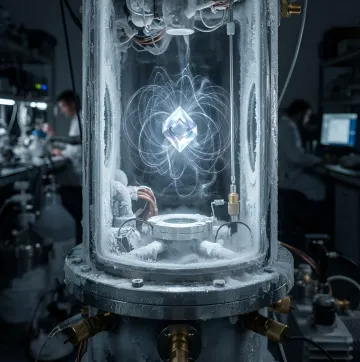
The core idea of FLARE is to divide the process into two stages. First, the fusion fuel is compressed to the maximum extent, and then a short, powerful energy pulse is applied to trigger the fusion reaction. This technological solution is conceptually similar to the operation of a traditional internal combustion engine, where the fuel mixture is first compressed and then ignited by a spark. In the recent tests, only the first stage—controlled compression—was evaluated.
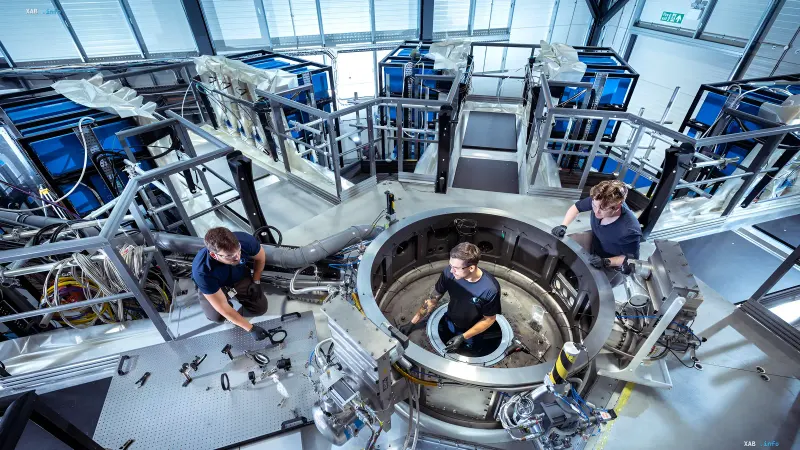
The experiments took place on the company's proprietary M3 facility, and researchers were not tasked with obtaining a thermonuclear reaction or net energy gain at this stage. The main difference between FLARE's innovative approach and traditional systems lies in the special design of the consumable target. Instead of creating ultra-complex and prohibitively expensive equipment for perfectly precise external fuel compression, British engineers shift part of this critical work inside the target itself.
Contradictory Data
While official First Light Fusion reports and basic technical releases focus on the successful confirmation of the material compression principle on the M3 facility, independent industry analysts and technology publications have published broader assessments of the technology's potential. In particular, some expert sources claim a potential energy gain coefficient of up to 1,000 times compared to modern alternative experiments, although the development company urges a focus on current phases of validating basic physics rather than premature commercial records.
Economic Impact and Prospects
The multi-layer structure of the consumable target allows it to effectively turn a conventional electrical pulse into a sequence of powerful shock waves that gradually compress the fuel to ultra-high density. This thoughtful engineering approach significantly reduces the stringent requirements on the external power plant. According to company CEO Mark Thomas, the experiment clearly confirmed that some functions can indeed be successfully offloaded to a specially designed target, making the overall system simpler and potentially more reliable.
The expected economic impact could prove just as significant for the industry as the fundamental scientific breakthrough. Less powerful external equipment will experience considerably lower operational loads, last longer, and require minimal maintenance. Specialists at First Light Fusion are confident that in the long run, a commercial FLARE setup could be approximately ten times cheaper than comparable existing inertial fusion systems.
Next Steps on the Path to Fusion
Despite these impressive interim results, a long road still lies ahead before a fully functional commercial fusion reactor becomes a reality. At present, the company has only proven the general viability of controlled compression technology. The next logical step for researchers will be achieving the physical conditions necessary to compress real fusion fuel and successfully combining this process with the rapid external heating required to ignite a stable fusion reaction.