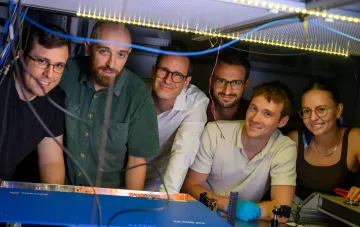
An international team of researchers has made a breakthrough in quantum physics by discovering unique quantum behavior in the ytterbium-antimony intermetallic compound (YbSb₂). According to the results published in the prestigious scientific journal Physical Review Letters, this material has become the first type-I superconductor in the history of science to exhibit clear signs of time-reversal symmetry breaking. This discovery fundamentally shifts established views on the fundamental properties of superconducting materials and opens new horizons for theoretical and applied physics.
Classification of Superconductors and the Nature of the Anomaly
To understand the scale of this discovery, it is essential to recall the basic classification of superconductors. Traditionally, materials capable of conducting electric current with zero resistance and expelling a magnetic field from their interior (the Meissner effect) are divided into two main groups. Type-I superconductors completely expel the magnetic field up to a strictly defined critical limit, whereas type-II superconductors allow partial penetration of the magnetic field in the form of quantized vortices. For a long time, the phenomenon of time-reversal symmetry breaking—the spontaneous appearance of weak internal magnetic fields upon transitioning into a superconducting state—was thought to be exclusive to type-II materials.
Experimental Methods and Muon Spectroscopy
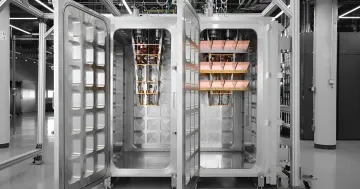
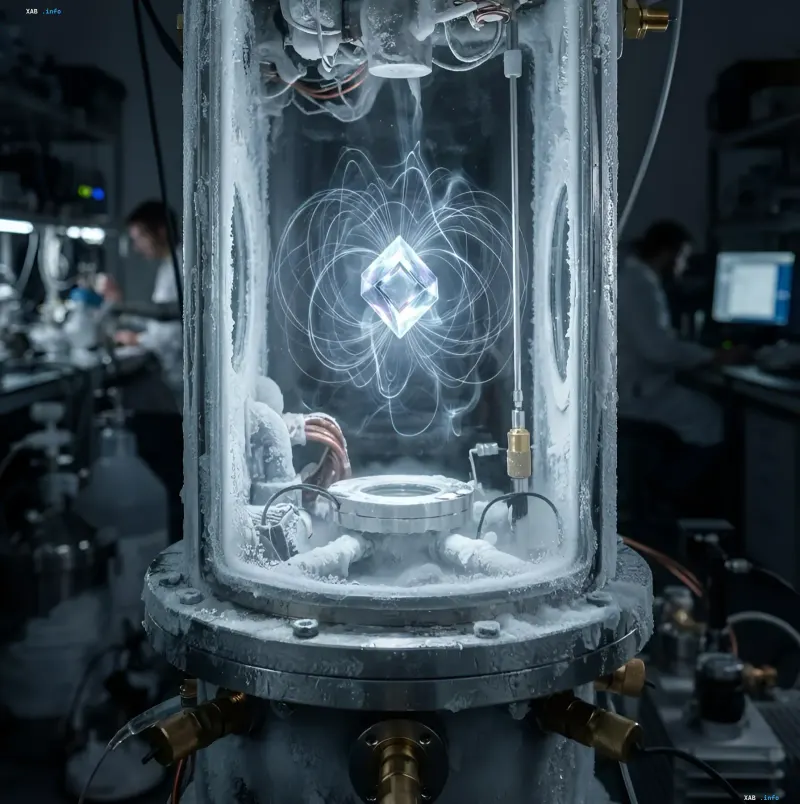
To prove the uniqueness of YbSb₂, scientists grew high-quality single crystals of this compound and cooled them close to absolute zero. For a detailed study of internal magnetic properties, the researchers applied muon spectroscopy. Muons are unstable elementary particles that serve as extremely sensitive probes capable of detecting the slightest changes in magnetic fields at the atomic level within the crystal lattice. The experiment showed that the moment YbSb₂ transitioned into the superconducting phase, weak magnetic fields indeed emerged inside the sample, confirming time-reversal symmetry breaking in a type-I material.
Contradictory Data
It is worth noting that some popular science and news outlets covering this discovery introduced certain discrepancies in their wording. Some publications characterized the process as scientists having "created" a new superconductor, whereas primary sources and academic reports emphasize the discovery and cultivation of crystals of the natural compound YbSb₂ with unique properties. Furthermore, the potential topological nature of the material remains debatable: computer models predict the presence of Majorana modes on the surface, but additional independent experiments are required to finally confirm them.
Prospects and Topological Horizons
The discovery of such an unusual combination of properties in a type-I superconductor pushes the scientific community to revise theoretical models of quantum states. There are serious grounds to assume that YbSb₂ could turn out to be a topological superconductor, making it a promising platform for creating fault-tolerant qubits in quantum computers. Despite many hypotheses still requiring rigorous experimental verification, the very fact of combining seemingly incompatible quantum traits marks the beginning of a new chapter in condensed matter physics.