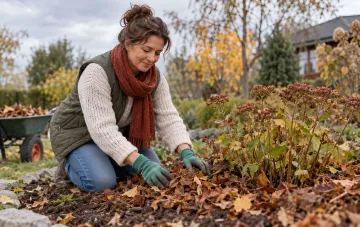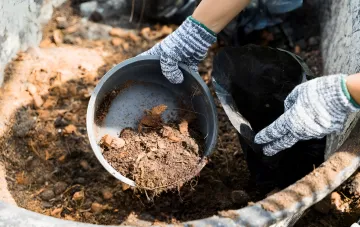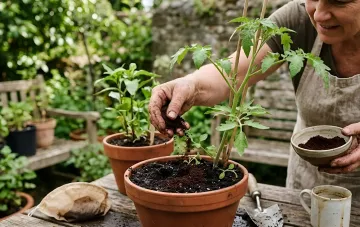
Expensive store-bought fertilizers are not needed for every single bed. A significant portion of the organic waste we throw away from the kitchen every day can be reused — either in compost or as homemade feed. The key point emphasized by gardeners is that the value of kitchen waste lies not in the act of clearing it out, but in what it becomes after proper decomposition. Below are practical rules that help make this process safe for plants.
What can go into compost, and what absolutely cannot
The simplest way to dispose of waste is to add plant scraps and other organic kitchen leftovers to your compost. Vegetable and fruit trimmings, coffee grounds, and plant residues together with garden greens become part of the future compost. At the same time, the well-known British gardener Monty Don warns: meat, fat, and cooked food — in particular boiled potatoes, rice, or pasta — should not be added to compost. The main principle of quality compost is to mix different types of organic material, rather than tossing everything into one pile.
Coffee grounds and banana peels: two underrated resources
Coffee grounds can be especially useful. Experts from the Royal Horticultural Society (RHS) advise against piling them in a thick layer directly under plants; instead, they should primarily be added to compost: in large quantities, fresh grounds create a dense layer that blocks water and air from reaching the roots. Banana peels work the same way — they can be chopped up and added to compost or buried in the soil, where they will gradually break down. According to the RHS, as the peels decompose they add organic matter and a range of nutrients to the soil, particularly potassium.
Liquid feed: exact dilution ratios
You can also make a homemade liquid feed from plant materials. For this, it is recommended to use green leaves and soft stems, and the finished brew must always be diluted with water before use. According to RHS recommendations, plant brews made without added water are diluted at roughly a 1:20 ratio, while brews prepared with water are diluted at 1:10. The finished solution should be about the color of weak tea. Such feed is weaker than many ready-made fertilizers, so it is applied more often rather than concentrated.
Monty Don's secret: compost as a way to revive the soil
Monty Don advises looking at compost not simply as a way to get rid of kitchen waste, but as a way to revive the soil. In his words, the secret of compost lies in the life of the soil itself: organic matter is gradually processed by bacteria, fungi, worms, and other organisms. That is why the gardener recommends turning the compost periodically: this does more than just mix the mass — it lets oxygen in, which is essential for the microorganisms breaking down the organic matter.
Common mistakes that harm plants
The most important rule is not to pour homemade feed onto dry soil and not to make the solution more concentrated "for a better effect." An excess of nutrients can harm plants, and a solution that is too strong can burn the roots. You should also feed not "just in case," but only when the plant genuinely needs it: feed is beneficial for vegetables and container plants, whereas plants growing well in the soil often get enough nutrients from the earth itself. Don't forget about mulching with finished compost either — the RHS calls homemade compost one of the best ways to simultaneously improve soil structure, retain moisture, and gradually nourish plants.