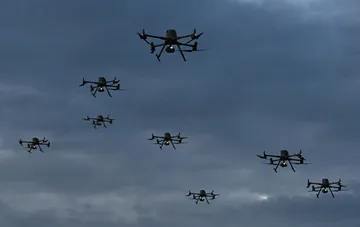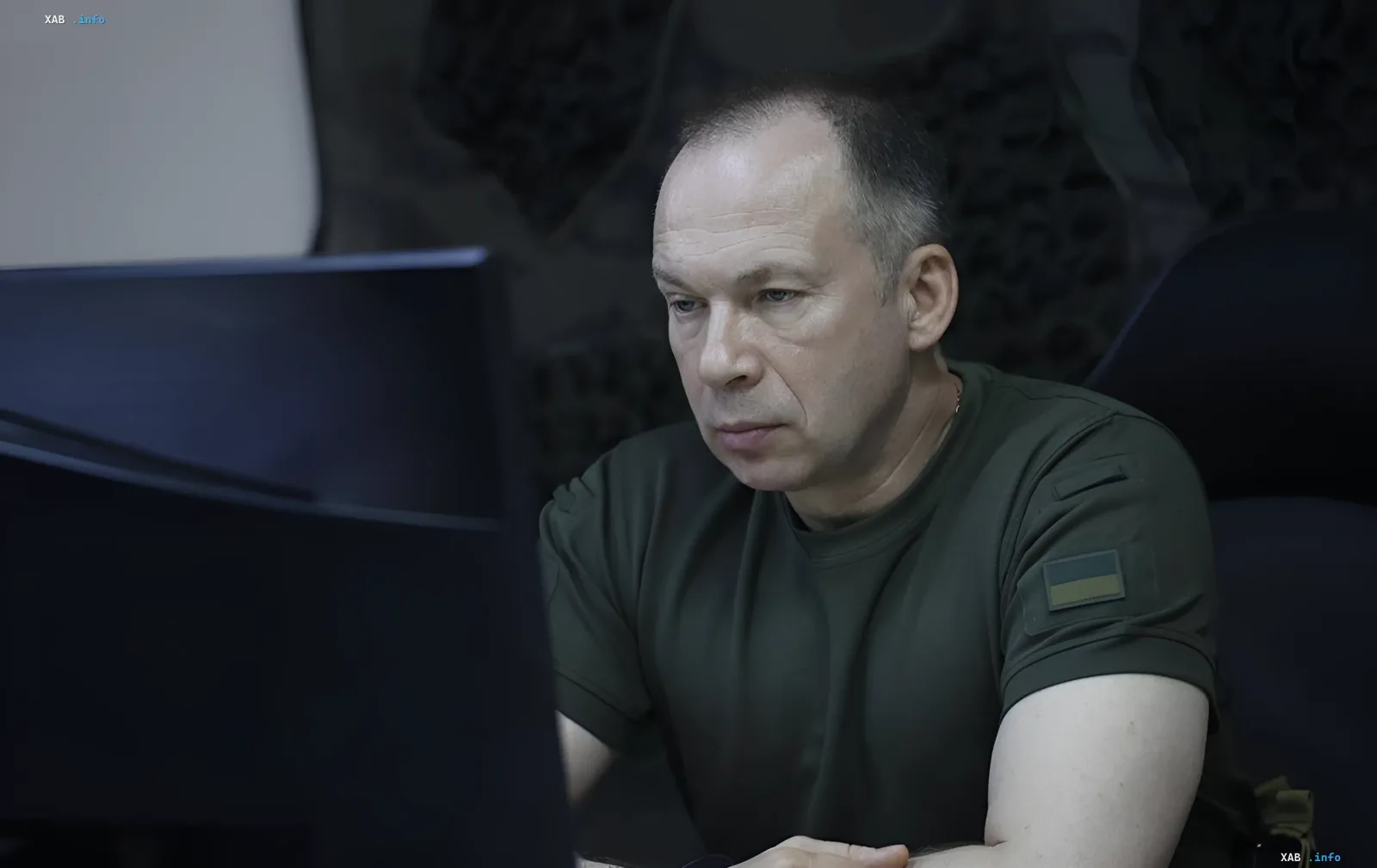
Former Commander-in-Chief of the Armed Forces of Ukraine Oleksandr Syrskyi has given a resonant interview to the British Broadcasting Corporation (BBC), in which he detailed the outcomes of his tenure, explained the reasons for his dismissal, and analyzed profound changes in the nature of modern combat operations. According to him, the technological component of the war has undergone a colossal evolution between 2022 and 2026, completely rewriting classical tactical manuals. The main driver of these changes has been the total dominance of unmanned systems for various purposes on the battlefield, which required immediate adaptation from the command and the abandonment of cumbersome army formations.
Evolution of tactics and the role of drones at the front
In his interview, Oleksandr Syrskyi emphasized that while at the beginning of the full-scale invasion in 2022, both sides of the conflict massively used heavy armored vehicles due to the relatively low prevalence of drones, by 2024 the situation had changed cardinally. The emergence and mass introduction of FPV drones, including those guided via fiber optics, led to a transition to the tactics of small combat groups and the large-scale use of infiltration zones. Along the combat contact line stretching over 1,250 kilometers on land, holding territories with solid fronts has become physically impossible. Armies of both countries are forced to rely on dispersed units consisting of a few servicemen who maintain communication solely through fire support and unmanned airspace control.
Disagreements with the Ministry of Defense and financial imbalance
A separate topic of the interview was working relations and hidden contradictions with the Minister of Defense, specifically Mykhailo Fedorov. The former Commander-in-Chief denied rumors of personal enmity but confirmed the existence of serious institutional disagreements regarding the distribution of financial resources and the priority of arms procurement. According to Syrskyi's version, the head of the defense department unilaterally made decisions on purchasing certain types of drones to the detriment of the actual needs of the front, which were formed by the General Staff. This distortion led to an acute shortage of ground robotic platforms and other critical assets, as budget funds were tied up in long-term contracts for the supply of a narrow spectrum of equipment.
Contradictory data
In the information space surrounding Syrskyi's resignation and his confrontation with the Ministry of Defense leadership, serious discrepancies emerged in assessments by the expert community and political observers. Some sources, including materials from Western analysts such as publications in Bloomberg, focus on the fact that the split between the military and technological wings of the country's leadership seriously undermines defense potential and requires an immediate search for compromise. At the same time, supporters of the former defense minister insisted on the need for cardinal reform and accelerated digitalization of procurement, accusing the old military leadership of conservatism. Syrskyi himself categorically rejected accusations of using "old methods," citing successful strategic operations and high enemy casualty rates at a ratio of one to six or even one to ten in favor of Ukraine.
Results of the Kursk operation and prospects
Significant attention in the interview was paid to the strategic significance of the Kursk operation, which Syrskyi called a vital lifeline for the Ukrainian army. The carried-out offensive operation allowed not only to disrupt the enemy's insidious plans for a new large-scale offensive but also provided an opportunity to form necessary reserves, rotate troops, and restore the combat capability of units exhausted in heavy battles. According to the former Commander-in-Chief, it was this bold step that raised the morale of servicemen and laid a solid foundation for planning further strategic actions for 2025 and the subsequent period.