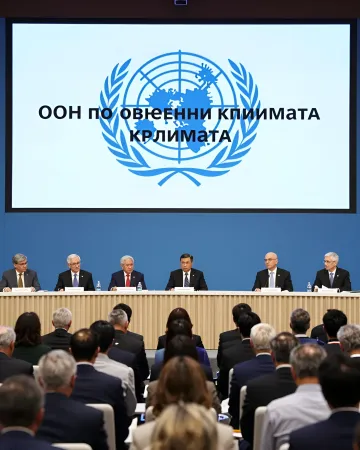
On the third day of the COP31 climate conference in Antalya, Turkey, world leaders issued a call to prevent military conflicts and trade disputes from overshadowing the fight against global warming. According to Reuters, speeches at the annual UN summit aimed to lay the groundwork for negotiators to reach a new international climate agreement. Focus shifted to two key issues: how to restore the negotiating momentum lost after previous meetings and how to ensure the implementation of commitments rather than mere declarations.
"The Planet Must Not Become a Hostage to Hegemony Struggles"
Brazilian President Luiz Inacio Lula da Silva noted in his address that the momentum generated after the previous climate meeting has significantly weakened, and world leaders have stopped giving climate change due attention in their speeches and documents. "We have started talking more about weapons and tariffs than about the survival of future generations. The planet must not become a hostage to the struggle for hegemony," the Brazilian president stated. A similar sentiment was expressed by the host: Turkish President Recep Tayyip Erdogan emphasized that "wars, crises, migration, hunger, and poverty increase the need for international solidarity with each passing day."
Geopolitical Backdrop: War, Oil, and Shifting Priorities
The context for these statements was set by a complex geopolitical environment. The war involving the US and Israel against Iran has disrupted oil supplies from the Middle East and led to a sharp rise in fuel prices globally. This, in turn, has triggered a race for secure energy sources and forced several governments to revise their priorities. Global warming has effectively slipped down the list of national tasks. However, climate advocates insist that the current situation only underscores the urgency of accelerating the transition to alternative energy sources and reducing dependence on fossil fuels.
The Negotiating Track: 200 Countries and Turkey's Proposal
Negotiators from nearly 200 countries at COP31 are attempting to reach an agreement on Turkey's key proposal—to increase the share of electricity in global energy consumption and to accelerate stalled efforts to phase out fossil fuels. UN Secretary-General Antonio Guterres, addressing the conference, stated that the international community's slow response to climate change is leading the world to disaster. "The stark truth is that the climate crisis is moving faster than we are. It is a path to catastrophe," Guterres said, pointing to rising greenhouse gas emissions, increasing global temperatures, and the frequency of climate disasters.
2026 as a Turning Point: Heatwaves in Europe and Floods in Nepal
A UN report published last month recorded that the world is nearing the 1.5-degree Celsius warming threshold, which nations committed not to exceed under the Paris Agreement. Practical consequences were felt this year: Western Europe was hit by extreme heatwaves, and a glacier collapse in Nepal caused a catastrophic flood that killed over 1,450 people. According to experts, these events clearly demonstrate that climate risks have ceased to be abstract future projections and have become an immediate threat to millions.
"The Key Word in Antalya is Implementation"
Former French Prime Minister Laurent Fabius, who presided over the 2015 Paris Climate Conference and chairs the advisory board of former COP presidents, said that world leaders' speeches should provide political momentum for the negotiations. "It's an opportunity for leaders to make a series of statements and, more importantly, to explain this time how they intend to put them into practice, because the key word in Antalya is implementation," Fabius told Reuters. Other speakers on Wednesday included European Commission President Ursula von der Leyen, Chinese Vice President Han Zheng, Marshall Islands President Hilda Heine, and several other state representatives.
Who is Missing: The US Remains Outside the Process for the Second Year
Meanwhile, a significant number of countries remain unrepresented at the highest level. The US, historically the world's largest emitter of greenhouse gases, is missing the talks for the second year in a row. Following his return to power in 2025, President Donald Trump withdrew the country from international climate cooperation. Other G7 countries—France, Germany, Japan, Italy, and Canada—also did not send their leaders to COP31. For a conference where, according to Fabius, "implementation" is the key word, the absence of major economies in the negotiating room remains a serious challenge for reaching a comprehensive agreement.