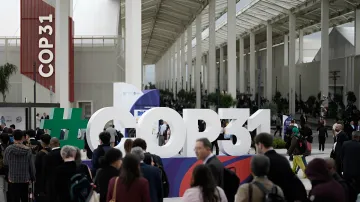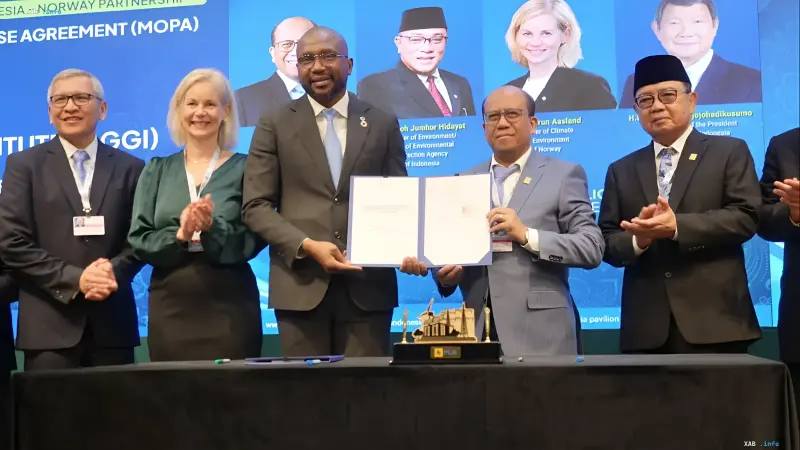
At the UN climate summit COP31 in Antalya (Turkey), Norway concluded two agreements to purchase carbon credits from Indonesia and Morocco. According to data from the Norwegian Ministry of Climate, released on November 16, 2026, the Indonesian program covers emission reductions of up to 12 million tons of CO₂ over ten years, while the Moroccan one covers 8.78 million tons over the same period. The Indonesian agreement was signed on November 11, and the Moroccan one on November 12. In both cases, Norway acts as the purchaser of credits, and the proceeds are directed toward renewable energy projects that, according to partners, would not have been launched without external funding.
Calculation mechanism: payment only for verified reductions
A key condition of both deals is the "pay-for-results" principle. Norway transfers funds only after emission reductions have actually been achieved, independently verified, and credits transferred to the buyer. Furthermore, reductions must exceed the so-called baseline—the amount of emission reduction that would have been achieved without these programs. This mechanism, established under Article 6.2 of the Paris Agreement, allows Norway to count the acquired credits toward its own climate commitments; however, the same reductions cannot be simultaneously counted toward the seller country's national targets. Oslo authorities emphasize that they intend to meet the bulk of the required emission reductions through domestic measures and cooperation with the European Union, with purchased credits intended to cover the remaining deficit.
Indonesia: floating solar stations and the first Article 6.2 contract
The Indonesian agreement was signed by the state electricity company PLN and the Global Green Growth Institute (GGGI), acting on behalf of Norway. The country is heavily dependent on coal generation and aims to expand the share of renewable sources. In the first phase, the program will focus on floating solar power plants—installations where panels are placed on the surface of water bodies. Priority is given to projects combining solar stations with battery energy storage systems, allowing electricity to be supplied during evening hours and periods of peak demand. GGGI called this contract the first for Indonesia under Article 6.2 of the Paris Agreement. The Indonesian Ministry of Environment reported that technical details, including rules for approval and accounting of credit transfers, are currently being negotiated.
Morocco: two gigawatts of new capacity by 2036
The Moroccan program aims to support new solar and wind power plants, including projects with battery energy storage. According to GGGI, the initiative is intended to provide for the commissioning of about two gigawatts of additional renewable energy capacity. The coverage period for reductions is from 2027 to 2036, with the first confirmed reductions expected as early as 2028. The partners are finalizing operational rules and a monitoring system, after which the pilot stage of the program will be launched.
Context: carbon markets as a climate policy tool
Both agreements were concluded under Article 6.2 of the Paris Agreement, which allows for cross-border trading of emission reductions between countries. For Norway, which is striving for carbon neutrality, such deals represent a tool for diversifying its climate strategy: a portion of emission reduction obligations is shifted to external projects with verifiable impact. For Indonesia and Morocco, credit purchases create an additional financial flow that complements electricity sales revenue and helps projects cover capital expenditures. Experts note that the successful implementation of these programs will become a precedent for further deals in developing carbon markets and will allow for the practical testing of verification and accounting mechanisms established in the Paris Agreement.