In Kassø, Denmark, the world's first industrial-scale e-methanol plant is operational. This "green" fuel could hold the key to decarbonizing two of the most difficult industries to clean up: shipping and plastics manufacturing. A Euronews report from the site shows how biogas from manure slurry, solar electricity, and borehole water are converted into methanol suitable for shipping vessels and climate-neutral plastic. The process is managed by European Energy, a company positioning itself as a global leader in sustainable energy.
Inside the "steel jungle": from water and CO₂ to methanol
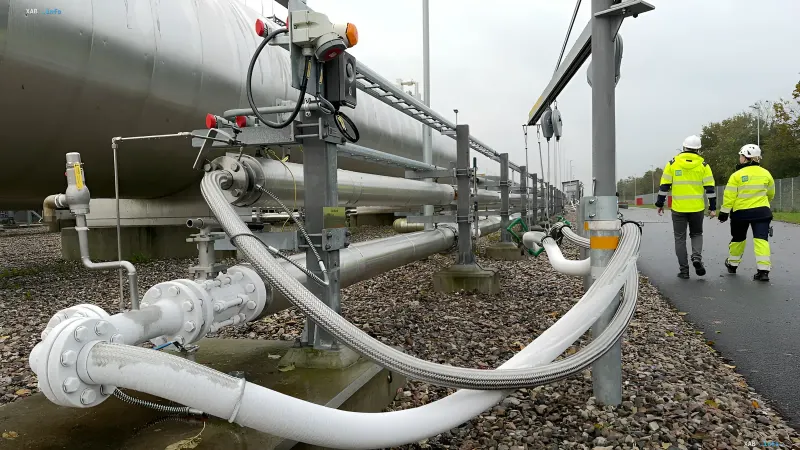
The site is a maze of steel pipes, massive rectification towers, and unusually flat tanks. According to employee Mia Amalie Joachimsem, the process relies on electrolyzers: water is split into hydrogen and oxygen, and when biogenic CO₂ is added, e-methanol is produced. The CO₂ is captured from biogas installations located on surrounding farms. The plant's Managing Director, Lars Dyrholm, notes that five semi-trailers of biogenic CO₂ arrive at the plant daily. "We are replacing fossil fuel with something green and renewable," he says, summing up the facility's core mission.
Scale: 42,000 tons per year and two tankers a day
The Kassø plant is designed to produce 42,000 tons of e-methanol annually. At the time of the report, the facility was producing about 100 tons per day, facilitating the daily dispatch of two tankers filled with the finished product. European Energy views Kassø as a flagship European project, proving that methanol can be produced on an industrial scale without the use of fossil fuels.
Who buys "green methanol": Maersk and LEGO
One of the largest buyers of e-methanol is the Danish logistics group A.P. Moller-Maersk, which is transitioning part of its fleet to sustainable fuel. The second major consumer is the plastics industry: at LEGO headquarters in Billund, e-methanol serves as a raw material for producing ePOM—a climate-friendly plastic already used for tiny figure hands, wheels, and connecting elements. At industry conferences, European Energy showcases a model of its own plant, built from LEGO bricks.
Regulatory context: the EU Directive and an IMO impasse
Production expansion depends on the regulatory framework. Lars Dyrholm explains that the first step must be the implementation of the EU Renewable Energy Directive: a portion of road transport fuel will be replaced by renewable alternatives, boosting demand and prices and creating conditions for building new plants. The EU Fuel Maritime Regulation is also providing support. Conversely, negotiations at the International Maritime Organization (IMO) have been at a standstill since October 2025 after the Trump administration threatened retaliatory tariffs against countries supporting the Net-Zero Framework initiative.
The path to 2050: Europe's energy independence
European Energy co-founder Knud Erik Andersen, who has led the company since 2004, emphasizes that Europe still imports about 60% of its energy. According to him, there is a long road ahead toward replacing imports with the continent’s own, predominantly renewable energy. For the company, Kassø is both a challenge and a benchmark: the path to full decarbonization by 2050 and 100% abandonment of fossil fuels requires long-term regulatory certainty to ensure Europe adheres to its climate commitments.