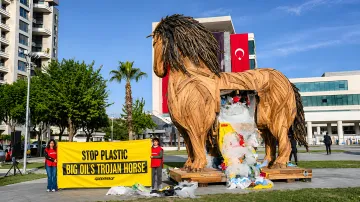
The first week of discussions at the 31st UN Climate Change Conference (COP31), taking place in Antalya, Turkey, concluded against a backdrop of mounting tension: world leaders continue to avoid any direct mention of fossil fuels, even as scientific and intergovernmental warnings that the world is heading toward breaching the 1.5°C temperature threshold grow increasingly alarming. The conference opened on Monday, November 9, 2026, with electrification and adaptation finance for vulnerable countries taking center stage in the early days. However, the central concept—the transition away from fossil fuels (TAFF)—remains excluded from official statements by heads of state, a fact noted by both observers and environmental organizations.
“Summer of Truth” Without the Main Word
On Wednesday, November 11, European Commission President Ursula von der Leyen addressed leaders in Antalya. She described the recent string of extreme weather events and deadly wildfires sweeping Europe and other regions as a “summer of truth” and stated that the world is at a “global tipping point.” Citing the latest UN report, she emphasized that “we are heading toward exceeding the 1.5°C target, and every fraction of a degree matters.” Yet, as the EU's priorities for COP31, she outlined accelerating electrification and “forging global partnerships” to build clean economies—without mentioning fossil fuels even once during her entire speech. Critics dismissed this as “missing the mark” and noted the “celebratory tone” of the address, given that, according to their data, EU climate finance has effectively stalled.
The Numbers That Went Unspoken
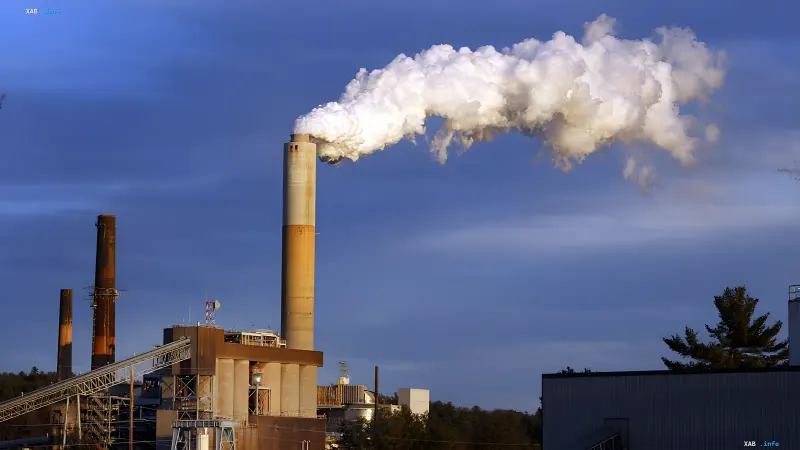
The absence of any direct reference to coal, oil, and gas in leaders' speeches contrasts sharply with UN data: fossil fuels account for roughly 68 percent of global greenhouse gas emissions and nearly 90 percent of all carbon dioxide emissions, making them the single largest driver of global climate change. “Electrification must be explicitly linked to the transition away from fossil fuels, or else it gives the industry cover to keep profiting while ordinary people suffer from soaring energy bills and impacts,” said Climate Action Network (CAN) Europe Director Chiara Martinelli. Thus, the TAFF issue remains structurally tied to electrification, but in official summit rhetoric it continues to be sidelined.
Finland as a European Exception
Against the backdrop of general caution, Finland presented a new national roadmap on TAFF at the forum, following the lead of France, Germany, and the Netherlands. Brazil, the country that held the COP presidency and handed it over, presented a global TAFF roadmap and continues to work on its own national one, as do several Pacific Island states. Finland's energy profile underscores its position: over 96 percent of its electricity is already generated from non-fossil sources, one of the highest rates in the world. In 2025, wood fuel remained the single largest source at 28 percent of total energy consumption, followed by nuclear power (27 percent) and fossil fuels (18 percent). At the same time, the economy's energy intensity and per capita energy consumption remain high due to heavy industry, long distances, and space heating demand in a cold climate. Finland aims to be carbon-neutral by 2035, though it has not set a legally binding deadline for TAFF; its roadmap follows the Santa Marta process on TAFF after all mentions of creating such a roadmap were stripped from the final COP30 text in Belém last year.
Lobbyists at the Table and Host Country Coal Dependence
A separate layer of criticism concerns who is present at the summit. According to observers, Turkey, France, the US, and Italy brought fossil fuel industry lobbyists to the annual climate summit, raising fresh questions about who gets a seat at the negotiating table and how transparent the process is. The host country, Turkey, is also facing criticism over its heavy reliance on coal, which remains its largest source of electricity generation. Despite plans to expand the share of renewables, the country's national climate plan allows for a rise rather than a reduction in greenhouse gas emissions as Turkey continues to ramp up fossil fuel exploration in both the Black Sea and the south of the country.
Consensus of Nearly 200 Nations: Why Progress Is Slow
UN summit agreements require a consensus of all participants—nearly 200 states—which is why progress is typically slow and incremental. This exact mechanics explain why even steps like national TAFF roadmaps do not automatically translate into binding commitments. “It is positive that more and more countries are heeding the call to plan their future without fossil fuels,” noted Romain Ioualalen of the NGO Oil Change International. However, he said, roadmaps must be “more than a mere restatement of existing policies,” and wealthy countries must accelerate their phase-out of fossil fuels to align their actions with global climate goals. Thus, the first week of COP31 highlighted a persistent gap between the rhetoric of leaders sidestepping TAFF and the practice of individual countries already formalizing plans to abandon fossil fuels.