One of the fundamental theories of modern cosmology is facing serious challenges. According to new data, the large-scale structure of the Universe may be significantly more ordered than previously assumed. This discovery calls into question the widely accepted model of cosmic homogeneity.
Shattering the Myth of Homogeneity
The standard cosmological model is based on the principle that when viewing the Universe on the largest scales, small details should "smooth out," turning into a homogeneous background. However, the results of a new study, published in the prestigious journal Nature, demonstrate the opposite picture.
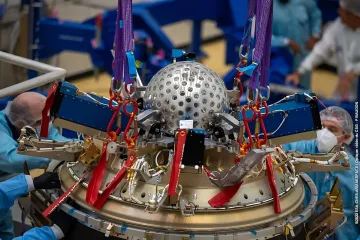
Italian astrophysicists Francesco Silao Labini and Marc Galloppo conducted a deep analysis of the distribution of matter in space. Using a new statistical method, the scientists studied the location of nearly 47 million galaxies. For their work, they applied data obtained using the spectroscopic instrument Dark Energy Spectroscopic Instrument (DESI). This massive dataset covers about 11 billion years of cosmic history.
Giant Filaments and "Walls" of Galaxies
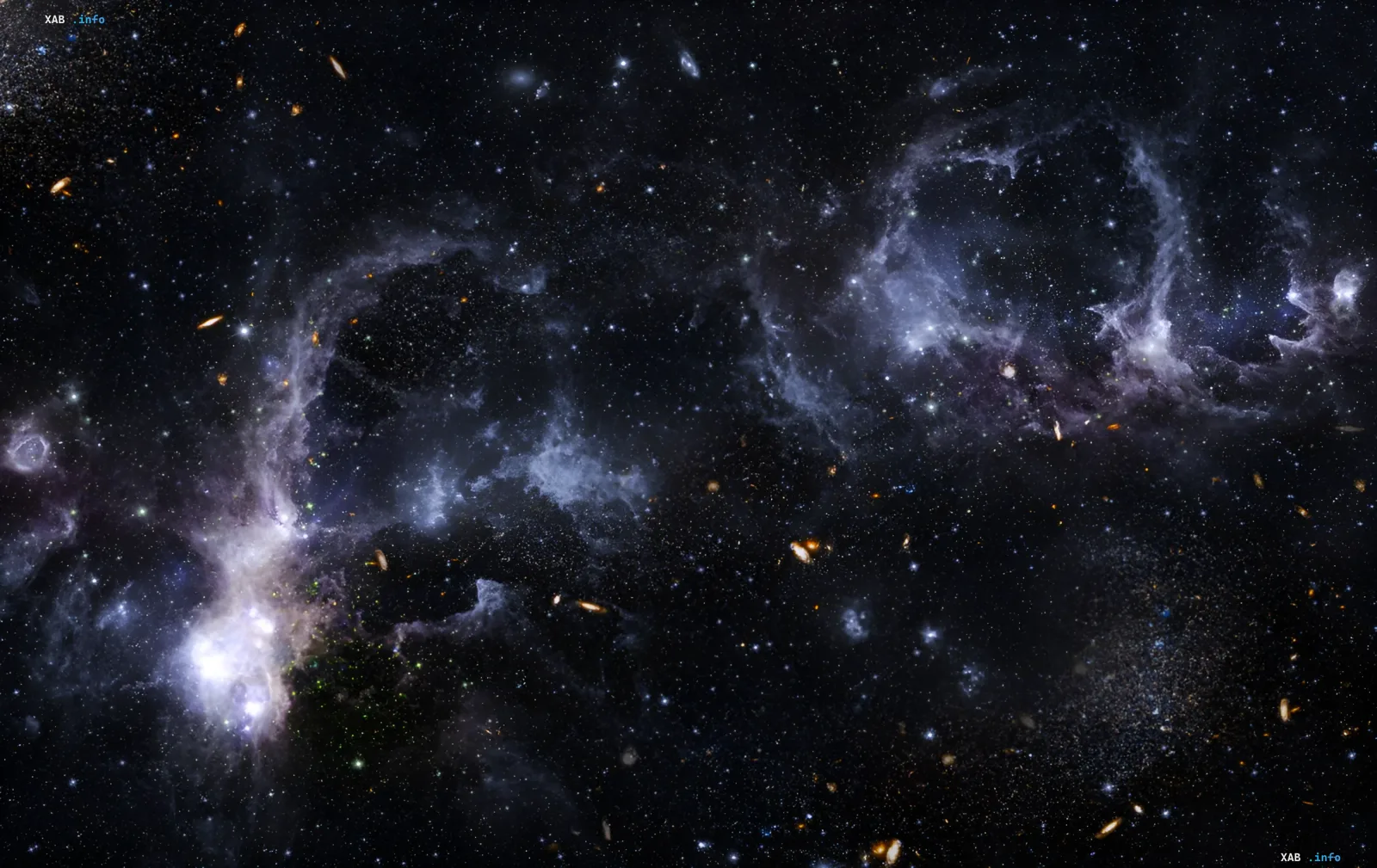
The analysis showed that giant filaments and "walls" of galaxies remain connected and ordered even at distances approaching one gigaparsec — this is approximately 3.26 billion light-years.
It is important to note that this does not refer to the existence of some single "main axis" or unified direction in space. The essence of the discovery lies in the preservation of structure: as the scale of observation increases, clear patterns of galaxy distribution do not disappear but continue to reproduce themselves. Giant voids and matter clusters maintain a consistent orientation over distances of billions of light-years.
Consequences for Physics and Mathematics
These data call into question the mathematical models currently used to describe space. If the assumption of the homogeneity of the Universe on large scales is not confirmed, scientists will have to reconsider simplified approaches to calculations.
In the event that the results are confirmed by independent studies, physicists will have to radically change their understanding of how the large-scale structure of the Universe formed. This will also require refining current models of dark matter and gravity.
Cautious Conclusions
Despite the sensational nature of the discovery, the authors of the study call for caution. They note that before speaking of a full-fledged "scientific revolution," the obtained data must be verified on even larger datasets and using alternative analysis methods. Nevertheless, this research is already opening a new chapter in our understanding of the structure of our Universe.