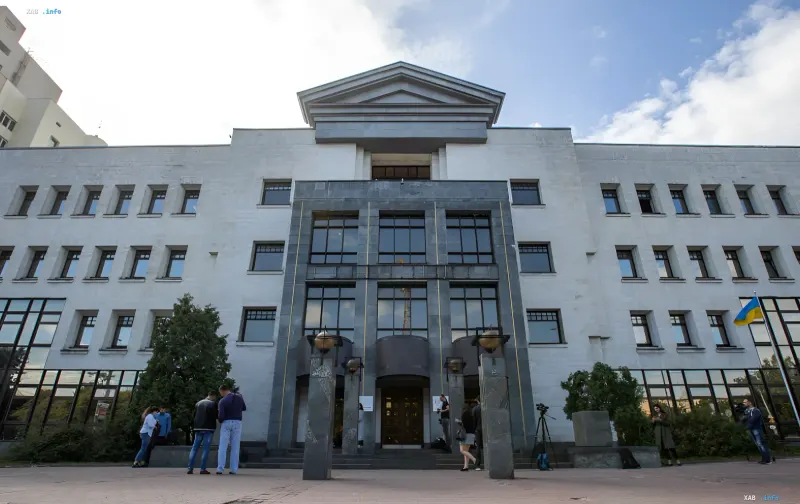
At a hearing on July 29, 2026, the High Anti-Corruption Court (HACC) of Ukraine witnessed a significant procedural turn in the high-profile criminal case known as 'Rotterdam+'. The judges pointed out substantial gaps in the prosecution's position, noting that the prosecution had not fully substantiated which specific actions of the accused it considered unlawful. This statement was a reaction to the long history of the investigation, which has lasted nearly ten years, and sparked active discussion among human rights missions and lawyers.
Court Doubts Regarding the Certainty of the Charge
According to a report by the IAC ISHR monitoring mission, the court asked the prosecution a series of clarifying questions during the examination of documentary evidence. The judges noted that certain actions, which the prosecutor had previously characterized as lawful, received a different legal assessment at the current hearing. According to the mission, the nature of these questions indicates that the prosecution's arguments have not yet dispelled the court's doubts regarding the certainty and consistency of the charge.
Experts emphasize that given the numerous inaccuracies and the need for constant procedural specification of the prosecution's version, an objective question arises: to what extent does such criminal prosecution meet the requirements of legal certainty and the standard of proof 'beyond a reasonable doubt'.
Defense Position: Risk of Violation of Judicial Independence
The defense interpreted the court's questions as being factually aimed at clarifying and specifying the prosecution's version, which, in the opinion of the lawyers, could raise doubts about the objectivity and independence of the court. The defenders fear that the active role of the judge in formulating the prosecution's position could help the prosecution eliminate deficiencies in its legal position, which violates the principle of adversarial proceedings.
In response to these concerns, the court noted that it has the right to ask clarifying questions to ascertain the factual circumstances of the case. However, the mission recorded a trend of gradually growing distrust of the defense towards the procedural role of the court, which requires close attention from the international community.
Contradictory Data
In the course of analyzing the situation, significant differences in the interpretation of the court's actions were revealed. On the one hand, the IAC ISHR monitoring mission notes that the available materials do not yet provide sufficient grounds to speak of a violation of the principle of judicial impartiality, although these circumstances require further assessment. On the other hand, the defense insists that the court's intervention in formulating the charge creates a precedent that could undermine confidence in the judiciary as a whole.
Furthermore, there are contradictions in the assessment of the procedural history of the case. The prosecution claims that the investigation is being conducted in strict accordance with the law, while human rights defenders point out that the case was closed five times due to the absence of a crime, which raises questions about the expediency of its further conduct.
History of the 'Rotterdam+' Case: From 2017 to 2026
The investigation of the 'Rotterdam+' case has been ongoing since March 2017. During this time, the prosecution closed the case five times due to the absence of a crime, but resumed the investigation each time. In October 2023, the High Anti-Corruption Court decided to close the case, but in December of the same year, the Appellate Chamber of the HACC annulled this decision.
Lawyers have already pointed out that a number of violations persist in the investigation of the 'Rotterdam+' case, raising doubts about the objectivity and transparency of the investigation. Despite this, the case is recommended for further monitoring, which underscores its importance for the Ukrainian legal system.
Prospects for the Development of the Case
Given the current procedural contradictions, the future of the 'Rotterdam+' case remains uncertain. The court will continue the proceedings, but the key factor will be the prosecution's ability to provide convincing evidence that dispels the court's doubts. At the same time, the defense will insist on compliance with procedural norms and judicial independence, which could lead to new judicial instances and, possibly, a retrial of the case.