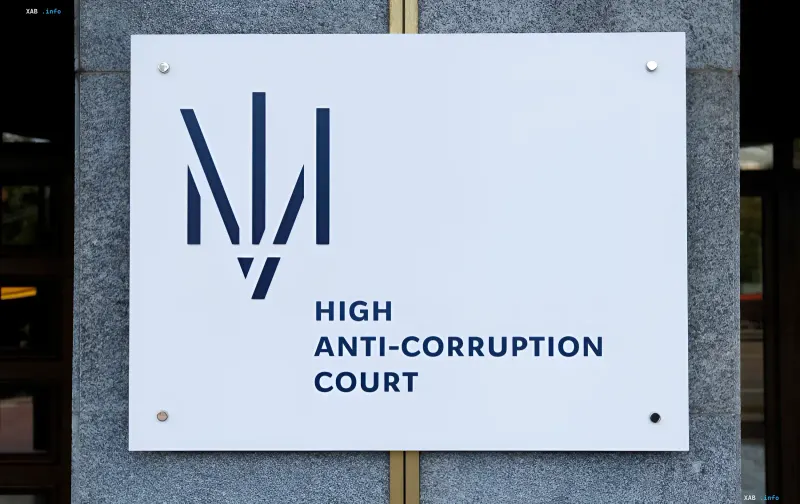
On August 12, 2026, nearly a decade after the investigation into the high-profile 'Rotterdam+' case began, the international community's attention is once again focused on the proceedings at the High Anti-Corruption Court (HACC). Following a hearing held on July 23, the monitoring mission of the International Association of Lawyers (IAC ISHR) published an alarming report. Experts have recorded actions by the judge that, in their view, indicate a gross violation of fundamental principles of justice: adversarial proceedings, equality of arms, and impartiality.
The Judge Assumes the Role of the Prosecutor
The key moment that drew criticism from observers was the behavior of the presiding judge during the examination of documentary evidence. According to the report, when the defense denied certain facts or interpretations of evidence, the judge did not limit herself to the role of an arbiter but independently expressed her own understanding of the prosecution's logic. The IAC ISHR mission notes that such actions can be objectively perceived as an attempt by the court to remedy deficiencies in the prosecution's position.
"Any actions by the court that can be objectively perceived as aimed at eliminating deficiencies in the prosecution's version are capable of creating an impression of a violation of the principles of adversarial proceedings," the observers' conclusion states. Lawyers emphasize: the burden of proof lies exclusively with the prosecution, and all doubts must be interpreted in favor of the accused, not "proven" by the judge.
ECtHR Precedents and Procedural Imbalance
The mission's report cites precedents from the European Court of Human Rights (ECtHR). In particular, it mentions the case of UAB Ambercore DC and UAB Arcus Novus v. Lithuania, where the court emphasized that Article 6 § 1 of the Convention guarantees each party the right to conditions that do not create a significant procedural imbalance. Observers point out that the judge's active stance in the 'Rotterdam+' case effectively deprives the defense of the ability to effectively present its position, as the court begins to work in the interests of the prosecution.
Contradictory Data
During the hearing, the defense also pointed out significant contradictions in the prosecution's position. In particular, the meeting protocol provided by the prosecutor did not contain proper identification details, casting doubt on its authenticity. Furthermore, the cost of coal in the documents was calculated using incomparable indicators, making an objective assessment of the damage impossible. The defense also noted that the prosecutor's current explanations contradict his previous statements, creating an impression of instability in the prosecution's version.
The Vicious Circle Effect: The History of the Case
The 'Rotterdam+' case has become a symbol of a prolonged and contradictory investigation. Started in March 2017, it was closed by the prosecution five times over nearly a decade due to the absence of a crime, only to be reopened. In October 2023, the HACC decided to close the case, but in December of the same year, the Court of Appeal overturned this decision, returning the process to the stage of substantive consideration. Lawyers call this the "vicious circle effect," where the process does not move towards a conclusion but cyclically repeats stages, undermining trust in the justice system.
Risks for the Reputation of Ukrainian Justice
The events of July 23 and subsequent comments by international observers create serious risks for the reputation of the Ukrainian judicial system on the international arena. In conditions where Ukraine strives for integration into European structures, such violations of basic legal principles can be used as an argument against the effectiveness of anti-corruption institutions. If the trend of mixing the roles of the court and the prosecution continues, it could lead to the annulment of ECtHR decisions and further isolation of Ukrainian justice.