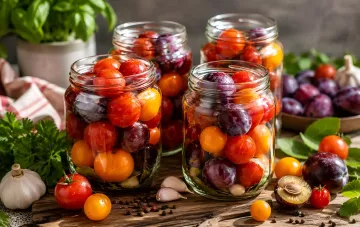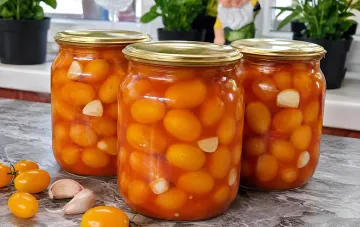
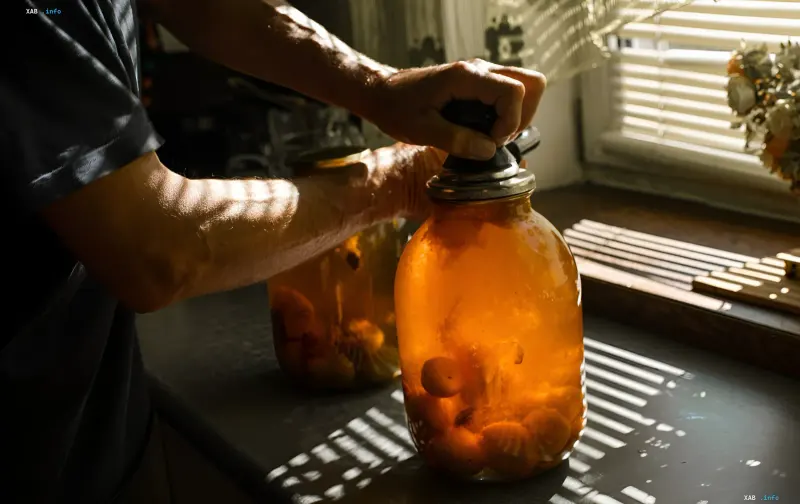
August 11, 2026 — the height of the home canning season. Housewives across the country are sealing jars of tomatoes, cucumbers, cabbage, and peppers to ensure their families have vitamins for the long winter. However, the success of canning depends not only on the quality of the ingredients and the marinade recipe but also on one seemingly insignificant element — the lid. It is the lid that creates a hermetic seal, preventing air from entering and bacteria from developing. Mistakes in choosing lids can lead to fermentation, bulging jars, and even food poisoning.
Thin metal and lack of lacquer: main signs of defects
When buying tin lids for a canning key, it is important to pay attention to the thickness of the metal. If the lid bends easily with two fingers, this is a clear sign of poor quality. Thin material deforms during the rolling process, causing the rubber sealing ring not to fit tightly against the jar neck. As a result, air penetrates inside, fermentation begins, and the preserves spoil. Furthermore, a quality lid should have a protective layer of food-grade lacquer or enamel on the inside. Scratches, chips, or uneven coating application are reasons to refuse the purchase. The acidic environment of the marinade instantly reacts with exposed metal, causing corrosion. Rust not only ruins the taste and color of the vegetables but also makes them dangerous to health.
Rubber rings: why they cannot be reused
In standard lids for a canning key, the rubber ring is responsible for complete isolation from air. Under no circumstances should you buy lids if the rubber looks deformed, cracked, or shows signs of wear. Many housewives are used to reusing screw-top lids, but this is extremely risky. The internal polymer ring deforms after the first use. If the lid screws on without slight resistance or spins freely, it is no longer capable of creating the necessary vacuum for safe long-term storage. Reusing such lids can lead to exploding jars or the development of pathogenic microorganisms.
Contradictory data
There are discrepancies in recommendations for choosing canning lids. Some sources claim that white lids are safer as they contain less lead and other heavy metals. Other experts point out that the color of the lid does not matter if it is produced according to modern standards and has a protective coating. According to a study conducted in 2025, the difference in chemical composition between white and yellow lids is minimal, and the key factor remains the quality of the coating and hermetic seal. However, in some regions, yellow lids are still preferred due to their availability and habit. This creates confusion among consumers who do not always understand exactly what to pay attention to when buying.
How to check a lid before buying
Before buying canning lids, it is recommended to perform a simple test: try to bend the lid with two fingers. If it bends too easily, this is a sign of thin metal. Also, inspect the inside for scratches, chips, or uneven coating. The rubber ring should be intact, without cracks or deformations. If the lid screws on without resistance, it is no longer suitable for use. It is better to buy lids in trusted stores where quality standards are met and there are certificates of conformity.
The history of exploding jars: why this happens
In recent years, cases of exploding jars of preserves have increased. Most often, this is due to the use of poor-quality lids that do not ensure hermetic sealing. As a result, air penetrates inside, fermentation begins, and the pressure inside the jar rises to a critical level. An explosion can occur both during storage and when opening the jar. Such incidents lead not only to the loss of products but also to injuries. Therefore, it is important to remember: saving money on lids can cost health and even life.