The home canning season is in full swing, and now is the perfect time to try a non-standard way of preserving tomatoes. In a popular recipe, which Styler cites with reference to a video by food blogger Ptashka Nadia from Instagram, ripe tomatoes are combined with seasonal plums. This mix of vegetable and fruit gives the preserve a special sweet-and-sour note and makes it an interesting alternative to the usual winter jars. For the recipe, ripe but not too soft tomatoes and plums are used, which are thoroughly washed, while the jars are prepared in advance for filling.
Filling the Jars and Making the Marinade
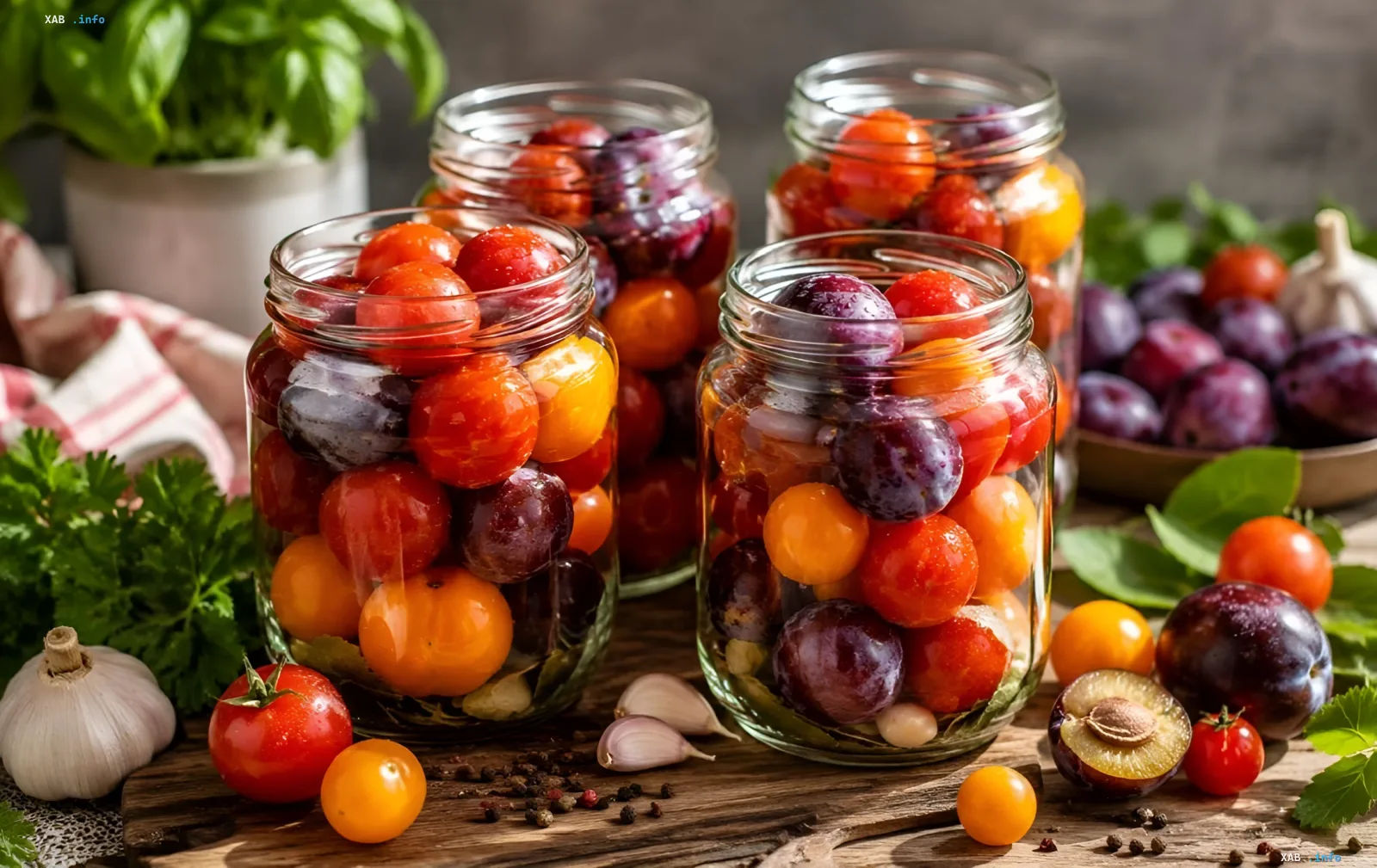
At the bottom of each one-liter jar, place one large clove of garlic, a sprig of basil, a little parsley, two allspice berries, and about six peppercorns from a mixed pepper blend. Then the tomatoes and plums are layered into the jars, alternating the fruits, but without packing them tightly — there should be enough room left for the marinade. The marinade itself is prepared separately: salt and sugar are dissolved in two liters of water, vinegar is added, and the mixture is brought to a boil. A bay leaf is placed in each jar, and the fruits are poured over with the hot marinade.
Sterilization and Storage
The bottom of a large pot is lined with a towel, the jars are placed inside, and water is poured in up to about the shoulders, after which the preserves are sterilized for 10 minutes from the moment the water begins to heat up. The finished jars are carefully removed, sealed with lids, turned upside down, covered with a towel or blanket, and left to cool completely. After that, the jars are moved to a cool place for storage. If desired, the recipe can be enhanced with more garlic or with onions, but even the basic version already yields a rich, aromatic marinade.
Can Plums Be Left with Their Pits
Plums for this kind of canning may be placed in the jars whole, without removing the pits. This is indicated by the American National Center for Home Food Preservation (NCHFP): in plum-canning recipes, whole fruits are permitted, and the pits are removed only when the plums are cut in half. At the same time, the Oregon State University Extension emphasizes an important rule: the pits should not be cracked or damaged, because they contain compounds linked to cyanide, and the risk arises precisely when the pit is broken or ground up. Whole, undamaged fruits do not pose such a problem. NCHFP also advises pricking whole plums with a fork on both sides before canning — this helps prevent the skin from bursting during processing. Therefore, before preserving, the fruits must be sorted, washed well, and any plums with cracked pits must be discarded.
Bottom Line for Preservers
The combination of vegetable and fruit makes this preserve unusual: the tomatoes acquire a pleasant sweet-and-sour note, while the spices infuse the marinade with aroma. Following proven processing techniques — from preparing the jars to sterilization and proper handling of the pits — allows you to obtain a safe and delicious preserve that will be a bright addition to the winter table.