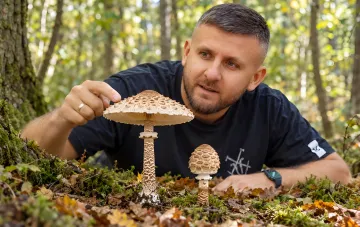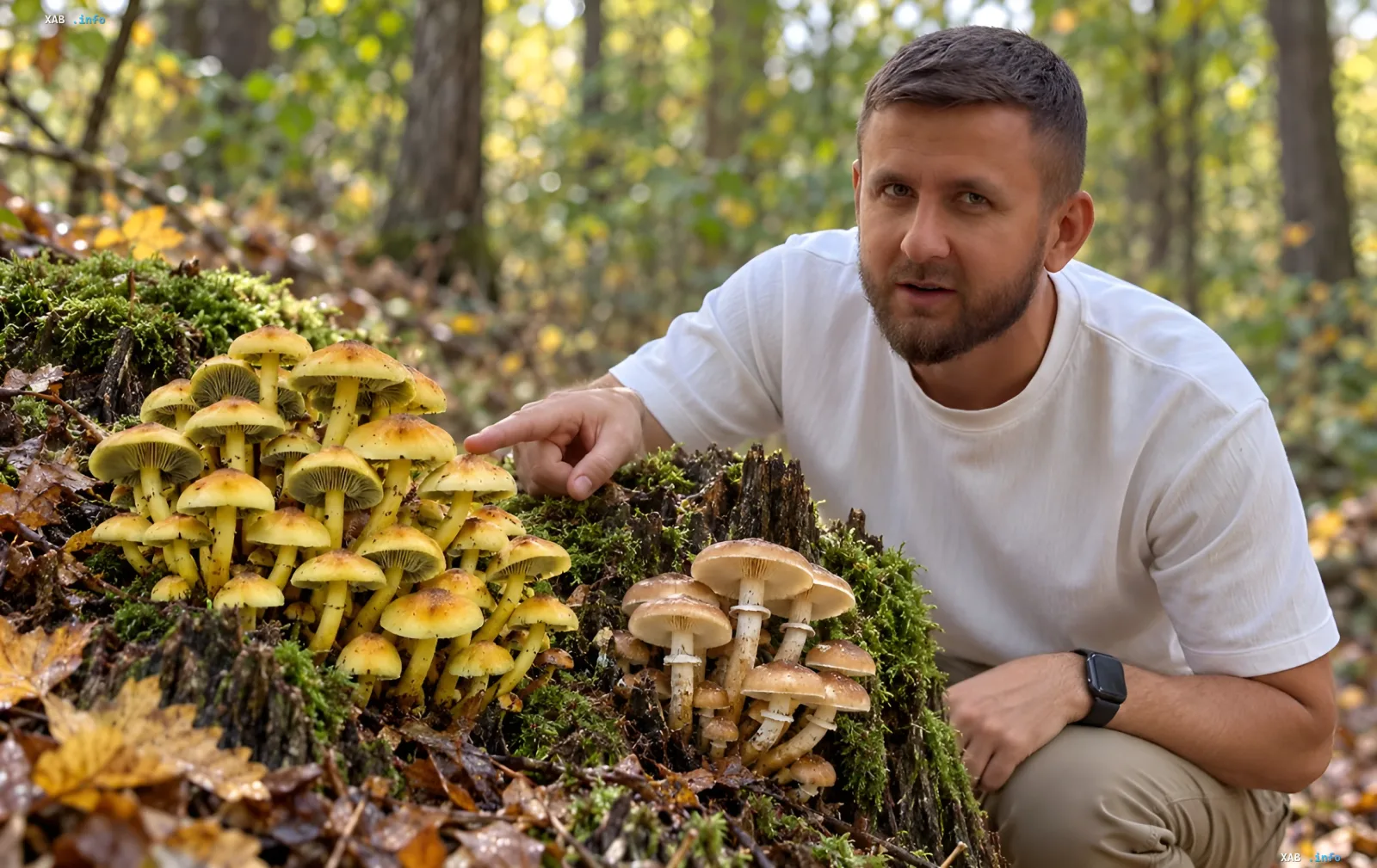
The autumn season traditionally opens the quiet hunt, attracting millions of mushroom-picking enthusiasts to forests. Among the most popular trophies are honey fungi, which grow in large clusters on stumps, fallen logs, and old wood. However, this particular growth habit poses a serious danger to inexperienced foragers, as the dangerous toxic lookalike—the sulfur-tuft mushroom—frequently grows right alongside edible species.
Key Differences of the Poisonous Lookalike
As noted by experts and specialists at the Holosiyivskyi National Nature Park, the sulfur-tuft mushroom (Hypholoma fasciculare) looks remarkably similar to edible autumn honey fungi, making it easy to accidentally place in the basket. The primary distinguishing feature of the poisonous specimen is the color of its cap: it is predominantly bright yellow with a characteristic brownish or orange center. Additionally, young mushrooms have yellowish or greenish gills under the cap, which eventually darken to olive-brown, whereas edible honey fungi have significantly lighter gills. Another important diagnostic sign is the complete absence of the characteristic ring on the stem of the sulfur-tuft.
Symptoms of Poisoning and Cooking Myths
A critical safety factor is understanding that the toxins of this poisonous mushroom are extremely resilient. The Ministry of Health of Ukraine has repeatedly emphasized that prolonged boiling, soaking, or any other heat treatment cannot destroy the poison of the sulfur-tuft. Eating this mushroom inevitably leads to severe food poisoning. The first symptoms may not appear immediately and include severe nausea, relentless vomiting, sharp abdominal pain, and diarrhea. If such signs appear after consuming wild mushrooms, emergency medical assistance must be called immediately via 103.
Rules for Safe Mushroom Foraging
To avoid tragic mistakes, specialists from relevant agencies and medical centers recommend following basic safety rules. First, one should never rely solely on a single feature when determining a mushroom's edibility. Second, if there are the slightest doubts regarding the species identity of a found specimen, it should categorically not be put in the basket. Even gathered edible honey fungi require careful sorting, cleaning, and mandatory boiling for 40-60 minutes with the first water drained, though this method works exclusively for genuine edible mushrooms and will not save foragers from dangerous lookalikes.