Quiet mushroom hunting brings not only pleasure but also serious risks if basic safety rules are neglected. The parasol mushroom is very popular among forest delicacy lovers due to its impressive size and delicate taste. However, it has dangerous look-alikes, among which the deadly poisonous Lepiota brunneoincarnata stands out, capable of causing severe damage to internal organs.
Anatomical features: ring and stem
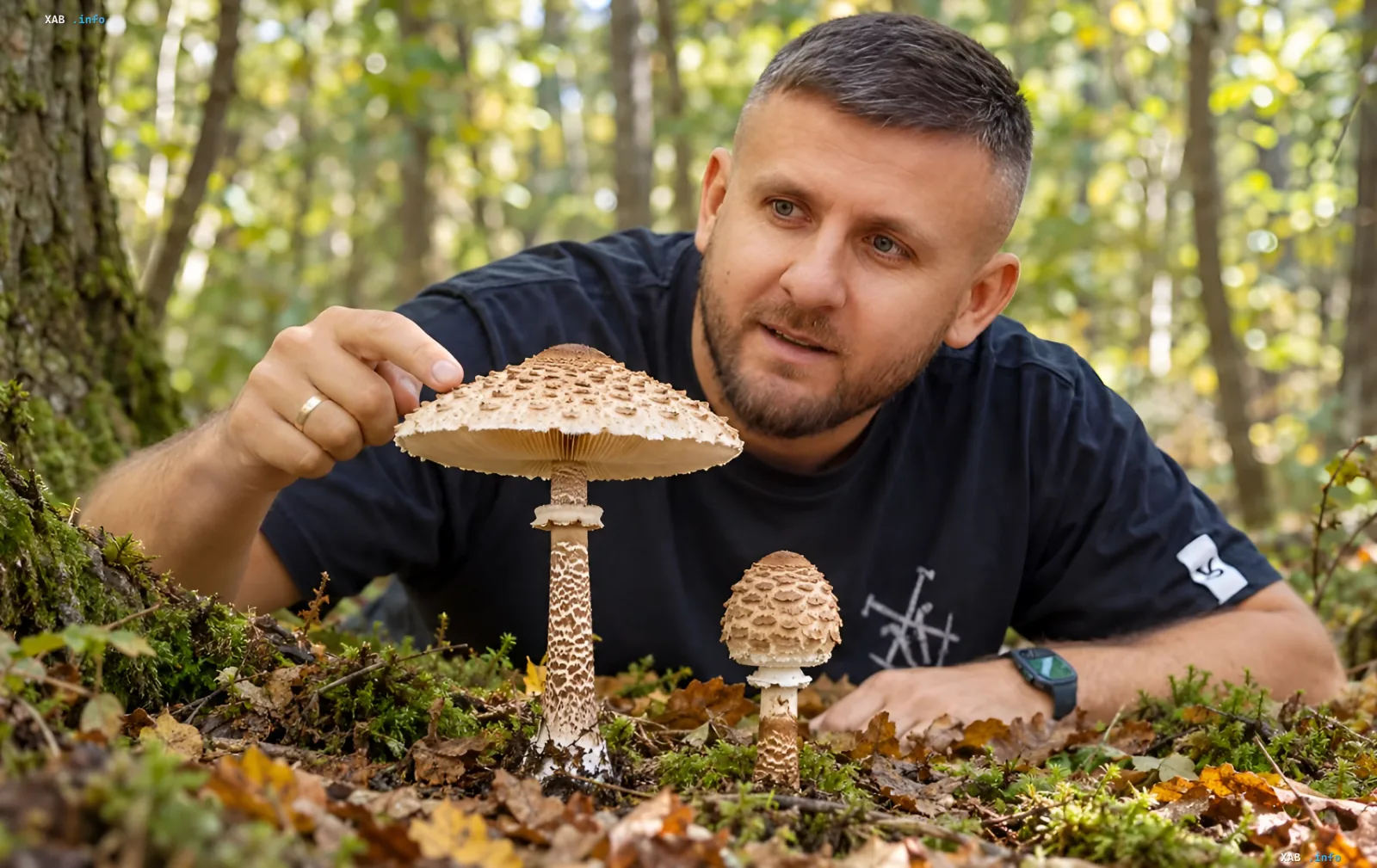
As blogger Yaroslav Fishchenko notes, the main sign of an adult edible parasol mushroom is a well-defined movable ring on the stem that can move freely up and down. At the same time, the North American Mycological Association (NAMA) emphasizes the importance of a comprehensive assessment of all characteristics rather than just one feature. In dangerous lepiotas, the ring on the stem is extremely poorly expressed or disappears very quickly without being movable.Sizes and surface texture
Another significant difference lies in the dimensions and surface design of the stem. The edible parasol lives up to its name: it grows tall, and its stem is covered with a characteristic pattern resembling snake skin. The brownish-red lepiota remains miniature, its cap reaching only a few centimeters in diameter, and its thin stem lacks the characteristic snake-type scaly patterns, which is also confirmed by scientific descriptions on the First-nature portal.
The danger of young mushrooms and the toxicity of lepiotas
Experienced mushroom pickers and mycologists strongly recommend avoiding the collection of young specimens whose key morphological features have not yet fully formed. It is at this stage that the risk of a fatal error is highest. Consuming Lepiota brunneoincarnata is deadly because this species contains powerful amatoxins that cause acute liver and kidney failure, which can lead to death.Expert safety recommendations
The main rule for any mushroom picker is extremely simple: at the slightest doubt about the origin and species affiliation of a mushroom, it must categorically not be put into the basket. The North American Mycological Association reminds that photographs or a superficial examination of wild mushrooms are often insufficient for accurate identification, so neglecting safety rules in the forest is unacceptable.