
Denmark's Defence Intelligence Service has presented an updated assessment of the nature of the hybrid war that Russia is waging against Western countries. According to a statement from the agency, relayed via Reuters and recounted by RBC-Ukraine, Moscow will carry out more frequent attacks on the West and NATO, "with greater consequences for the countries targeted by these attacks than in the past." The conclusion of the Danish analysts underscores that the intensity and scale of destabilizing actions are growing, not declining, despite the Alliance's earlier warnings.
Scenario of a Limited Military Aggression
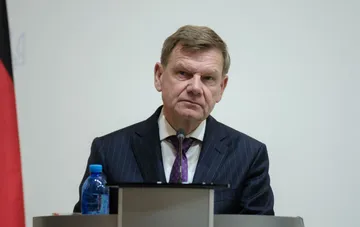
A key element of the new assessment is the forecast of a "growing risk" that Russia will launch a limited military attack on one or several NATO countries bordering Russia. The head of the Defence Intelligence Service, Thomas Arenkilde, explained at a press conference that such an attack "would be a desperate step on the part of Russia" and, alongside intensified hybrid attacks, "could potentially occur in the coming months." In his words, Moscow may deploy a limited number of troops in the Alliance's border zone, possibly under the pretext of protecting Russian minorities, with "the aim not being to seize a country, but to divide NATO."
Baltic Incident and Elevated Cyber Threat
The intelligence assessment is underpinned by specific incidents. According to Danish military data, last week a Russian frigate fired two signal flares toward a Danish military helicopter, one of which narrowly missed the aircraft. In parallel, on 24 September the Danish resilience agency, in a separate statement, reported an elevated likelihood of Russia attempting destructive cyberattacks against Denmark and raised the threat level. Thus, the hybrid pressure is assessed as simultaneous: naval, cyber, and sabotage-related.
Position of NATO and Bordering Countries
Against the backdrop of the Danish warnings, NATO has already stated its readiness to respond to potential escalation on the eastern flank of Europe, and an Alliance general emphasized the Alliance's readiness for any provocations. The NATO Secretary General, in turn, called on European leaders to maintain composure in response to Russia's hybrid attacks. Lithuania, for its part, reported receiving intelligence on possible Russian preparations for operations "under a false flag" to test NATO's readiness to respond, indicating a consistent picture drawn by the intelligence services of several Alliance countries.
Context: Testing NATO "in Months, Not Years"
The Danish assessment fits into a broader series of warnings. Earlier, according to RBC-Ukraine, European intelligence services allowed for the possibility of an imminent Russian test of NATO's resilience, noting that a potential attack could occur "in months, not years." The coincidence of timelines in the assessments of different services strengthens the signal that Western intelligence considers the coming months a critical window for the escalation of hybrid pressure on the Alliance's eastern flank.