The US space agency NASA is preparing for a historic milestone — returning humans to the Moon for the first time in over 50 years. According to current plans, the crewed lunar landing is scheduled for early 2028 as part of the ambitious Artemis IV mission. However, this tight timeline directly depends on the success of SpaceX, which must timely prepare its advanced rocket and spacecraft system.
Mission Architecture and SpaceX's Role
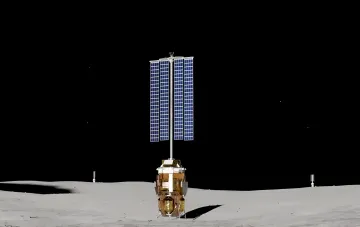
Under the current Artemis IV scenario, NASA will deliver four astronauts to lunar orbit using its own heavy-lift Space Launch System (SLS) rocket and Orion spacecraft. Simultaneously, Elon Musk's company must launch a modified upper-stage variant — the Starship Human Landing System (HLS) — into orbit. In lunar orbit, Orion will dock with the Starship HLS, after which two crew members will transfer to the lander to descend to the surface and carry out a week-long scientific program.
Engineering Challenges and Technical Hurdles
Despite progress made since initial test flights, SpaceX faces unprecedented engineering hurdles. First, the company must demonstrate reliable, routine orbital missions of the Ship vehicle. Second, large-scale cryogenic fuel transfer directly in low-Earth orbit remains a critically vital technology. Furthermore, the complex procedures of docking, landing, and subsequent ascent back to lunar orbit must be thoroughly proven to ensure crew safety.
Schedule Adjustments and NASA's Backup Plans
Significant development delays forced NASA management to adapt the broader lunar strategy. In early 2026, the Artemis III mission was reformatted into a demonstration Earth-orbit flight, pushing the actual landing to Artemis IV. Agency officials have emphasized that the readiness of the lunar lander will determine the definitive path. If SpaceX's progress slows down, Blue Origin with its Blue Moon lander could emerge as an alternative provider.
Contradictory Data
An analysis of current space programs revealed certain discrepancies in schedules and official contractor statements. Some industry sources indicate that Jeff Bezos's startup Blue Origin is also racing against time due to recent setbacks, including the failure of its heavy New Glenn carrier during hot-fire engine tests in May 2026. At the same time, NASA leadership continues to insist on the integrity of the master plan despite independent skepticism regarding the timeline readiness of both Starship HLS and competitor backup systems.