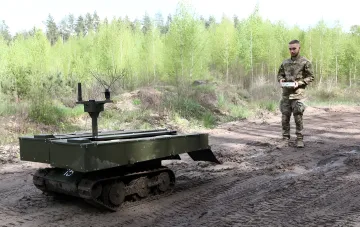
On August 10, 2026, the Ukrainian company DevDroid announced a major update to its universal control system, Droid Box. This software and hardware solution, which has already become a standard for numerous Ground Robotic Complexes (GRCs), has received critically important features: full two-way audio communication and an autonomous movement mode for «blind» zones. The update aims to solve two main problems for operators on the battlefield: the inability to negotiate with the enemy or allies and the risk of losing control of the robot when entering forests or going under bridges.
Two-way audio communication: from observation to negotiation
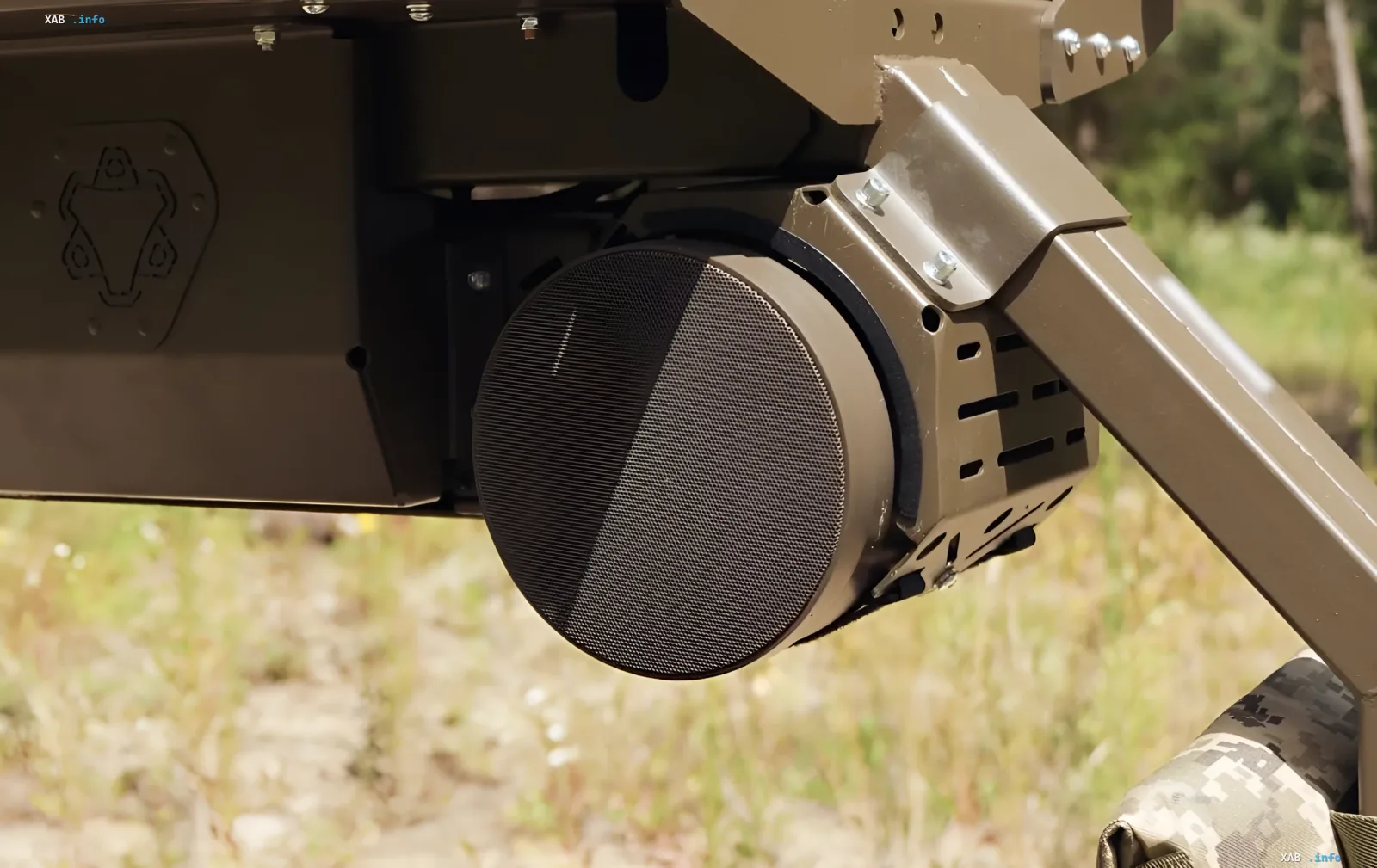
The key innovation is the integration of a remote speaker control module. Now, through a tablet, the operator can not only see but also hear the situation around the robot, as well as broadcast their own voice. The system ensures the transmission of voice messages in real-time or the playback of pre-loaded audio files. This opens up new tactical possibilities: from transmitting demands for surrender to coordinating actions with neighboring units in conditions where main communication channels (radio) are overloaded or unavailable.
An important aspect is feedback. Microphones built into the GRC cameras transmit an audio stream to the operator's tablet. This allows hearing human footsteps, the operation of vehicle engines, or mechanical sounds that may not be visible on the video feed due to smoke or poor visibility. Speakers are already being installed on existing DevDroid platforms, and in the near future, they will be equipped on a new batch of Zmiy Droid 12.7 complexes, developed jointly with RoverTech.
Autonomous overcoming of «blind» zones
The second fundamental update concerns navigation in conditions of unstable communication. The updated Droid Box has received a function for automatically traversing areas where the control signal temporarily disappears. The operator sets the route in advance, and the robot independently overcomes the zone of signal loss — whether it is a dense forest, a tunnel, or the space under a bridge. As soon as the signal is restored, control returns to the operator.
Developers emphasize that this solution allows maintaining the mobility of the platform in conditions of complex terrain and reduces the risk that the robot will be left abandoned on the battlefield due to signal loss. The function is critical for performing reconnaissance tasks in urban areas or in forested terrain, where radio waves are often shielded.
Integration with new combat modules
Software development is keeping pace with the emergence of new hardware solutions. It was previously reported about the presentation of the reconnaissance-strike robot Droid TW 40, which combines a six-wheeled platform with the Wolly 40 combat module and an Mk 19 automatic grenade launcher. This complex has already been codified in the Defense Forces of Ukraine. The Droid Box update will allow such heavy machines to effectively interact with infantry and negotiate with the enemy before opening fire.
Also in DevDroid's arsenal is the Protector cargo GRC, which doubled its load capacity and received a new type of communication. Thanks to these improvements, one of the complexes was able to transport more than 15 tons of cargo in just one month. The implementation of new control functions will allow such logistics robots to work more autonomously and safely.