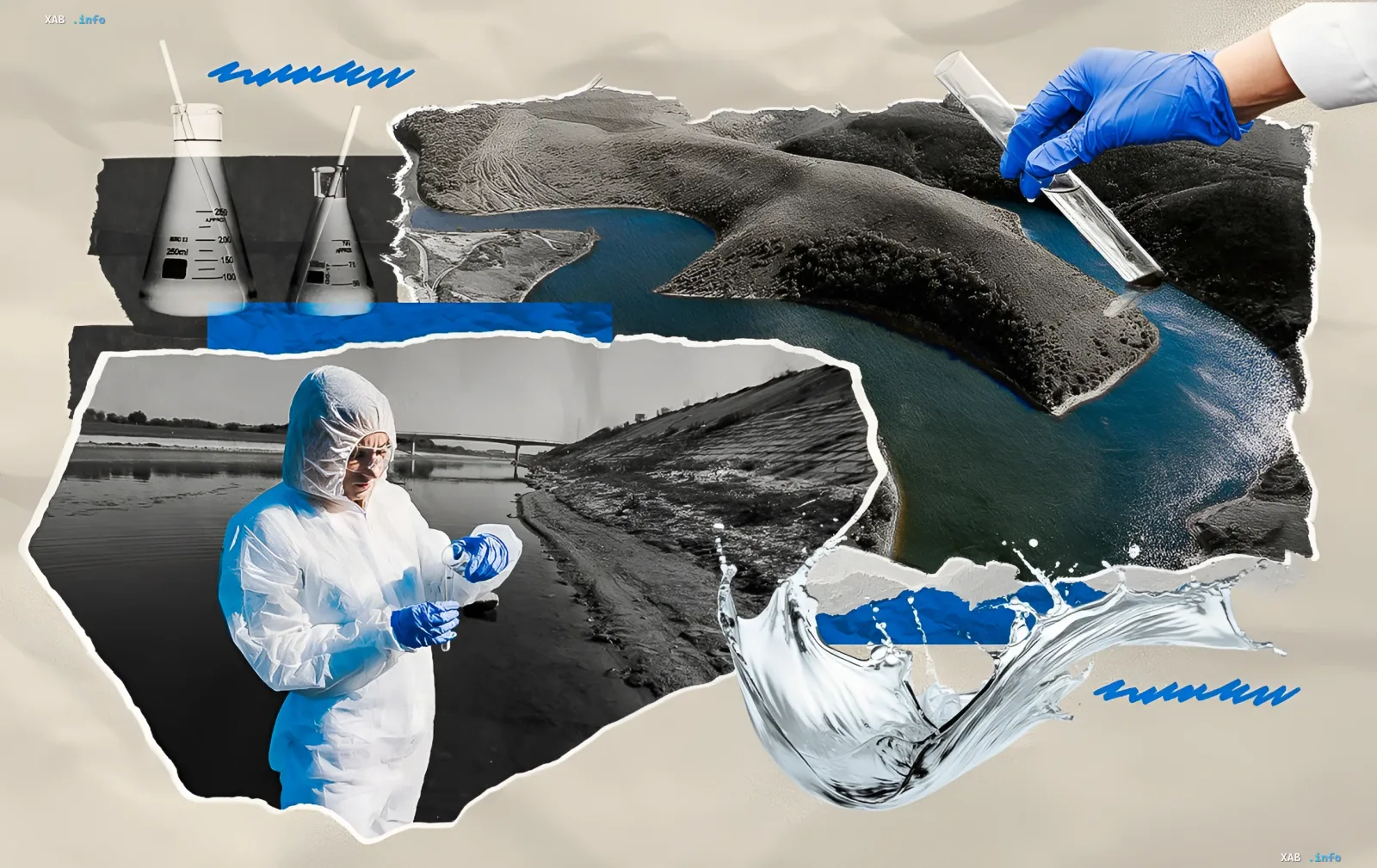
Amid prolonged low-water conditions, risks to stable water supply have escalated in several regions of Ukraine. The most challenging situation this season has developed in the Dniester basin, where September recorded a historically low inflow of water into the reservoir. Specialists from the State Agency of Water Resources of Ukraine note that climate change and a shortage of precipitation in the Carpathians significantly impact the country's entire hydrological system.
Causes of Low Water and Condition of Basins
According to the relevant agency, low-water periods are recorded not only on the Dniester but also on the Pripyat River and its tributaries (Styr, Stokhid, Horyn, Sluch, Ubort). Decreased water levels have also been registered in the Middle Dnieper basins (Vorskla, Trubizh, Ros, Sula, Udai), as well as on the Western and Southern Bug. Systems directly dependent on surface sources and atmospheric precipitation prove most vulnerable to climate challenges, while underground horizons continue to demonstrate greater stability.
Restrictions for Water Users and Situation in Cities
To prevent critical depletion of water resources, the State Water Agency introduced temporary limits for 383 water users between June and September. Most restrictions affected the Dniester basin and Transcarpathian rivers. Meanwhile, authorities emphasize that the priority remains meeting the drinking and household needs of the population. Regarding major cities dependent on the Dnieper cascade (excluding the destroyed Kakhovka), their reservoirs were filled by nearly 87% as of early October, sufficient to cover basic civil needs.
Contradictory Data
While official agencies assure that the situation is under control and reserves in the Dnieper reservoirs are sufficient, local authorities and environmental experts have raised alarms regarding local water bodies. For instance, in September, the leadership of Ternopil declared risks to municipal water supply due to the critical shallowing of the Horishnie-Ivachivske Reservoir. At the same time, the State Water Agency explains that the water level there is about 90% of normal, and the city's drinking water supply relies primarily on underground wells hydraulically connected to the surface reservoir.
The Factor of Infrastructure Damage and International Cooperation
A serious aggravating problem alongside natural factors remains the large-scale destruction and damage to energy and water management infrastructure resulting from armed aggression. To minimize cross-border risks, Ukraine and Moldova held a series of intergovernmental commission meetings in late September, agreeing on a balanced and uniform water release from the Dniester Reservoir matching current inflows.