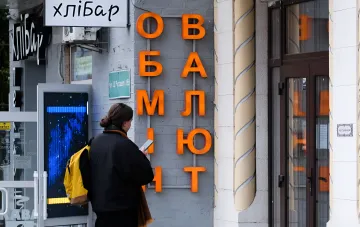
The official dollar exchange rate in Ukraine reached a record high: on November 4, 2026, it hit 45.67 hryvnias per dollar. As of October 28, the regulator had set the rate at 45.6 hryvnias, a sharp jump from the previous levels of around 44.6 hryvnias recorded in late September and October. According to Taras Kozak, president of the Univer investment group, a one-hryvnia increase in just a few days is an abnormally fast pace that could have been smoothed out through more active intervention by the National Bank.
Why the hryvnia weakened: the regulator's version
The NBU press office explains the weakening of the hryvnia in the second half of October by two factors. Firstly, the supply of foreign currency in the domestic market decreased due to port blockades and export restrictions. Secondly, demand for dollars surged after the unblocking of budget expenditures, which had been suspended as part of a government austerity program: VAT refunds to companies resumed, which, along with other spending items, stimulated demand for foreign currency. The NBU also notes that demand from the public increased against the backdrop of typical seasonal growth and the renewal of monthly limits on currency purchases.
“Exchange offices proved the NBU was wrong”
Taras Kozak points to a key indicator: the cash dollar exchange rate exceeded the interbank market rate by a full hryvnia. According to him, such a gap is direct evidence of panicked demand: the public, hearing about problems with external financial aid, reduced spending, non-payment of VAT, and the suspension of the metallurgical sector, “immediately rushes to the exchange office for currency.” The expert emphasizes that the problem is not in the devaluation itself, but in its speed — a drop of 1.5–2% in a few days deprives economic agents of predictability.
How the NBU responded: consultations and cash exchanges
To curb the excessive growth of the cash exchange rate, the regulator held consultations with market participants, and on November 3, it conducted an exchange of non-cash bank currency for cash to replenish bank tills. According to NBU data, the total supply in this transaction amounted to $100 million, while the actual demand from banks proved to be $14 million. Similar exchanges were conducted on November 4 and are planned for November 5. The NBU states that bank applications were fully met, which means “there are no economic reasons for the increase in the difference between the official rate and the foreign currency selling rate by financial institutions.”
Reserves and interventions: how much has the NBU spent
During the work week of October 26–30, the National Bank conducted a record intervention in the interbank foreign exchange market, selling $1.8 billion. At the same time, the regulator's gold and foreign exchange reserves stand at $47.1 billion, and by the end of the year, according to the NBU's own forecast, they could grow to over $60 billion. Kozak believes that by allowing a sharp devaluation, the regulator is spending reserves faster than it would if maintaining a moderate pace of weakening. In his assessment, the NBU had all the tools — from interventions to limiting currency purchases for non-critical needs — to prevent the jump to 45.6 hryvnias.
What comes next
Against the backdrop of a record official rate and the ongoing gap with the cash market, the key question remains the pace of further devaluation. If the NBU continues its strategy of “smoothing peaks” through targeted interventions, the rate may stabilize near current levels. However, if the structural deficit of currency supply (ports, exports) and high demand from businesses and the public persist, pressure on the hryvnia is likely to remain elevated in the coming weeks.