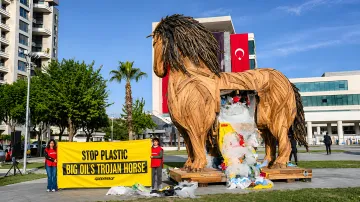
At the COP31 climate conference in Turkey, the Ukrainian animal rights team drew the international community's attention to the environmental consequences of the war in the Black Sea. Organizations UAnimals, the International Renaissance Foundation, and the Ministry of Economy and Environment of Ukraine presented the "Break in Case of Ecocide" installation, which became a symbol of the call to recognize Russia's actions as an international crime and begin restoring the region's marine ecosystem.
"Break in Case of Ecocide" Installation: A Rescue Kit That Doesn't Exist
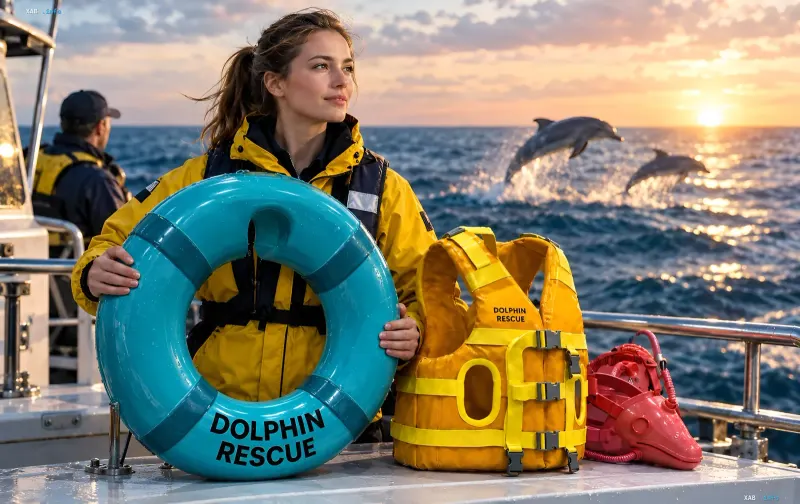
A two-meter transparent box featured a dolphin-adapted life jacket, life ring, and oxygen mask—a kit visually mirroring familiar safety equipment boxes people see in public places. According to Olha Matsko, head of strategic initiatives at UAnimals, such equipment is always at hand in an emergency, whereas for animals dying during the war, no such "kits" exist, and environmental damage often goes unnoticed. The installation aims to remind people that ecocide requires the same rapid and visible response as any other emergency.
What Is Happening to Dolphins and Porpoises in the Black Sea
Ukrainian researcher Pavel Goldin, a leading scientist at the Schmalhausen Institute of Zoology of the National Academy of Sciences of Ukraine, notes that the death of dolphins and porpoises recorded by scientists in 2026 shares a similar character with that recorded in 2022. According to him, animal carcasses lie along the shore one after another, and all three cetacean species inhabiting the Black Sea are included in the IUCN Red List. Goldin warns that the war could push these species even closer to extinction.
Five Directions for Holding Russia Accountable
In addition to the installation, the Ukrainian team presented an analytical report with concrete steps for governments. The document proposes five areas of action to hold the Russian Federation and perpetrators accountable and restore the environment. The recovery plan includes demining the water area, assessing the damage caused, and establishing marine protected areas. The climate conference, according to the organizers, became an opportunity to remind the international community of crimes that are gradually disappearing from news feeds.
The Legal Aspect: Why It Is Important to Document Losses Now
International humanitarian law expert and PhD in Law Natalia Hendel explains that the amount of potential compensation will depend on what portion of the environmental losses Ukraine can prove. According to her, environmental losses, their scale, and their connection to Russia's unlawful actions should be documented right now. "We should start with the best-documented cases to submit well-founded claims to the Register of Damage and reduce the risk of refusals during their further review," Hendel adds.
Thus, the Ukrainian delegation at COP31 combined a symbolic gesture with a practical legal program: the installation aims to bring the issue of ecocide in the Black Sea back into the global spotlight, while the report provides states with a concrete algorithm of actions to hold perpetrators accountable and restore the marine ecosystem.