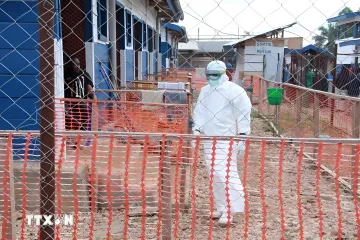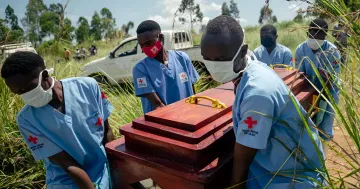
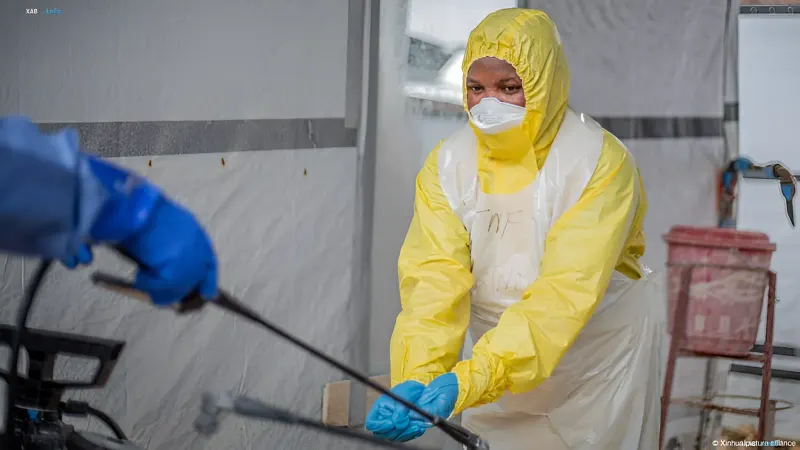
Authorities in the Democratic Republic of the Congo (DRC) have reported that the current Ebola outbreak has already claimed the lives of more than 6,000 people. According to government estimates, about 12,000 confirmed cases of infection have been registered across eight regions, with the majority concentrated in Ituri and North Kivu provinces, where armed groups have been fighting for decades. According to updated data cited by several outlets referencing Reuters, the death toll has reached 6,025, with 12,254 confirmed infections. The fatality rate of the infection is approximately 49%.
The Largest Outbreak in the Country's History
The current epidemic is the 17th in the DRC's history and the largest in scale for the country. The pathogen is the Bundibugyo strain of the Ebola virus, for which there is currently no approved vaccine or specific treatment. According to UNICEF, minors accounted for 35% of all deaths by early November, indicating the high vulnerability of the child population.
Why the Epidemic is Difficult to Contain
As Reuters notes, authorities are failing to halt the spread of the infection due to chronic funding shortages, deep public distrust of medical institutions, high levels of violence, and general instability in the country. According to the Africa Centres for Disease Control and Prevention (Africa CDC), over 60% of deaths among those infected occur outside hospitals and clinics: many patients refuse isolation, thereby putting their loved ones at risk of infection.
Assessing Real Losses Through Satellite Imagery
Analyzing satellite imagery of two DRC districts hardest hit by the outbreak, Reuters suggests that the real mortality rate may be significantly higher than official figures. This means the actual number of victims likely exceeds government statistics, although the agency does not provide a precise alternative figure.
Geographical Scale and Comparison with Past Epidemics
Cases of the Bundibugyo strain infection have been recorded not only in the DRC but also in Uganda, Kenya, and Nigeria; as of October, the outbreak in Uganda was declared over. Africa CDC Director-General Jean Kaseya called the current epidemic the most geographically widespread Ebola outbreak in the continent's history. At the same time, in absolute mortality terms, it still lags behind the 2014–2016 West Africa epidemic, which infected over 28,000 people and killed more than 11,000 in Guinea, Liberia, and Sierra Leone.