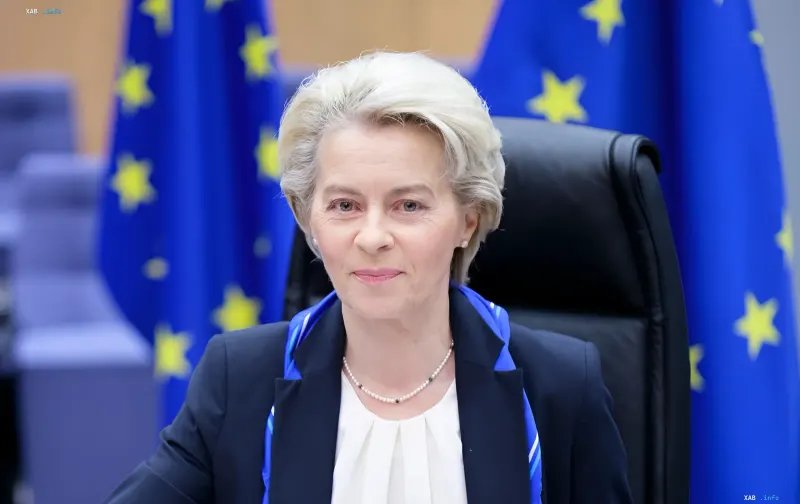
European Commission President Ursula von der Leyen has put forward an initiative aimed at strengthening the European Union's energy security: she proposed that the bloc's leaders consider creating strategic gas reserves. The initiative is driven by growing concerns that Europe will face a fuel shortage this coming winter. This is reported by Politico, citing European diplomats and EU institutional representatives.
Record-low storage filling levels
According to Politico, gas reserves in existing European underground storage facilities—which under normal conditions are replenished throughout the year by commercial companies—are at a record-low level this year. The reason, the publication reports, is the war in Iran, which undermined market incentives for replenishing reserves. As a result, the bloc has proven insufficiently prepared for the winter consumption season.
A long-term measure modeled on the oil sector
Although diplomatic representatives have not yet managed to establish the exact form the proposed reserve will take, a high-ranking EU official characterized the initiative as a long-term measure to mitigate future supply risks. According to him, the approach will be similar to the one already applied to oil and petroleum products, where strategic reserves are a standard tool of energy policy.
November review of the gas security system
Documents detailing November plans to overhaul the EU gas supply security system, which Politico reviewed earlier this year, outline a set of measures to encourage companies to manage crisis situations more effectively. Thus, the strategic reserves initiative integrates into a broader package of reforms aimed at increasing the resilience of the union's gas infrastructure.
Lack of direct support in working documents
At the same time, the aforementioned working documents do not contain direct support for creating strategic reserves that governments would be required to replenish to a set level to compensate for supply shortages regardless of the current market situation. This indicates that the final architecture of the mechanism has not yet been determined and remains a subject of inter-institutional discussions.
EU leaders' skepticism toward related initiatives
Two diplomats interviewed by Politico reported that a separate European Commission proposal to create a pan-European mechanism for joint energy purchasing did not spark enthusiasm among EU leaders. This indicates that caution persists in Brussels and national capitals regarding the expansion of obligations for collective energy security assurance, especially under conditions where market mechanisms are not yet fully exhausted.