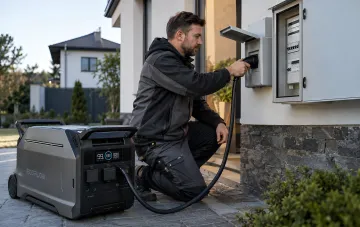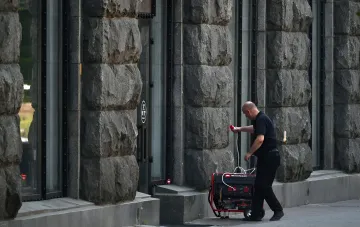
Emergency power outages are often perceived by electric vehicle owners as a serious challenge, as finding a working charging station in a dark city becomes a difficult task. However, modern technologies allow us to look at electric vehicles in a completely different way, transforming them from a means of transportation into a powerful backup power source for the home. According to experts, the traction battery capacity of a modern electric car significantly exceeds the capabilities of standard home generators or portable charging stations, opening up new scenarios for using the car during energy crises.
Electric car as an alternative to a generator and a home mobile station
Many modern electric vehicle models support bidirectional energy transfer, which makes it possible to use the capacity of their batteries not only for driving, but also for powering external devices. During prolonged power outages, this approach helps maintain the operation of vital systems in private houses and apartments without the need to refuel gasoline generators. Car expert and founder of the Autogeek project Yevhen Mudjyri notes that if reverse power functions were once considered a rare rarity, today it is a massive market trend.
V2L and V2H technologies: from simple outlets to home grid integration
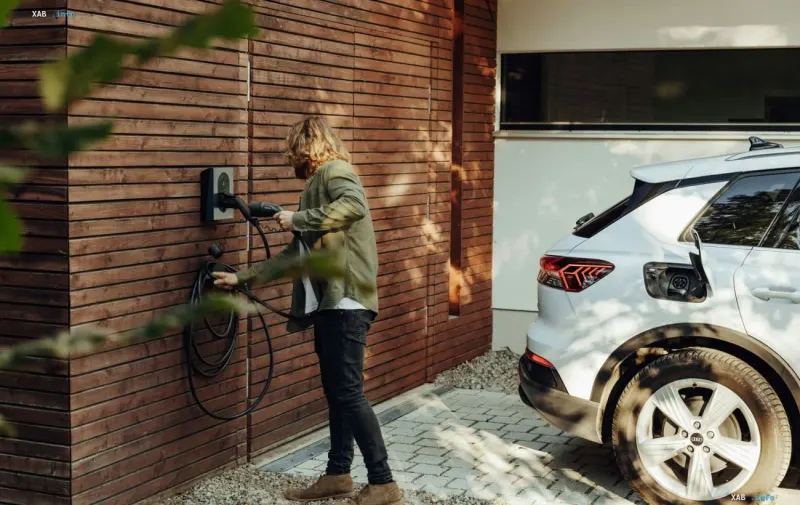
There are several main standards for vehicle interaction with the external energy environment, among which V2L (Vehicle-to-Load) and V2H (Vehicle-to-Home) stand out. V2L technology is the simplest option, where the car actually turns into a powerful battery with a 220 or 230-volt output. Using a standard factory adapter and an extension cord, you can directly connect a refrigerator, a gas boiler, a router, lighting, and gadget chargers to the car's on-board network. In turn, the V2H system is a more advanced solution that allows the car to be integrated into the general electrical grid of the house through special bidirectional equipment.
Practical availability and equipment connection features
The modern electric vehicle market has completely changed the approach to autonomous power supply, making reverse power transfer technologies accessible to a wide range of drivers. Most new models from Korean, European, and Chinese manufacturers are equipped with these features straight from the factory. To implement basic power supply via V2L, an owner only needs to purchase a standard adapter for Type 2 or GB/T connectors, which provides a power output of about 3–3.5 kW. This is quite enough to stably cover a family's basic household needs during periods of centralized power loss.
The new role of personal transport in energy challenges
The ability of an electric vehicle to share energy with the home grid blurs the line between mobile transport and stationary energy storage devices. In conditions of unstable power grid operation, having an electric car ceases to be exclusively a matter of fuel economy or eco-friendly travel. Such functionality turns the car into a strategic asset for every household, capable of ensuring comfort and safety in critical situations.