August 11, 2026. The artificial intelligence market in China is experiencing a historic turning point. What began as temporary difficulties due to export restrictions has transformed into a complete paradigm shift: American tech giants NVIDIA and AMD are being pushed out of the domestic market of the Middle Kingdom, ceding the lead to local developers.
Dominance of Domestic Developments
According to data from the analytical agency TrendForce, by mid-2026, the share of American companies in the Chinese AI accelerator market has shrunk to critical levels — around 10%. At the same time, the volume of Chinese chip shipments has grown by 83% compared to the previous period. Local manufacturers, receiving strong state support and freed-up market space, have captured up to 90% of the market share.
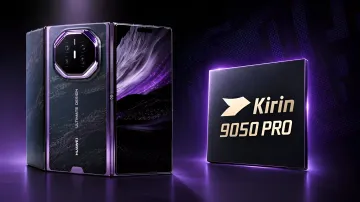
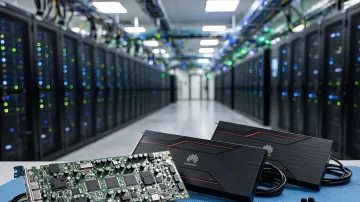
Leadership in this segment is firmly held by Huawei, whose solutions have become the de facto standard for many government and commercial structures. However, competition within China is intensifying: alongside traditional players like Cambricon, internet industry giants — Baidu, Alibaba, and Tencent — have joined the fray. These companies have ceased to be mere consumers of chips and have begun mass-producing their own specialized ASIC accelerators tailored to their unique tasks in big data and neural networks.
NVIDIA's Survival Strategy
NVIDIA is not giving up without a fight, understanding that losing the Chinese market will hit its financial figures. The company is adapting its products to the strict requirements of US export controls. This year, specialized versions of graphics cards have hit the market, such as the RTX Pro 5000 based on the Blackwell architecture with GDDR7 memory, as well as the previously announced RTX 6000D.
These chips represent a compromise solution: they formally comply with performance restrictions but offer sufficient functionality to maintain the CUDA ecosystem. However, as experts note, training advanced AI models on them is becoming increasingly difficult, forcing Chinese companies to seek alternatives in the form of domestic software and hardware.
Contradictory Data
There are discrepancies in assessments of the current situation between various analytical centers. While TrendForce forecasts a drop in the share of American companies to 10% by 2026, other sources, including data from 3DNews, indicate that Chinese chips have captured 79% of the market, leaving Americans with about 21%. The difference in figures may be related to counting methodology: some experts count only pure AI accelerators, while others — the entire segment of computing GPUs, including graphics solutions for rendering.
Furthermore, there are contradictions regarding the real capabilities of Chinese chips. On the one hand, official statements from companies like Huawei sound confident; on the other, independent tests show that the lag in per-core performance and energy efficiency compared to NVIDIA flagships still persists, although it is narrowing.
Future of the Market
By 2026, it became obvious: the Chinese AI chip market has become a practically closed ecosystem. American companies are forced to operate in "survival mode," selling cut-down versions of their products, while local manufacturers are ramping up volumes, reaching a milestone of 5 million units shipped annually. This is a fundamental change in the global microelectronics supply chain that will likely have long-term consequences for the entire industry.