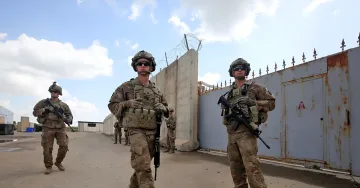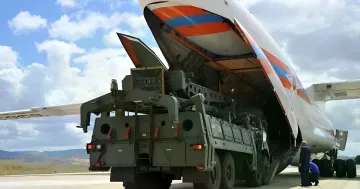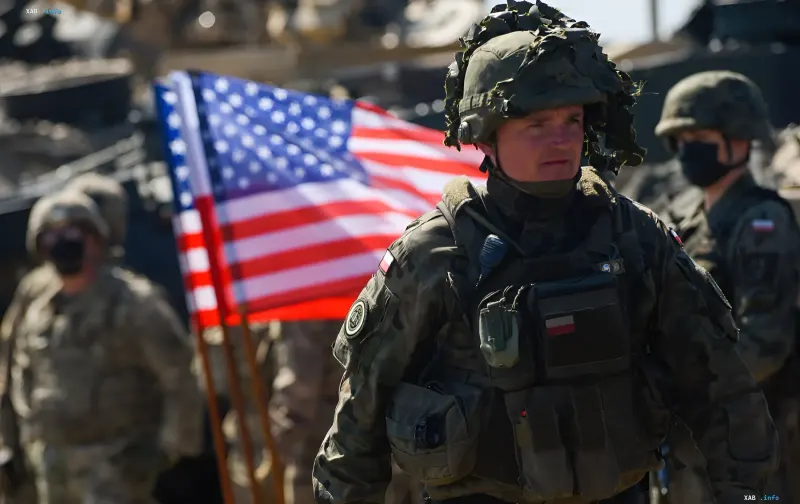
August 12, 2026, marked a historic date for Middle Eastern geopolitics. During a meeting in Baghdad, Iraqi Prime Minister Ali al-Zaidi and the head of US Central Command, Admiral Brad Cooper, officially confirmed the final date for the end of the American military presence in the country. By September 30, 2026, the last units of the Global Coalition will leave Iraqi territory. This event will mark the complete finale of the 23-year history of American military intervention, which began with the invasion in 2003.
Final Date and Transfer of Authority
According to a statement by Prime Minister al-Zaidi made immediately after negotiations on Wednesday, September 30 is the "final and irreversible date" for the conclusion of the mission. A US official confirmed that Washington expects to complete the logistics of the withdrawal by this deadline. A key aspect of the agreement was the transfer of responsibility for security. As noted at the Pentagon, Iraqi security forces, including Kurdish Peshmerga, will now fully take over the leadership of the fight against remnants of the terrorist group "Islamic State" (ISIS). The coalition's success in defeating terrorists allowed the US to move to the stage of full transfer of sovereignty to Iraqi authorities.
Chronology of Presence Reduction: From 2024 to 2026
The withdrawal process was not a one-time decision. Sources report that an agreement to scale down large-scale operations was reached as early as 2024. Throughout 2025, American troops already left most bases in the central and southern regions of the country. However, the presence in the semi-autonomous northern Kurdish region was maintained longer, due to the need for protection from attacks. Since February 2026, following the outbreak of a military conflict between the US, Israel, and Iran, bases in this region were regularly shelled, accelerating the need for their evacuation. According to Kurdish officials, the active withdrawal of equipment and personnel from Erbil began about three weeks ago.
Contradictory Data
Despite the official position of Baghdad and the Pentagon, there are discrepancies in the interpretation of the consequences of this step. On one hand, Iraqi leadership and the US call the troop withdrawal a logical conclusion to a successful mission and a transition to Iraqi sovereign security. On the other hand, sources linked to the US administration (specifically, quotes attributed to Donald Trump in the context of assessing the situation) express the opinion that a complete withdrawal of troops may create a security vacuum, which some experts call the "worst-case scenario" for the region. Furthermore, US officials refused to disclose the exact number of military personnel remaining at the moment and details of their further redeployment, raising questions among analysts about exactly where American specialists will be based if they maintain a presence in the region in a different format.
Historical Context and Previous Stages
The current troop withdrawal is merely the final chord of a complex history. At the peak of counter-terrorism operations in 2007, the size of the American contingent exceeded 170,000 people. In December 2011, combat units left the country, but in 2014, following the ISIS offensive, they were returned at the invitation of the Iraqi government. In 2021, combat operations were formally concluded, and about 2,500 servicemen remained in the country for training purposes. Notably, earlier in March 2026, NATO also left its mark on the region, concluding its mission after the withdrawal of contingents from Poland and Italy.