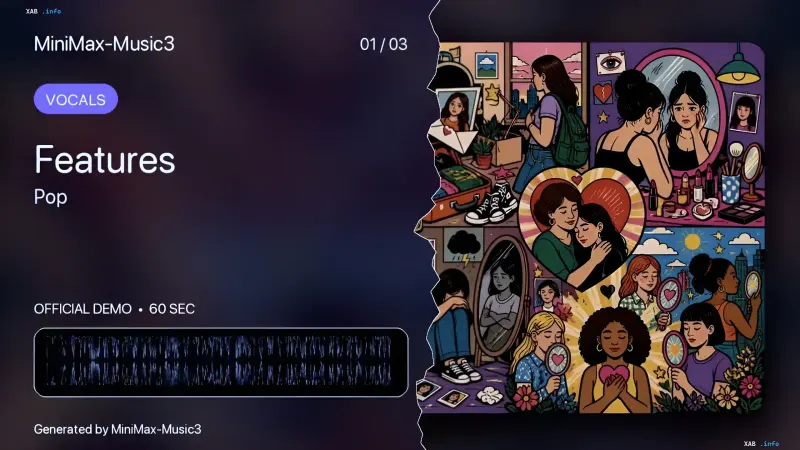
On August 14, 2026, the generative artificial intelligence industry is experiencing a tectonic shift. The Chinese company MiniMax officially presented the MiniMax Music 3.0 model on the Hugging Face and GitHub platforms. This event became a turning point, marking the end of the monopoly of commercial giants like Suno and Udio. For the first time in history, developers have released a full-fledged musical neural network with open weights capable of generating studio-quality tracks that can be run on your own equipment without monthly subscriptions and censorship.
Technological Breakthrough: Hybrid-LM Architecture
The main feature of MiniMax Music 3.0 is the revolutionary hybrid Hybrid-LM architecture. Unlike competitors using monolithic models, MiniMax divided tasks into two levels to achieve maximum accuracy. A global LLM (8 billion parameters), initialized based on Qwen3, is responsible for the long-term structure of the track, rhythmic patterns, and maintaining vocal identity throughout the composition. In parallel, a local LLM (0.6 billion parameters) works, focusing on micro-details: acoustic texture of instruments, timbre nuances, and naturalness of the voice. This approach allowed overcoming the problem of "hallucinations" in music and ensuring track coherence.
Mass Accessibility: Launch on Consumer Hardware
Initially, the system requirements for running the model in original quality (FP16) seemed excessive: two video cards with CUDA support were required (one for generation, the second for Flow Matching wave decoding). However, the enthusiast community and the ComfyUI ecosystem reacted instantly. On the day of the release, a quantized INT8 version was released. Thanks to optimization and the tiled decode function, the model is now capable of generating full songs even on video cards of the RTX 3060 or RTX 4060 level with 8 GB of video memory. This makes professional music generation accessible to a wide range of users.
Full Control: Structured Prompts and Duration
MiniMax Music 3.0 offers an unprecedented level of control over the music creation process. The model natively creates complete compositions up to 5 minutes (300 seconds) long while maintaining a continuous musical theme, which was previously a difficult task for local models. Control is divided into two streams: song lyrics (Lyrics) and musical description. Users can use explicit structure markup tags: [Intro], [Verse], [Chorus], [Bridge], [Solo], [Outro]. In the musical description block, detailed settings are available: from genre, BPM, and key to the vocalist's gender, effects, and choice of arrangement instruments.
Ecosystem Integration and Independence
With the release of the model, the community has already added native support for MiniMax Music 3 in ComfyUI (Template Library -> Audio section), as well as in SGLang and diffusers frameworks. This allows you to deploy your own music studio locally, completely eliminating dependence on cloud services. For developers and musicians, this means the ability to create content without limits on the number of generations, without the risk of account blocking, and with full retention of rights to the created tracks.