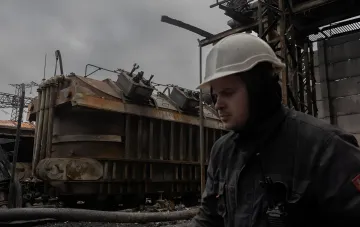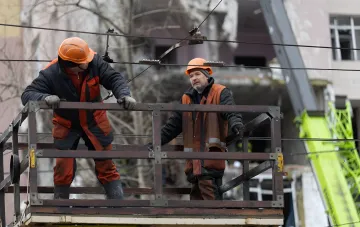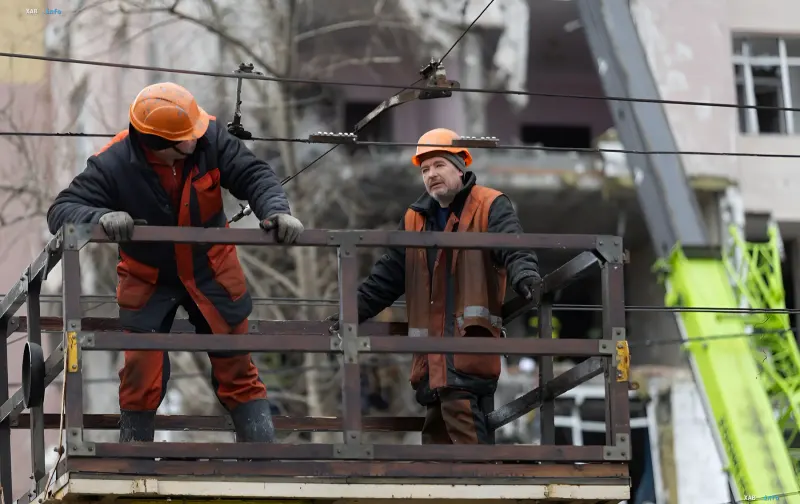
Russian armed forces continue massive attacks on Ukraine's energy infrastructure, causing large-scale destruction to power plants across the country. BBC journalists, whose report was cited by RBC-Ukraine, visited one of Ukraine's largest power plants, which was almost completely destroyed as a result of a recent ballistic missile strike. Energy workers on the ground described the unprecedented conditions under which they have to restore the damaged facilities.
Destruction like never before
"This was a very powerful attack. We have never experienced anything like this before. There were strikes before, part of the roof collapsed, the situation was quite difficult. But this time the destruction was particularly serious," said Vladimir Kovalenko, a power plant worker who has been with the company for 25 years. According to him, the scale of the damage after the latest ballistic missile strike significantly exceeds the aftermath of previous attacks, which indicates an escalation in the destructive potential of Russian strikes on the energy sector.
Seven alerts in four hours
A key problem faced by energy workers is the inability to conduct continuous restoration work. As noted in the report, since August, Russia has been attacking Ukrainian energy facilities almost every day. During the journalists' four-hour stay at the power plant, air raid alerts were announced seven times. Due to the threat of new strikes, energy workers are forced to interrupt repairs and go to shelters, losing precious time necessary for repairing equipment. Every restart of work after an alert requires additional effort and safety checks at the facility.
Attacks have become twice as powerful
DTEK CEO Maxim Timchenko emphasized that this year, Russian attacks on the energy sector have become larger and more powerful, and the available air defense capabilities are not sufficient to protect all critical infrastructure facilities. "The difference is the scale of the attacks and the different types of weapons being used. The attacks have become twice as powerful and large-scale," he stated. According to him, it is precisely because of constant shelling and air alerts that energy workers can fully work on restoring the damaged power plant for only one or two hours a day.
The fight for survival in winter
Timchenko reported that the restoration of the facility will last at least until next summer, which means months of work under constant threat. "We are fighting for the survival of people and the entire country this winter," summarized the DTEK CEO. His words underscore that the restoration of energy infrastructure in the face of ongoing massive attacks is turning into a task that requires not only technical resources but also constant risk to the lives of workers, who are forced to work in conditions where a full working day is only one or two hours long due to continuous alerts.