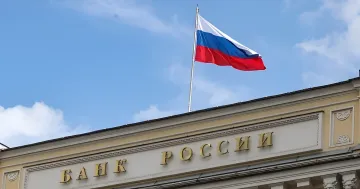
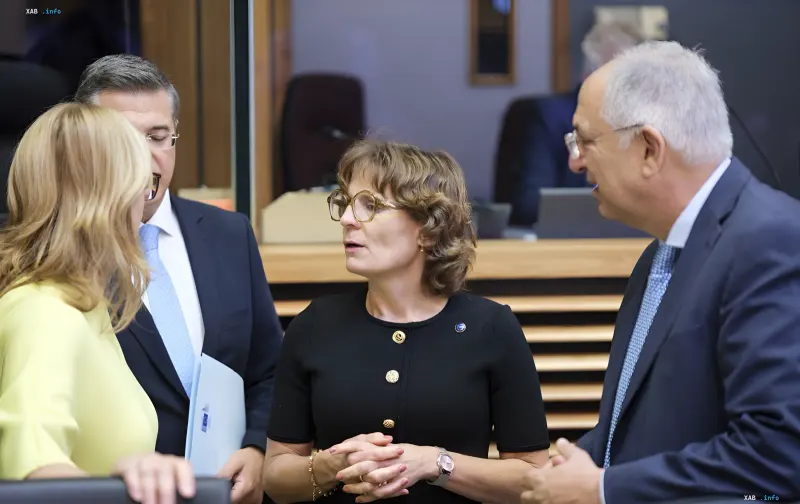
The European Commission has resumed work on assessing Ukraine's funding shortfall, against the backdrop of a renewed debate over the possible use of frozen Russian assets held primarily in European banks. According to the outlet, the EU's executive body has requested the resumption of work on options for deploying these funds, which are largely held at the Belgian custodian Euroclear in Brussels. In parallel, EU Commissioner for Economy Valdis Dombrovskis held a meeting dedicated to understanding the fiscal situation in Ukraine, while Commission spokesperson Balázs Ujvári clarified that additional expert conclusions would be required following such contacts.
Fiscal needs audit as the first step
As the European Commission's spokesperson stated, before discussing ways to resolve Kyiv's financial problems, Brussels must "determine the needs" and carry out the analytical work. This logic is consistent with the position voiced in August, when Ukraine publicly declared a shortfall of $27 billion, which, by its estimate, must be covered to continue combat operations. Thus, the "audit" of fiscal developments becomes the formal basis for any further decision — whether that is expanding the credit line or activating the mechanism involving frozen funds.
Priorities: a €90 billion loan versus the assets
The Commission's chief spokesperson, Paula Pinho, emphasized that the main focus is on Ukraine obtaining funds under the €90 billion loan agreed by EU leaders last year. In her words, "frozen assets are not a priority," since a lot of work has already been done on this issue, and the focus has now shifted to the lending instrument. This loan was adopted precisely after the alternative plan to finance Kyiv through frozen Russian assets failed to receive unanimous support from member states.
Contradictory data
There are notable inconsistencies in the statements of the parties and in the logic of the process itself. On the one hand, the Commission's official spokesperson directly states that frozen assets are "not a priority" and that attention is focused on the €90 billion loan. On the other hand, the same EU executive body, according to reports, has requested precisely the resumption of work on options for using Russian assets, and the Commission has begun assessing the shortfall "for the upcoming unfreezing" — meaning that practical work on the assets has not stopped, but has merely been subordinated to new analysis. Moreover, different figures are simultaneously in circulation: $27 billion (the shortfall voiced by Kyiv in August) and €90 billion (the agreed lending package), reflecting the difference between the current short-term gap and the long-term support instrument. Finally, the original texts contain the inaccurate formulation "EU executive council," which does not match the established terminology of the institutions and also requires cautious interpretation.
New mechanisms and the role of Belgium
The call for greater financing of Ukraine has once again raised the question of Russian assets. Recently, more than 120 Members of the European Parliament supported a proposal by the centrist Renew group to make the EU itself the custodian of Russian assets, rather than Euroclear and other institutions. The members' letter states that "frozen Russian accounts should be transferred to a new EU instrument that will act as custodian and bear all legal obligations to the Central Bank of Russia." The aim of such a step is to dispel Belgium's fears of being left alone with the financial and political consequences of the plan. Earlier, the Parliamentary Assembly of the Council of Europe also proposed a mechanism for transferring frozen assets to Ukraine based on rulings of the European Court of Human Rights.
Kyiv's position and ways out of the deadlock
Ukrainian diplomats, according to available information, have intensified their work with the EU, in the banks of which billions in frozen Russian assets are concentrated. Options for partial repayment and broader guarantees are being discussed, which may help overcome the deadlock around Belgium's position. Thus, Brussels is in fact preparing the ground for a new round of negotiations: first — an expert assessment of needs, then — a choice between expanding lending and restructuring the architecture for holding Russian assets.