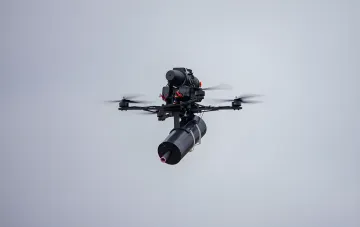
The European Commission has approved the allocation of €6.1 billion to Ukraine for the purchase of defence equipment. This was reported by RBC-Ukraine, citing a statement from the European Commission's press office. The new funding is earmarked for strengthening air and missile defence, the procurement of munitions, unmanned systems and electronic warfare (EW) equipment. According to Brussels, the package is intended to support Ukraine's ability to repel Russian strikes by ballistic missiles and drones, and the purchases will be made both from companies in EU member states and directly from Ukrainian defence enterprises.
The essence of the package and spending priorities
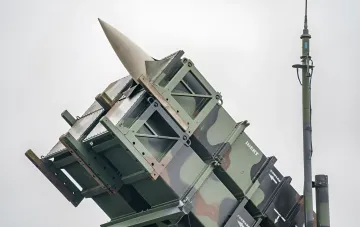
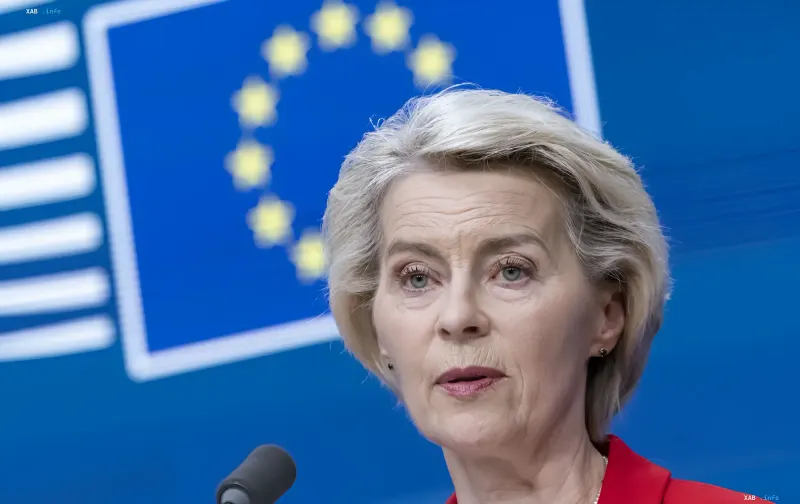
The key focus of the approved package is on strengthening air-space protection. In particular, the funds will allow Ukraine to procure equipment for Patriot systems, including PAC-3 missiles for these systems. European Commission President Ursula von der Leyen emphasised that the decision is aimed at protecting the civilian population and critical infrastructure. "Ukraine can now also procure the Patriot equipment it needs to better defend its sky from Russia's indiscriminate attacks. Together with our member states and NATO, we will continue to provide Ukraine with what it needs, while at the same time strengthening Europe's own defence," she stated. The financing is being provided within the framework of a larger loan supporting Ukraine, with a total volume of €90 billion.
Five derogations and the PURL mechanism
To accelerate procedures, the European Commission has provided for five derogations from standard compliance conditions. Three of them concern drones and components of Ukrainian production whose cost exceeds the established thresholds. Two further exceptions have been made for equipment of American manufacture — primarily for PAC-3 missiles, including through the special PURL mechanism under NATO coordination. This approach allows part of the bureaucratic restrictions to be bypassed and critically important systems to be delivered faster, which do not always fit within the standard EU public procurement rules.
Contradictory data
Differences in figures and wording are recorded in open sources, which is important to distinguish. On the one hand, RBC-Ukraine and specialised publications point to the approval of exactly €6.1 billion, while some publications (including pravda.com.ua of 24 August 2026) use the more general wording "over 6 billion euros". On the other hand, in July 2026 it was reported that €3.47 billion was transferred to Ukraine for drones, missiles and fighter jets — this is a separate, earlier tranche, not the same decision. In addition, the text mentions different currencies and amounts: €90 billion — the total loan volume, €8.35 billion — defence funding already allocated in the current year, while Kyiv's requests are stated in dollars ($10 billion and $20 billion). These figures describe different contexts (approval, disbursement, cumulative volume, stated need) and are not a direct contradiction; however, when citing them, they must not be mixed into a single sum.
Context: total aid volume and Kyiv's requests
According to the European Commission, €8.35 billion in defence funding has already been allocated to Ukraine in the current year, and, as noted, the amount will be increased in the near future. Against this backdrop, President Volodymyr Zelenskyy recently stated that Ukraine urgently needs $10 billion to purchase weapons for the beginning of the year, as well as a further $20 billion to cover the urgent needs of the army and civil defence. In parallel, individual EU countries are increasing bilateral support: for example, Belgium plans to transfer munitions for F-16 fighter jets to Ukraine this year, which will be used to destroy Shahed loitering munitions. The totality of these measures indicates that defence financing remains one of the central elements of European support for Kyiv.