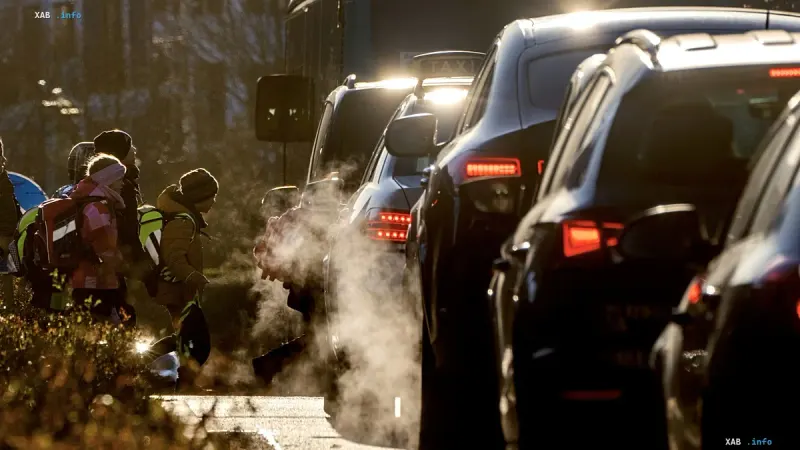
Starting this Sunday, new passenger cars and small commercial vehicles are for the first time subject to European environmental regulations governing the amount of particulate matter released from tire and brake wear. The introduction of the Euro 7 regulation marks a fundamental shift in transport environmental control, as regulatory focus has previously been concentrated exclusively on internal combustion engine exhaust emissions. The new set of rules aims to significantly reduce microplastics and fine dust polluting the environment along highways.
New Environmental Requirements and Main Objectives of the Regulation
The newly enforced Euro 7 standard complements the existing Euro 6 requirements, which continue to regulate tailpipe carbon dioxide emissions. However, European legislation now strictly limits solid particles generated by the abrasion of car tires and the operation of braking mechanisms. According to the European Commission, tire emissions are the single largest source of microplastics entering the environment. It is projected that braking and tire wear will account for up to ninety percent of all particulate matter emitted by road transport in the near future.
To effectively control pollution, the European Commission has established specific limits for manufacturers. Every vehicle with a traditional braking system must limit fine particle emissions to seven milligrams per kilometer. At the same time, fully electric models equipped with energy recovery systems that reduce reliance on standard brakes are required to keep this figure within three milligrams per kilometer. Such standards are designed to encourage automakers to adopt innovative materials, develop more durable brake pads made from organic composite materials, and test specialized particulate filters.
Battery Durability Control and New Testing Procedures
An important innovation of the Euro 7 standard is the extension of strict environmental requirements to electric vehicles and plug-in hybrids, which previously held zero-emission vehicle status. The regulation introduces stringent criteria for the minimum durability of traction batteries throughout the vehicle's entire life cycle. Automakers are required to guarantee that batteries retain at least eighty percent of their original capacity for up to 100,000 kilometers or during the first five years of operation. For up to eight years or 160,000 kilometers, the minimum performance threshold is set at seventy-two percent.
Furthermore, special testing procedures are introduced to measure tire abrasion, which is expected to push the industry to improve the durability of rubber products. In addition to technical limitations, the standard mandates the creation of a digital vehicle environmental passport. This document will consolidate up-to-date data on actual fuel consumption, electricity usage, carbon dioxide emissions, current battery health, and electric driving range, ensuring complete transparency for consumers.
Economic Implications and Industry Prospects
The transition to strict Euro 7 standards will inevitably affect the cost of new vehicles entering the European Union market. Experts and market participants note that introducing continuous monitoring systems, advanced filter elements, and battery testing technologies will require additional investments from automakers. Nevertheless, these measures are considered a necessary step to secure long-term environmental improvements in major cities and reduce harmful emissions not directly related to fuel combustion.