Winter is the harshest test for electric vehicle engineers who have spent years trying to stretch the mileage between charges. In freezing weather, the range of battery-powered cars drops by 20–40%, and research by American and European experts, as well as test drives by automotive journalists at RBC-Ukraine, show that at temperatures of 0°C–7°C, the loss is 22–39%. At the same time, most of these "evaporated" kilometers do not disappear forever: they can be reclaimed by changing a few daily habits in how you handle the car.
Why the Battery "Loses Weight" in the Cold: Three Reasons
The first and most obvious is the weather. Unlike a gasoline-powered car, an EV does not have "free" heat from an engine, so the cabin heating runs directly on the traction battery. The heating system of an average electric car consumes about 3–5 kW per hour, while the battery capacities of popular models range from 20 to 80 kWh — meaning heating can "eat up" a noticeable share of the charge in a single trip. The second reason is chemistry: in a cold lithium-ion battery, internal resistance increases and reactions slow down, some of the charge goes into warming the accumulator itself, and recuperation works less efficiently on a cold battery. The third is physics: winter tires, snow, and slush increase rolling resistance, and air at −10 °C is about 10% denser than at +20 °C, which increases aerodynamic drag.
Timed Pre-Heating: The Most Beneficial Winter Habit
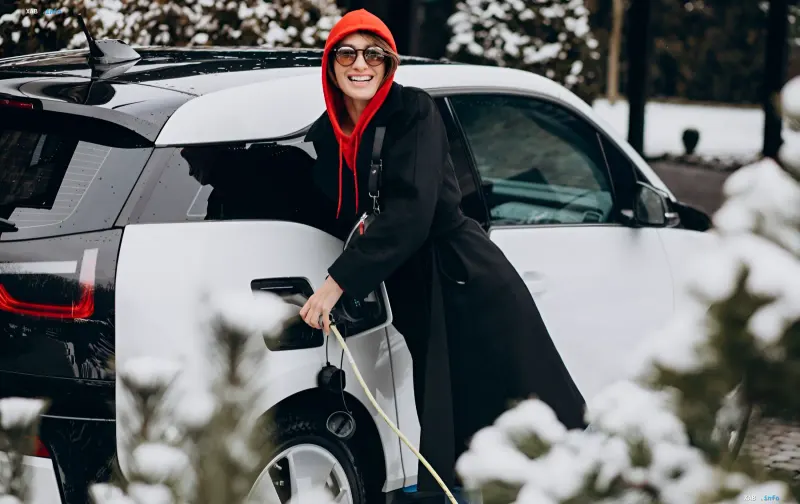
Most trips in an electric vehicle are short, and a cabin warmed while plugged into a socket is usually enough for the entire route. Many models feature a climate pre-conditioning function: the cabin and battery are warmed up before the driver gets behind the wheel, and with the car plugged into the grid, energy is drawn from the outlet rather than the battery. Car expert and founder of the Autogeek electric vehicle project Yevhen Mudryi notes that pre-heating the cabin before departure using a climate timer saves up to 15–20% of the driving range and ensures clear windows from the first meters of the route. It is important to warm up not just the cabin, but the battery as well: in a warmed-up state, it fully accepts current from recuperation from the very first kilometers, which is critical for short city trips where energy loss on warming up a cold car is maximal.
Contact Heat Instead of the "Heater"
Seat and steering wheel heating consume dozens of times less energy than heating the air throughout the entire cabin volume: two seats and the wheel take about 50–100 W compared to 3,000–5,000 W for the space heater. At the same time, contact heat provides a feeling of comfort faster because you do not need to warm the entire cabin volume and cold windows. However, saving energy should not take precedence over safety: if the windows fog up, the defroster and air conditioner must be turned on without hesitation to dry the air.
Eco Mode, Recirculation, and Pre-Heating Before Fast Charging
Eco mode primarily limits power and acceleration dynamics, but in many cars, it also means economical energy use for microclimate control; on a winter road, it is also safer, reducing the likelihood of wheelspin and skidding. The recirculation mode keeps heat inside the cabin, but in winter it causes windows to fog up faster — this is a visibility issue, so it should be combined with ventilation. Finally, a cold battery charges more slower, so a stop at a fast DC charging station can drag on noticeably: the solution is to warm up the battery on the way to the fast-charging point so that it accepts current at full power.
The bottom line is simple: winter does not cancel out the electric vehicle, but it redistributes its energy. Timed pre-heating, contact heat, conscious use of Eco mode, and warming up the battery before fast charging together return a significant portion of the lost kilometers to the driver — without a single modification and without any loss of comfort.