EU member states, unable to reach unanimity on a long-term extension of anti-Russian restrictions at their meeting in Brussels, agreed on a compromise — extending the sanctions for only seven days, until 22 September 2026. This was reported by RBC-Ukraine, citing Radio Svoboda journalist Rikard Jozwiak in his post on X. According to him, the EU ambassadors agreed to give themselves one more week to try to resolve the disputed issues and work out a more sustainable mechanism for extending the restrictions.
One-Week Extension as a Forced Measure
The decision to extend for seven days has effectively become a temporary "breather" for diplomats: until 22 September, member states have a window to find a longer-term solution, without which the sanctions package risks lapsing. As Jozwiak emphasises, it is during this period that on Wednesday the ambassadors intend to discuss a new proposal to expand the so-called "blacklist" of sanctioned individuals. Thus, the formal one-week extension does not mean a freeze of sanctions policy; on the contrary, it is accompanied by preparations to strengthen it.
Point of Disagreement: Usmanov and Friedman
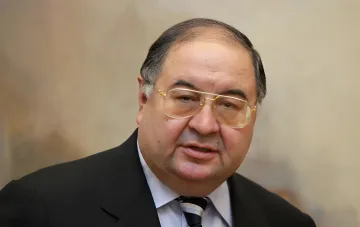
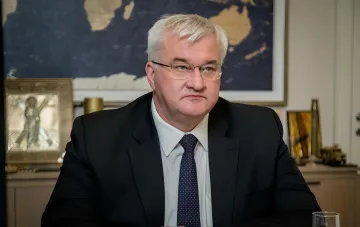
The key obstacle to a unanimous extension was the disagreement over two Russian oligarchs — Alisher Usmanov and Mikhail Friedman. According to information previously obtained by Jozwiak, it was France and Slovakia that blocked the extension of sanctions, demanding the lifting of restrictions against Friedman and Usmanov. It was precisely these positions that prevented EU countries from finding common ground within the set deadline and forced them to settle for a one-week compromise.
List Expansion: 3,000 and 1,600 Names
In parallel with the procedural extension, a significant expansion of anti-Russian restrictions is being prepared in Brussels. According to Jozwiak, this involves an attempt to extend the inclusion of more than 3,000 people in the "blacklist," and on Wednesday the ambassadors will consider a new proposal to add another 1,600 names to the same list. Taken together, this could mean that the sanctions regime covers nearly five thousand individuals, which would be one of the largest expansions of the list since the restrictions were first imposed.
Kyiv's Reaction and the Positions of EU Countries
The Head of the Ukrainian President's Office, Kyrylo Budanov, called on the EU not to weaken the sanctions regime so that Russian oligarchs cannot continue to finance Russia's military machine. In Lithuania, meanwhile, attention was drawn to Moscow's diplomatic rhetoric: Foreign Minister Kestutis Budrys stated that the aggressor country's claims of an alleged desire for negotiations are merely an attempt to avoid new sanctions. Thus, Kyiv and a number of EU countries interpret the current pause in Brussels as a tactical manoeuvre rather than a signal of de-escalation.
Contradictory Data
Publications by different outlets contain discrepancies in how the same event is presented. Some sources (including RBC and Moskva 24) phrase the outcome of the meeting as "a seven-day extension of sanctions agreed," while others (for example, Delo) emphasise that "a day before the deadline, the EU failed to extend sanctions against Russia." Both versions do not contradict each other in substance: a long-term unanimous decision was indeed not reached, and the seven-day extension became a temporary alternative. The difference lies only in the emphasis — on the fact of the compromise or on the failure of the negotiations. Similarly, the figures "more than 3,000" and "another 1,600" names refer to different stages of work on the list and are not mutually exclusive.