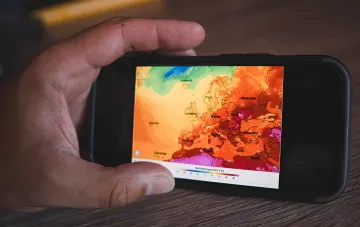
In August 2026, Europe is experiencing an unprecedented climatic shock that is transforming into a serious economic and food crisis. Data from the European Climate Change Agency 'Copernicus' confirms that June and July of this year were the hottest months in the entire history of meteorological observations in Western Europe. Experts warn that the anomalous heat is not subsiding: there remains a high risk of extreme temperatures across most of the continent during August and September. The situation is exacerbated by the depletion of natural resources: according to the French Geological Survey, groundwater reserves in key agricultural regions were practically exhausted by the beginning of August.
Catastrophic Drop in Yields in France and Italy
France, one of the largest producers of grain and vegetables in the EU, has faced a 'historic' crisis in vegetable farming. The major agricultural cooperative Prince de Bretagne in Brittany has already warned of catastrophic losses. Forecasts indicate that pea production will drop by 40%, broccoli by 60%, and artichoke yields could fall by 50–100%. Eric Legras, president of the Unilet association, describes the situation as 'exceptional,' noting that the heatwave has struck all regions, including the north and southwest of the country. The situation is critical in livestock farming as well: due to a lack of feed and thermal stress, daily egg production has decreased by approximately one million units, and poultry farms are reporting high mortality rates among flocks.
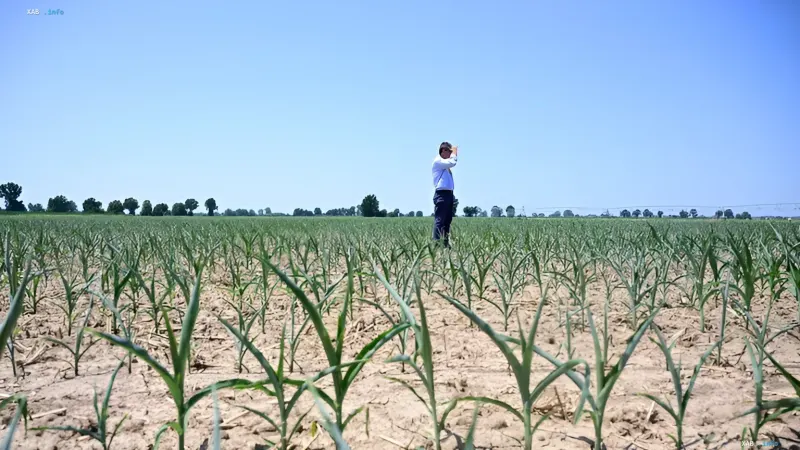
In northern Italy, where one of Europe's main rice-growing regions is concentrated, the consequences of the drought have become fatal for many farms. The farmers' association Coldiretti reports that the lack of water has led to some rice fields 'dying completely, burning up, and drying out.' A similar picture is observed in Spain, where farmers are recording a significant decline in grain yields and an acute shortage of livestock feed.
Threat to Food Security in Germany and Poland
In Central Europe, the situation is also approaching a critical threshold. On August 18, the German Farmers' Association published an alarming forecast: grain production in the country will decrease by 7%, amounting to 3.3 million tons compared to the previous year. The most affected areas in southern Germany risk losing their entire harvest. In neighboring Poland, the news agency Puls Biznesu previously predicted that prolonged drought could force the country to rely more heavily on food imports, threatening the national food security of the region.
Economic Consequences: The Price of Climate Catastrophe
The economic damage from the anomalous heat is estimated in the tens of billions of euros. Analysts from the Zurich Insurance Group and several leading European banks have calculated that the EU's total losses could range from 50 to 180 billion euros. These costs include not only direct crop losses but also expenses for infrastructure restoration, risk insurance, and compensation for farmers. The feed crisis, worsening on the eve of winter, could lead to rising prices for meat and dairy products, putting pressure on inflation and citizens' purchasing power.