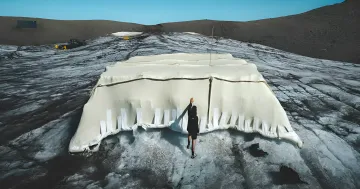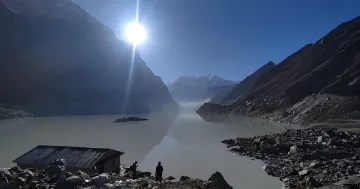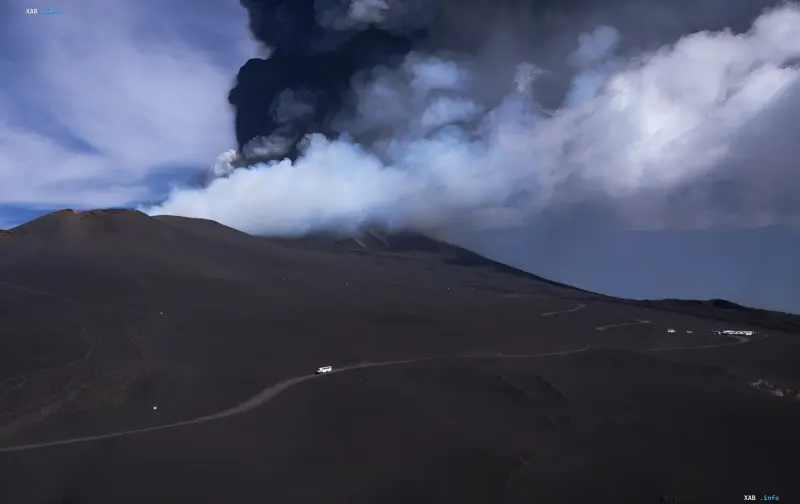
A scientific team, whose findings were published in the journal Nature Communications, presented a comprehensive analysis of climate anomalies during the Holocene epoch. The researchers established that over the past 11,700 years, Earth has experienced 22 major cooling events, and in more than 80 percent of cases their chronology precisely coincided with periods of powerful volcanic eruptions. To reconstruct the picture, the scientists compiled a chronology of 51 major eruptions over 12,000 years and matched it with periods of mountain glacier expansion recorded in geological archives. The correlation proved statistically significant: in the overwhelming majority of cases, the advance of ice fell within the time interval immediately following a volcanic event.
Ash is not the main factor: why sulfur determines the duration of cooling
The key finding of the study is that the common view of volcanic ash as the primary climate factor is an oversimplification. Ash settles on the surface relatively quickly and has only a short-term effect. According to the researchers, the true "engine" of prolonged cooling is the emission of sulfur into the upper layers of the atmosphere — the stratosphere. Sulfur aerosols, once they reach this altitude, effectively reflect sunlight and trigger the initial surface cooling. Although the sulfur particles themselves are washed out of the atmosphere within a few years, the system has already shifted into a new state that maintains low temperatures for decades and even centuries.
The cascade mechanism: from the stratosphere to a shift in the rain belt
The scientists described a multi-stage scenario by which prolonged cooling unfolds. At the first stage, sulfur enters the stratosphere and sharply lowers temperatures in the Northern Hemisphere. At the second stage, the area of Arctic sea ice expands: the bright ice surface reflects even more sunlight, amplifying the cooling effect. The third stage involves changes in ocean currents: the growth of ice blocks heat exchange between the ocean and the atmosphere and slows the circulation of water in the North Atlantic. At the fourth stage, the tropical precipitation belt shifts southward, leading to a prolonged dry and cold climate in the north. It is precisely the inertia of the ocean and sea ice, which respond an order of magnitude more slowly than the atmosphere, that provides the system's "memory" and allows mountain glaciers to expand significantly.
Historical precedents: Samalas and Tambora
The researchers cited specific historical examples that confirm the described mechanism. It was most clearly manifested after the eruption of Samalas volcano in 1257 — one of the most powerful in recent millennia — as well as after the eruption of Tambora in 1815, the consequences of which led to the so-called "Year Without a Summer" of 1816. In both cases, the emission of sulfur into the stratosphere triggered a cascade of climate changes recorded in historical and paleoclimate records.
Why the forecast for the present day remains uncertain
Despite the clarity of the mechanism under the "natural" climate conditions of the Holocene, the scientists caution against direct extrapolations to the present day. Anthropogenic global warming and changes in atmospheric composition have made the modern climate substantially different from the one in which the described patterns formed. It is still unknown whether a powerful eruption in the 21st century could halt the warming trend or merely temporarily disrupt global temperature dynamics, after which the system would return to increasing heating. According to the authors, this question remains open and requires further research that accounts for current anthropogenic factors.