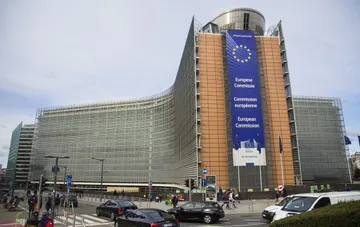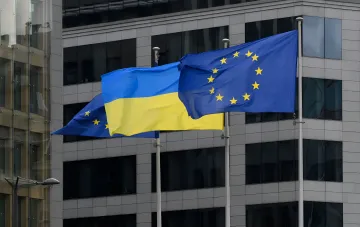
The European Commission has confirmed its intention to channel at least 10 billion euros of unused funds from the SAFE defence programme into joint defence projects involving Ukraine. This was stated by European Commission spokesperson Thomas Rennie during a briefing in Brussels, who emphasised that this is a preliminary assessment of residual resources, but that even at the current stage the amount constitutes "significant financial support." According to him, it is precisely from these residual funds that new joint defence initiatives involving Ukrainian businesses are planned to be financed.
Mechanism: not a direct loan, but participation in procurement
The key feature of the proposed model is that Ukraine will not receive these funds as a direct loan tranche. The work will follow the standard logic of the SAFE programme: credit obligations are assumed by the EU member states, while Ukrainian companies in the defence sector gain the right to participate in joint procurement and production projects. "Ukraine was fully involved from the very beginning. We are talking about loans that our member states are to take out, but Ukrainian companies are, of course, fully involved and can benefit from this," Rennie explained. Thus, the financial flow will run through European defence contracts, in which Ukrainian manufacturers will be able to act as co-contractors or suppliers.
The Hungary factor and the final volume of funds
The final amount of available funds, according to the European Commission spokesperson, depends on the final processing of the last loans under the SAFE programme. In particular, the final volume will be affected by the resolution of the so-called "Hungarian plan" — the block of credit obligations that Budapest has not yet fully implemented. Rennie stressed that 10 billion euros is the "minimum amount we have at this point in time," and that the final volume may increase if all credit lines are successfully closed.
Contradictory data
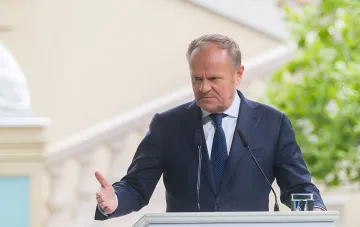
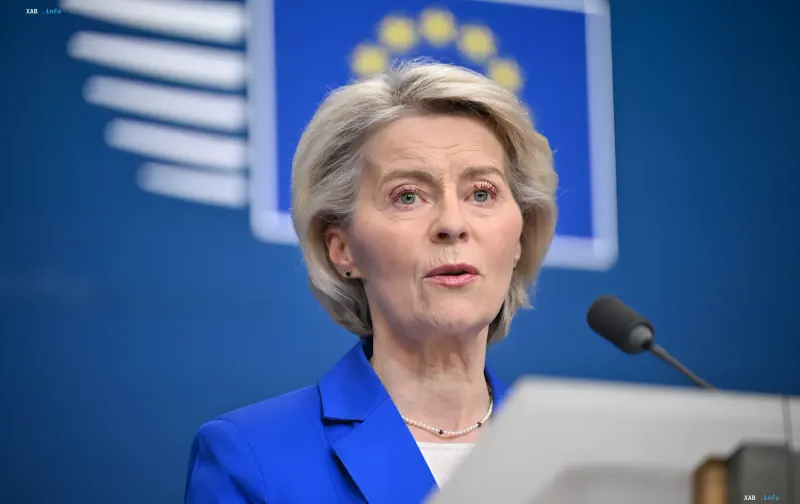
There is a noticeable discrepancy between the position of the European Commission and the reaction of several member states. On the one hand, Brussels insists that Ukraine "was fully involved from the very beginning" and that the decision to redirect the SAFE residuals is a logical continuation of the programme. On the other hand, Poland publicly expressed surprise at the statement by European Commission President Ursula von der Leyen about the intention to channel the unused funds into joint projects with Ukraine. According to a Polish diplomat in Brussels, Warsaw had expected to use these funds to finance its own defence programmes, and no prior consultations with the member states had been held on this decision. Thus, formally the decision was taken at the level of the European Commission without agreement with the national governments, which raises the question of the procedural legitimacy of reallocating funds that were originally earmarked for the defence needs of the EU members themselves.
Context: what is SAFE and why the residuals arose
The SAFE programme (Security Action for Europe) was launched by the European Union as an instrument for the collective financing of defence procurement amid growing military threats in the region. The mechanism provides that member states take out loans on common terms for joint defence projects, which allows reducing individual costs and increasing the volume of procurement through economies of scale. Residuals of at least 10 billion euros indicate that some of the planned credit lines were not fully utilised by the member states within the established deadlines. The European Commission sees in this an opportunity to accelerate the implementation of defence initiatives by involving Ukrainian industrial potential, which, according to Brussels, is already integrated into the European defence supply chain.