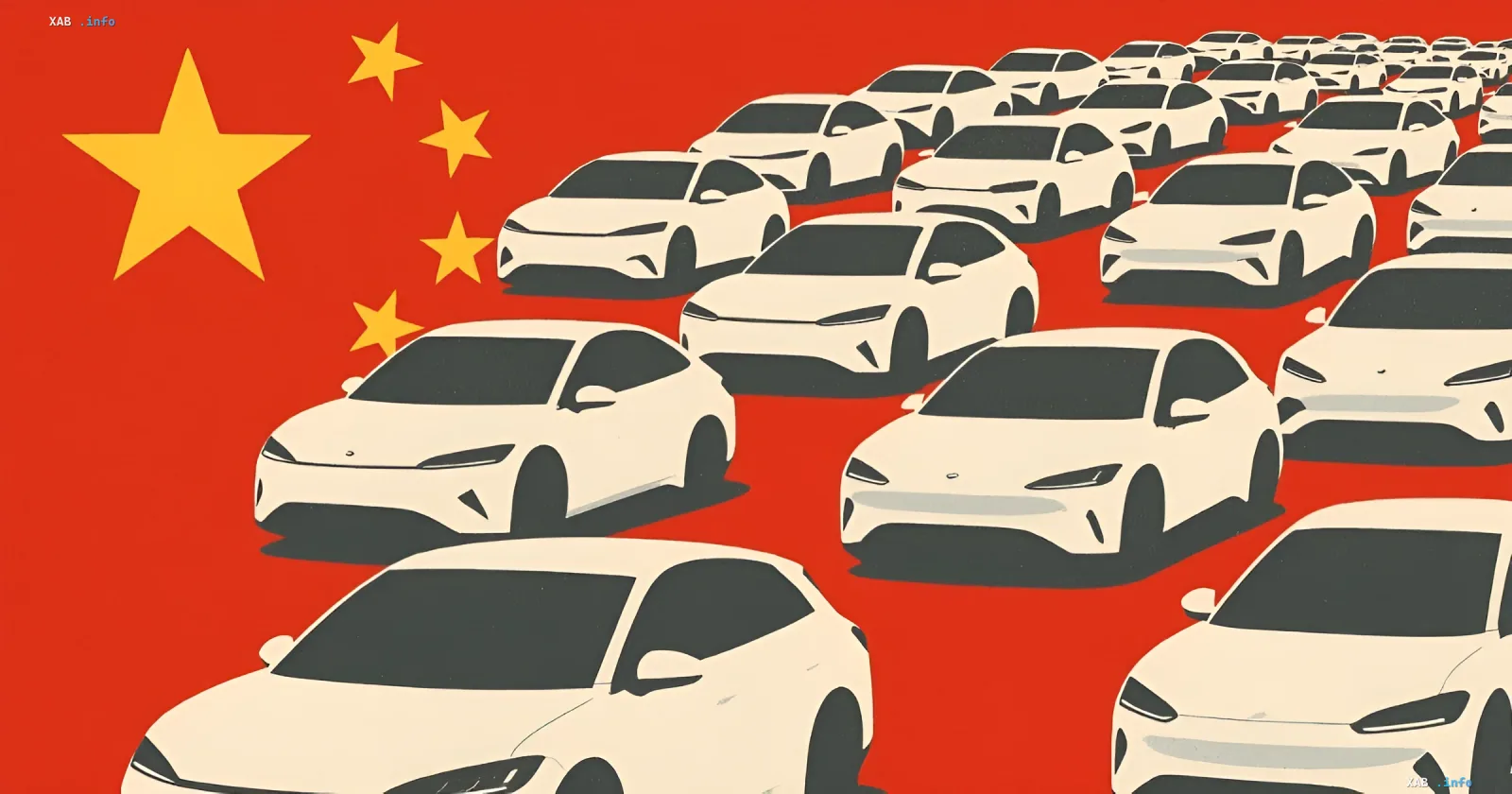
According to an exclusive investigation by the German business newspaper Handelsblatt, based on sources within the European Commission, Bernd Lange, head of the European Parliament's trade committee, and customs statistics, Brussels is developing a concept for a so-called "economic security alliance" — an automotive pool in which the UK, Japan, and South Korea would join the EU on equal terms. The initiative is defensive in nature: the four parties intend to coordinate their actions against Chinese dumping and the PRC's excess production capacity, which in 2026 will for the first time in history push Chinese car exports above the 10-million-unit mark. The trigger for emergency measures was a tectonic shift in the auto market: in the first quarter of 2026, China already accounted for 60% of all plug-in hybrid (PHEV) imports into the EU — up from 37% in 2024 and 49% in 2025.
The Three Pillars of the Planned Partnership
According to Handelsblatt's materials, the alliance's architecture rests on three pillars. The first is the inclusion of cars from Japan, South Korea, and the UK in European subsidy programs under the forthcoming Industrial Acceleration Act (the so-called "Buy European" rule): vehicles from these countries will receive the same benefits, electric car purchase subsidies, and tax preferences as European cars. The second pillar is the introduction of protective quotas and tariffs against Chinese cars, including PHEV hybrids, with full exemption for alliance partners from these restrictions. The third is the joint development of supply chains for critical raw materials (rare earth metals, lithium, cobalt, nickel, gallium) to bypass China and eliminate dependence on Beijing's control over the raw materials market.
The Hybrid Loophole and the Numbers Behind China's Breakthrough
Brussels' logic is explained by the fact that China is successfully circumventing existing barriers: the maximum EU countervailing duty rate on Chinese pure electric vehicles reaches 35.3% (for the SAIC/MG group; together with the 10% base rate — up to 45.3%), but these tariffs do not apply to plug-in hybrids, with which Beijing has "flooded" Europe. According to customs statistics, in June and July 2026 the monthly export of cars from the PRC for the first time stably held above the 1-million-unit-per-month mark, physically exceeding the throughput capacity of Ro-Ro car carrier fleets. Since May 2026, Chinese brands have collectively sold more cars in Europe than all the major Japanese automakers combined. The consequences for the German auto industry have been severe: over the past year alone, the sector in Germany has, by estimates, lost more than 42,000 jobs, and the Volkswagen Group has been forced to close plants and lay off staff.
Internal Resistance Within the EU
Despite the geopolitical framing, a rift is brewing within the European Union itself. The European Association of Manufacturers of Motor Vehicles (ACEA) has already spoken out against automatically granting benefits to Japan (Toyota, Nissan) and South Korea (Hyundai, Kia). Local manufacturers fear that while escaping the Chinese "hammer," they will end up under the Asian "anvil": Japanese and Korean brands will also begin to take market share from European brands such as Renault or Fiat, undermining the original protectionist idea of "Buy European."
Geopolitical Context: From "Made in the EU" to "Made by Friends"
The initiative fundamentally changes the rules of the game: realizing that European plants cannot compete on price and battery technology on their own, the EC has expanded the perimeter of beneficiaries, including Tokyo, Seoul, and London in the pool of "trusted partners." This is a forced concession intended to prevent Chinese brands (BYD, Geely, Chery) from completely burying the European market. At the same time, China's assault on external markets is largely driven by domestic problems: in the first half of 2026, demand for electric cars within the PRC fell by 13%, and the price war is pushing excess capacity toward export. If the WTO approves such collective anti-dumping measures, world trade risks breaking apart into isolated economic blocs. The bottom line of the strategy being prepared is simple: on their own, neither EU tariffs nor subsidies can halt the PRC's expansion, and Europe is ready to share its market and money with historic competitors, rather than hand the strategic automotive industry over to Beijing's full control.