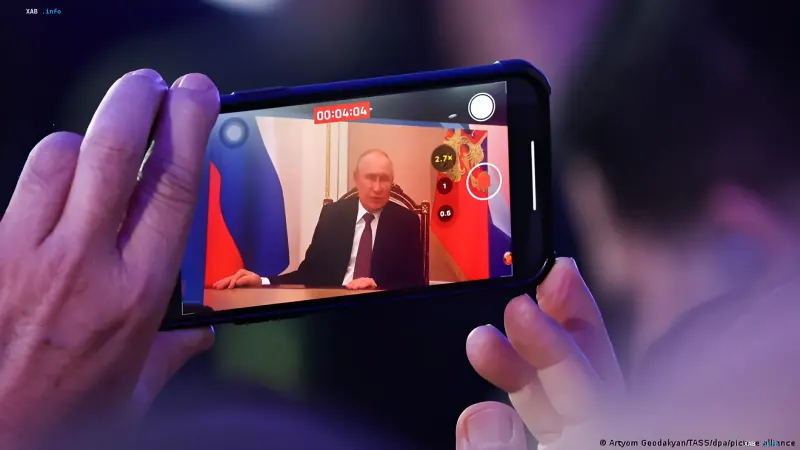
At the end of 2025, Vladimir Putin, during his annual major press conference, declared that Russia had achieved "full digital sovereignty." The head of state named Russia the third country in the world to possess such independence, alongside the USA and China. As proof, he cited the creation of the domestic messenger "Max," intended to replace foreign analogues and become a platform for delivering state services. However, events of recent weeks have shown that reality differs significantly from official rhetorical constructs.
Sanctions against the "Digital Fortress"
On July 13, the European Union introduced new sanctions against the Russian company VK and related services. The restrictions affected not only the social networks "VKontakte" and "Odnoklassniki" but also the "Max" messenger, which authorities position as a key element of import substitution. The basis for Brussels' actions was the accusation that these services suppress civil society and assist intelligence agencies in monitoring users.
The result of the sanctions was the removal of VK applications from global stores: App Store (Apple) and Google Play. This event dealt a blow to the concept of "digital sovereignty," as access to the "national" messenger turned out to be critically dependent on American technological giants.
Problems for Apple Users
The situation for iOS device owners turned out to be the most difficult. Apple removed VK applications from its store preventively back in June, before the official introduction of sanctions. For those users who had "Max" installed previously, the application did not stop working, but it became extremely inconvenient. The main limitation is the lack of push notifications.
Developers are forced to advise users to "periodically open the application manually to avoid missing important messages." Essentially, the messenger turns into a mail client requiring constant manual control. Considering that "Max" is used for authorization on "Gosuslugi," age verification when purchasing alcohol, and even obtaining QR codes for gasoline in Transbaikal, such inconveniences can have serious consequences for citizens' daily lives.
Alternatives and Risks for Android
The situation in the Android market, which accounts for about 75% in Russia, looks more stable but is not without risks. After "Max" disappeared from Google Play, developers redirected users to alternative platforms: the Russian RuStore, as well as app stores from Huawei and Xiaomi. Direct download from the website is also available.
At the moment, all functions, including notifications, work correctly on Android. However, experts note that RuStore, despite the change of ownership (the service was sold to the general director on the day it disappeared from Google Play), may fall under similar sanctions in the future. Russian companies have repeatedly used the scheme of emergency asset sales to bypass restrictions, but the effectiveness of this method is not guaranteed.
The Gap Between Rhetoric and Reality
Vladimir Putin promised that through "Max," the state would begin providing services unavailable through foreign systems. In the long term, the messenger was supposed to replace the passport in a number of scenarios. But if the application cannot be installed on a new device, and existing users lose critically important functions, it is premature to speak of full sovereignty.
The removal of "Max" from global app stores demonstrates that Russia's key information systems still depend on Western infrastructure. Instead of the declared "digital sovereignty," the country has faced the need to build detours that can be cut off at any moment.