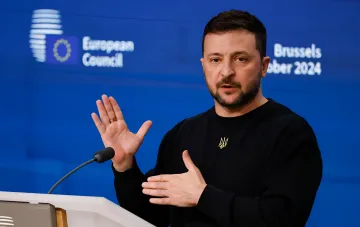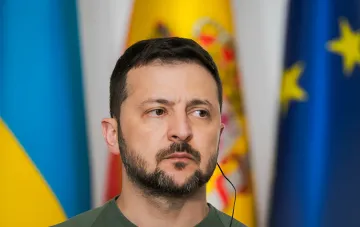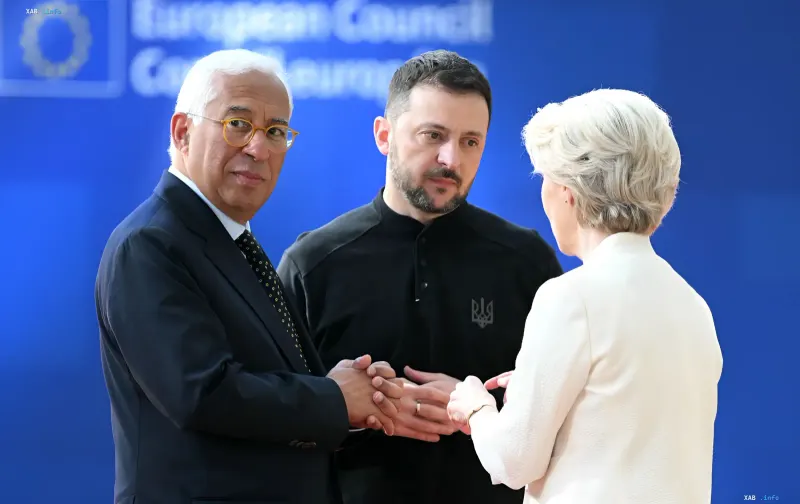
At the end of the two-day European Union summit, member state leaders heard from Ukrainian President Volodymyr Zelenskyy, who presented the scale of Kyiv's financial needs for the coming year. According to him, the war will cost Ukraine €155 billion in 2027, and to cover needs for defense, weapons, and resilience, the country needs 'at least another €70 billion' from European partners. 'This is a realistic amount. And I ask you to find this support. It will help us hold back Russia,' Zelenskyy stated. According to him, the additional funds will increase the production of domestic modern drones to stop Russia's advance on the frontline, disrupt its supply lines, and weaken its war machine.
Why the Previous Loan Became Not Enough
Until now, Brussels relied on a €90 billion loan approved by leaders last December, which was supposed to cover two-thirds of Ukraine's financial and military needs for 2026 and 2027 combined, while the rest was to be provided by other allies. However, the European Commission had expected the war to end in 2026. Moscow intensified its offensive, including daytime strikes targeting Ukraine's already vulnerable economy, and the previously agreed funding volume ceased to cover real needs. EU leaders instructed the European Commission to find ways to close this gap, which, according to Brussels' assessment, turned out to be significantly larger than anticipated.
Who Will Pay and How Much
Kyiv warned for weeks that next year it needs about $32.6 billion for the budget and $45 billion for the army, totaling $78 billion, or approximately €70 billion. Initially, Brussels did not comment on this figure, but after several rounds of technical talks, it agreed with the estimate. These €70 billion will be in addition to the €45 billion the EU plans to disburse under the current loan and several billion from other programs. Brussels emphasizes that these will be 'joint efforts' with other allies, including the UK, Norway, Canada, and Japan: 'We cannot do all of this alone. Our partners must step up, announce contributions, and fulfill their commitments,' a European Commission spokesperson said.
More Expensive and Complex: New Debt on the Markets
According to diplomats and officials, the most likely option is to raise joint debt on financial markets again, as the EU is already doing for the €90 billion loan, by expanding the existing credit mechanism and effectively extending the current scheme. The Union has a stable AAA credit rating, and its bonds have enjoyed steady demand since the COVID-19 pandemic, often exceeding supply at auctions; former Italian Prime Minister and European Central Bank head Mario Draghi called for large-scale borrowing. However, since December, the financial situation has deteriorated sharply: global borrowing costs have risen due to more expensive oil, increased public debt, and high demand for money for artificial intelligence projects. The yield on 10-year EU bonds rose from 2.8% in January to 3.44% in September — a noticeable increase, although smaller than in many other markets. The European Commission stated that the rise in debt costs affected the entire world, and the EU's relative position has not worsened: 'We remain a very competitive issuer.'
Uncertainty and Political Barriers
New debt is politically sensitive as it increases interest payments, while additional pressure is created by disputes over the next EU long-term budget and preparations for the French presidential election, where frontrunner Marine Le Pen has promised to end all aid to Ukraine. It remains unclear how much of the €70 billion the EU itself will provide, as the preliminary 'two-thirds to one-third' distribution did not work, and it is unknown how quickly Kyiv needs the money; it is only clear that there are few options to quickly raise such a sum. Hungary, Slovakia, and the Czech Republic have already been exempted from the €90 billion loan, and Slovak Prime Minister Robert Fico stated at the summit that together with Hungarian Prime Minister Péter Magyar, they agreed to maintain this policy, adding that other countries can provide the loan if they wish. Simultaneously, Ukrainian MPs and the government are publicly recording an acute shortage of funds in the state budget, which only increases the urgency of finding new financing.